Mandatory and Meaningful
A Day at the Ballers’ Innovation Summit
by Joe Horton
I think baseball in particular as a sport is at a precipice…the average baseball fan sits in their seat and watches the game for three innings. Baseball games are nine innings.
Bryan Carmel
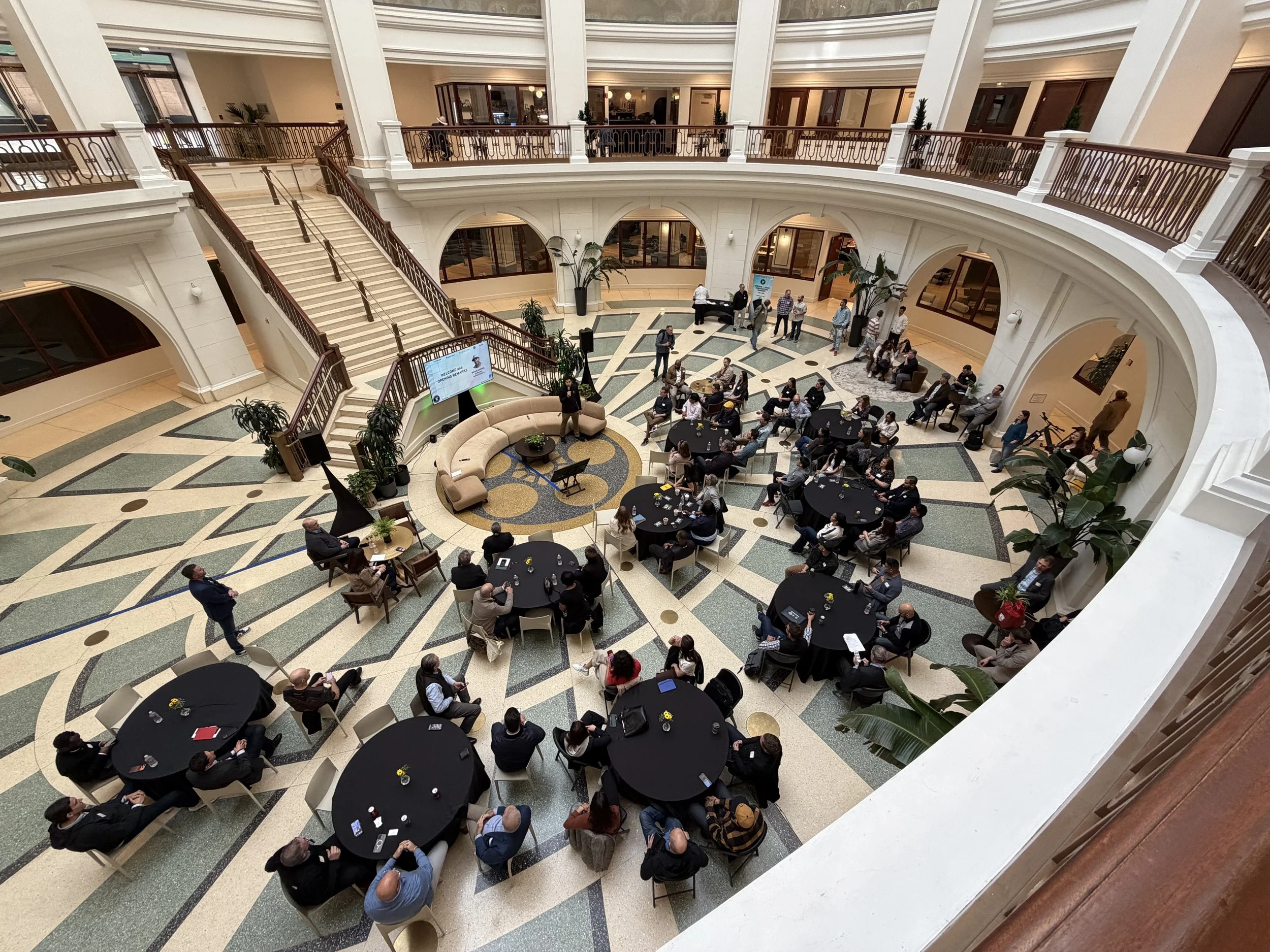
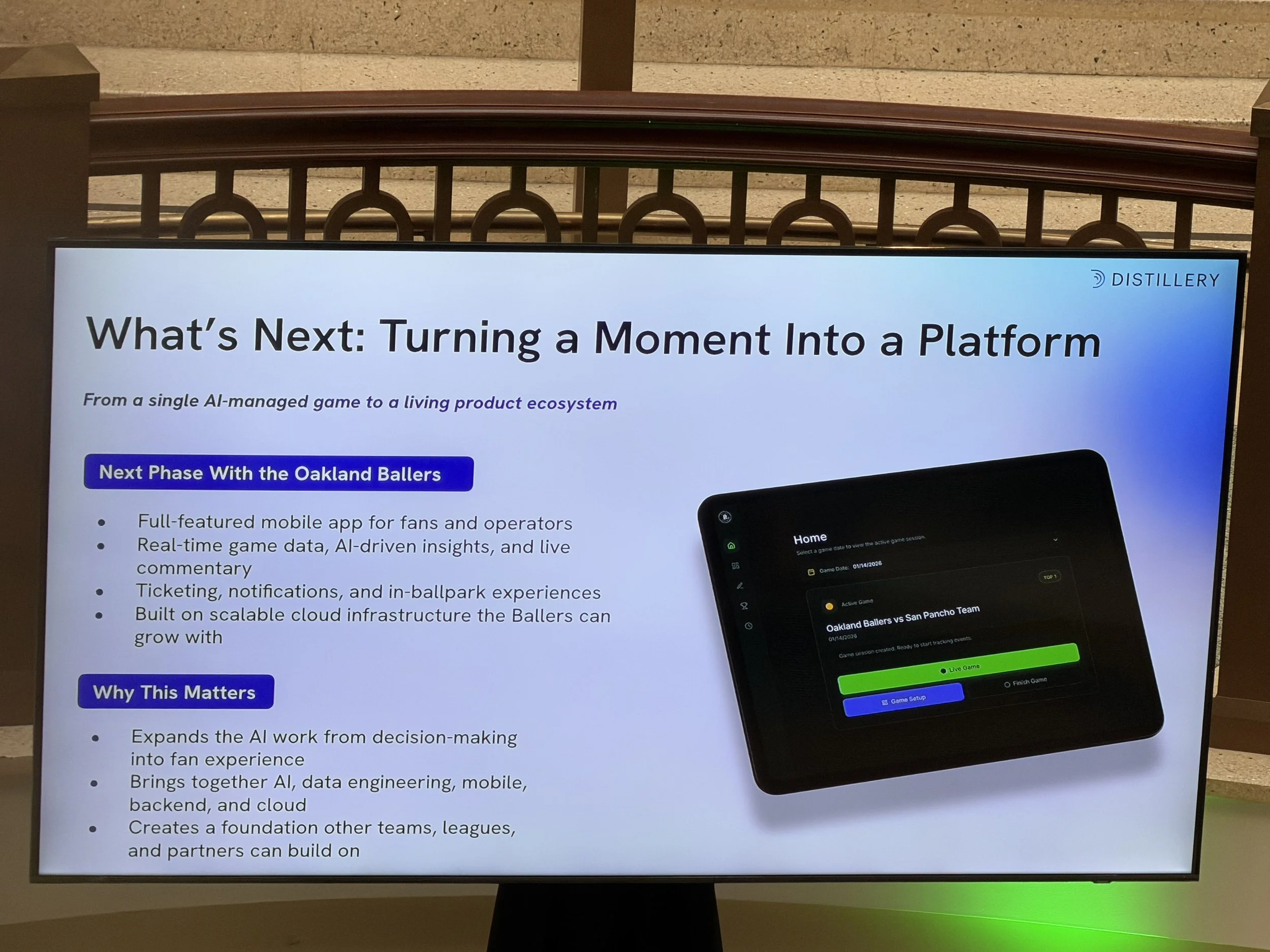
You’re reading this paragraph on a website that’s barely a website. I had to learn to speak Internet over a weekend to launch Dispatches a year ago. Innovative this space is not. But when your baseball team invites you to an innovation summit, featuring big names and big brains—Google, Gusto, Distillery, Portal A, Dealmaker, Oxide, Vy Vision, NBC News, PG&E, the Roots and the Soul—you go.
As a writing teacher, I live at one of the forefronts of anxiety about new tech and AI and the outsourcing of our thinking, our socialization, our jobs and sense of self. My students are tempted ceaselessly by opportunities to circumvent their originality and shortcut their creativity. Why, they ask tentatively in class or more stridently in evaluations after, should I learn something that I’m never going to need to do for myself? Why should I try to “find my voice” or craft an argument when that feels outdated or even indulgent? Simply put, deep thinking and honest reflection feel like luxuries that few of us can afford. I also get plenty of the opposite from curmudgeonly professors and animated students alike: AI is bad, Big Tech is bad, bring back the flip phone. In all the ways, B’s co-founder Bryan’s opening video spoke to me.
I for one don’t need to be fed the carrot that technology can help us or poked with the obvious stick that we ultimately keep up or fall behind. Whether it’s PG&E sponsoring a competition for Oakland Unified students to submit ideas for energy sustainability (with winners announced, of course, at a B’s game), or Gusto running the team’s payroll and HR and also getting their Ballers TV ad on screens nationwide during a tiny little event like the World Series, I know well and was reminded today of all that Bay Area tech can do. But I worry sometimes how it decides whether it should.
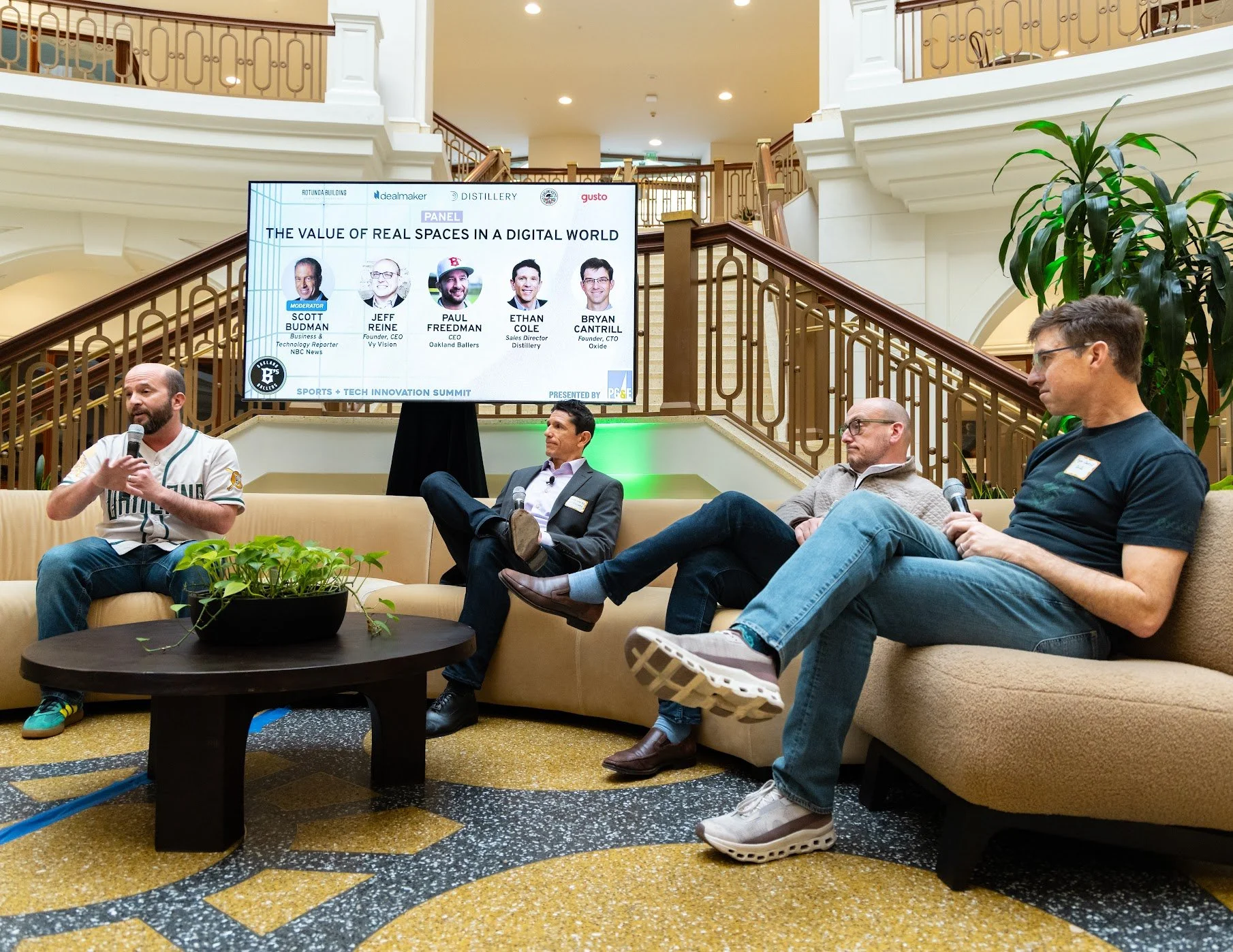
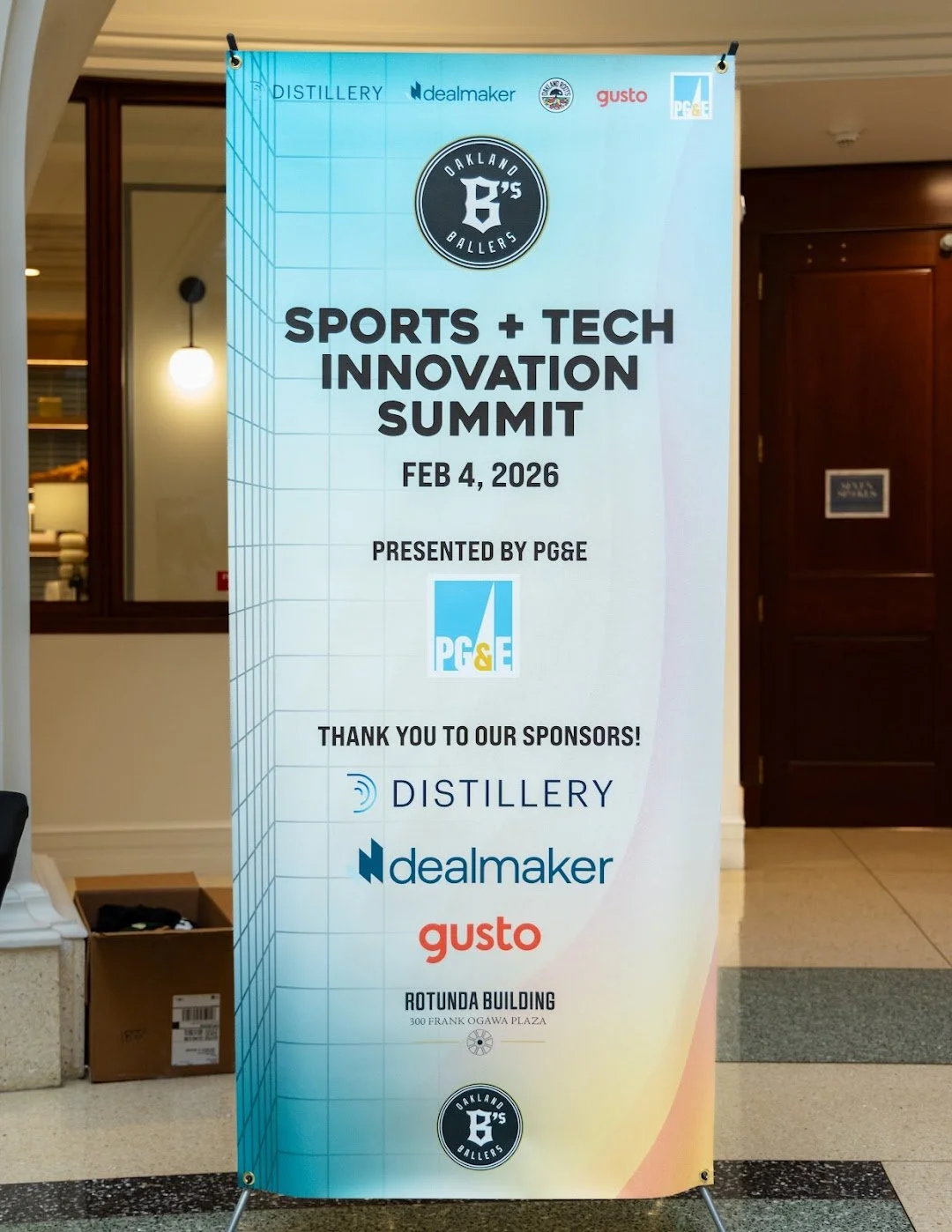
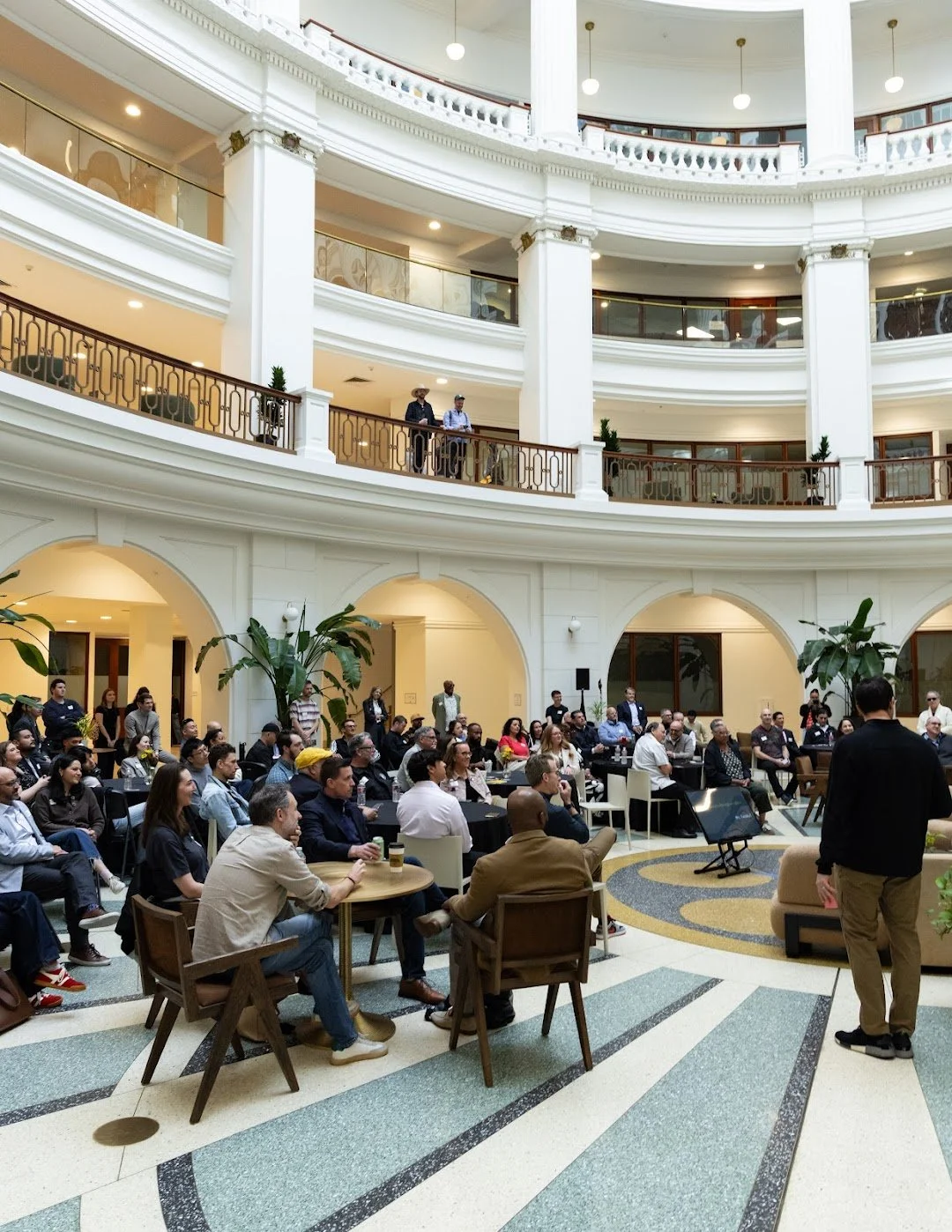
Gallery @Darrell Lavin
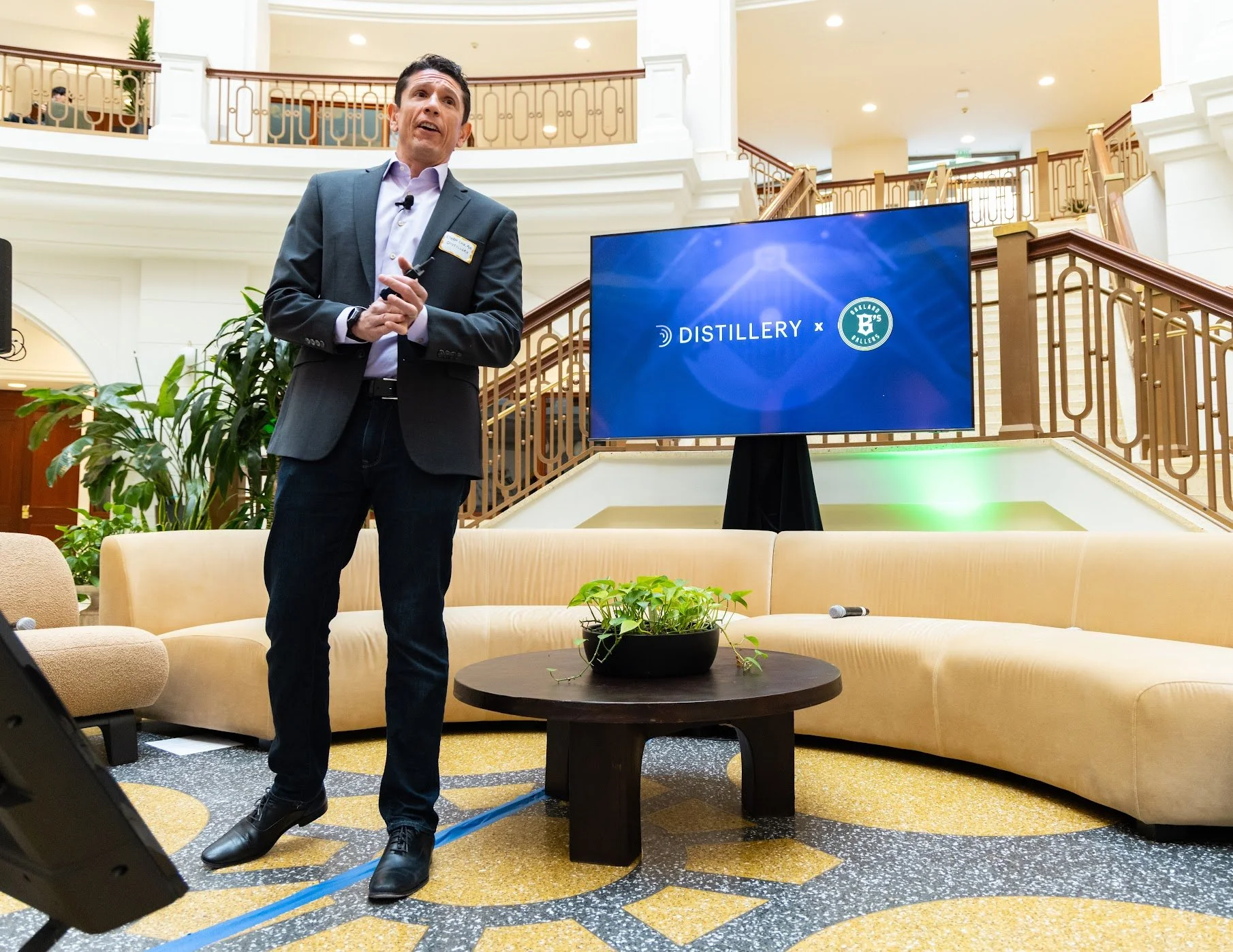
Ethan Cole, sales director for Distillery, the company whose AI “managed” the B’s game last year to considerable national press and some consternation down the cheap seats in my section, explained that their first major question was indeed whether it could actually be done. The B’s, after all, were the first professional team to try it. The should was trickier. By way of history, he offered up the 1894 Orioles whose regular acceptance of hit-and-run Baltimore Chop “inside baseball” was deemed sacrilegious by some and a “new game” by everyone. Innovation, I know, scares before it excites before it’s commonplace. Would the B’s have been on The Daily Show last year without trying out the new? Probably not. The fan-managed game the season before the B’s lost; the AI game they won.
I think it’s fair for B’s fans to worry about the job of their manager or the livelihoods of any of the humans in the dugout when a tablet manages a game, just like I think trepidation about using facial recognition software for the fan experience—even if it’s with the stated aim of seeing what they love most and delivering them more of that—is natural and necessary. When Jeff Reine detailed “Vy Vision” with cognitive science and spider charts for “measuring happiness…against neutrality and boredom,” it was easy to feel that this was too much information, too much data, even if it was the same science behind Inside Out.
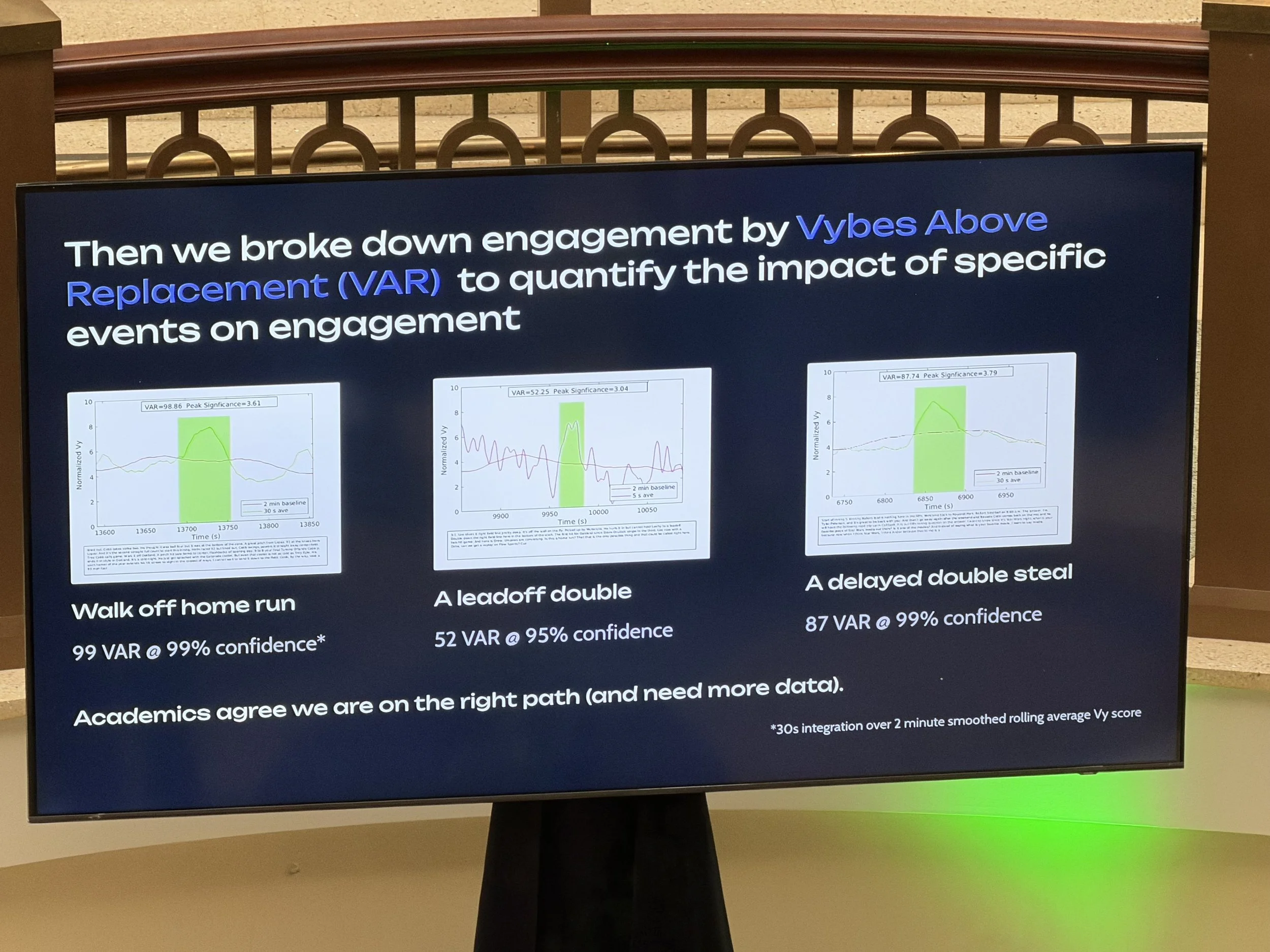
It’s strange to have your level of interest quantified in such a way, to see heads turning green and yellow and red, a sea of emotional stoplights, over what might otherwise be seen as the organic patter and flutter of community. (And to be fair, I think anyone who’s met me would be shocked to think I have five “sub emotions,” let alone the 52 that Vy can detect.) It was fascinating when Reine showed the data that fans enjoy sustained rallies more than the average home run, or that a delayed double steal is worth almost as much as a walk-off home run. It was even more fascinating when he described the value of entertainment beyond the game like knockerball or the Rubenstein Supply Toilet Toss™ rating as highly as a double or great catch in the outfield. But when he started his presentation by asking members of the audience their favorite parts of being at a baseball game was most fascinating of all. This B’s-forward crowd said the conversation, the camaraderie, the seventh inning stretch. These essential Raimondi values, I both fear and hope, may forever be unscannable and impervious to the algorithm. Togetherness, for us, is no sub emotion—it’s the root of that happiness on the chart; it’s the lead character manning the Inside Out control panel every day, voiced by Too $hort or Ave or Jwalt.
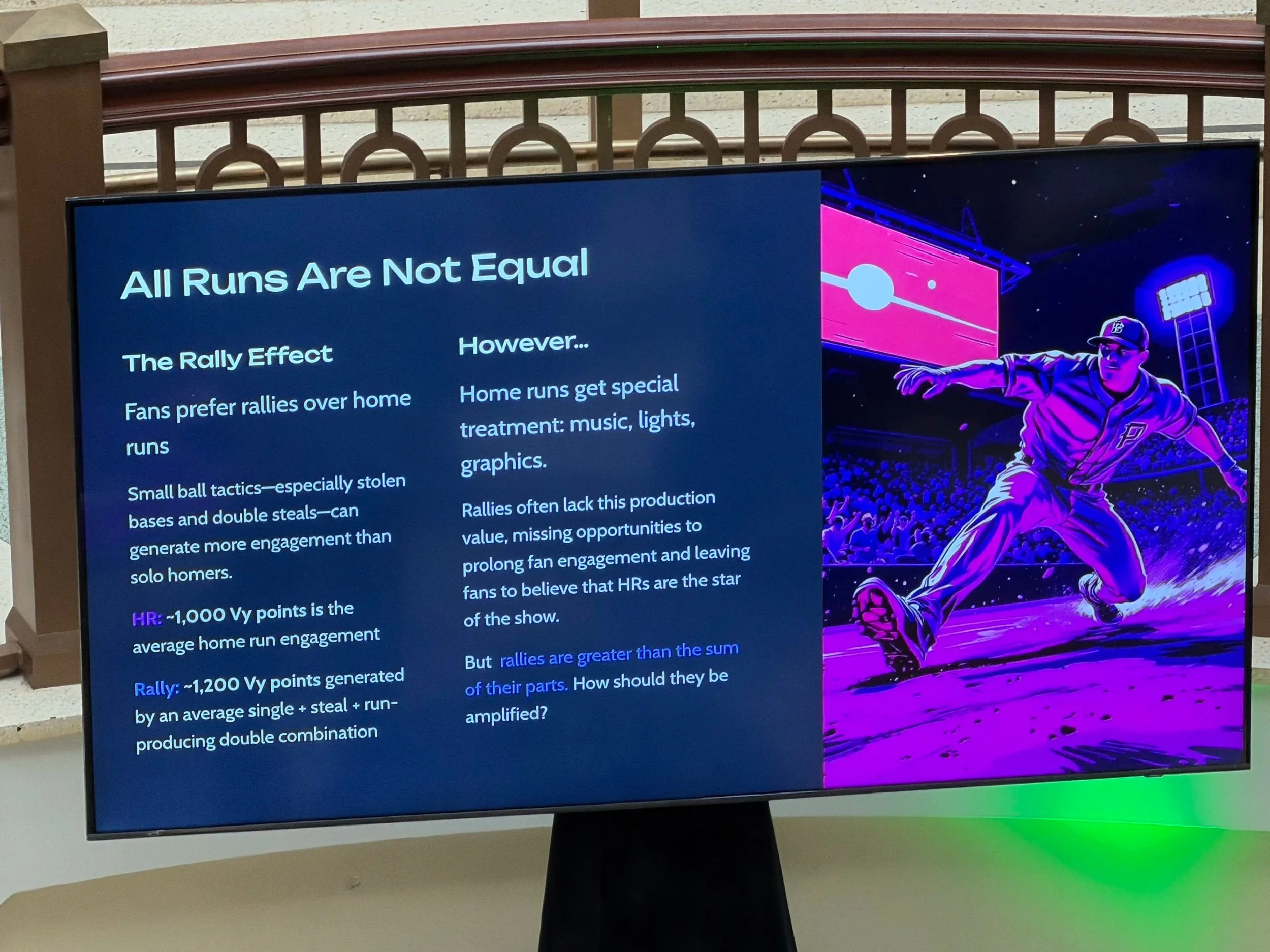
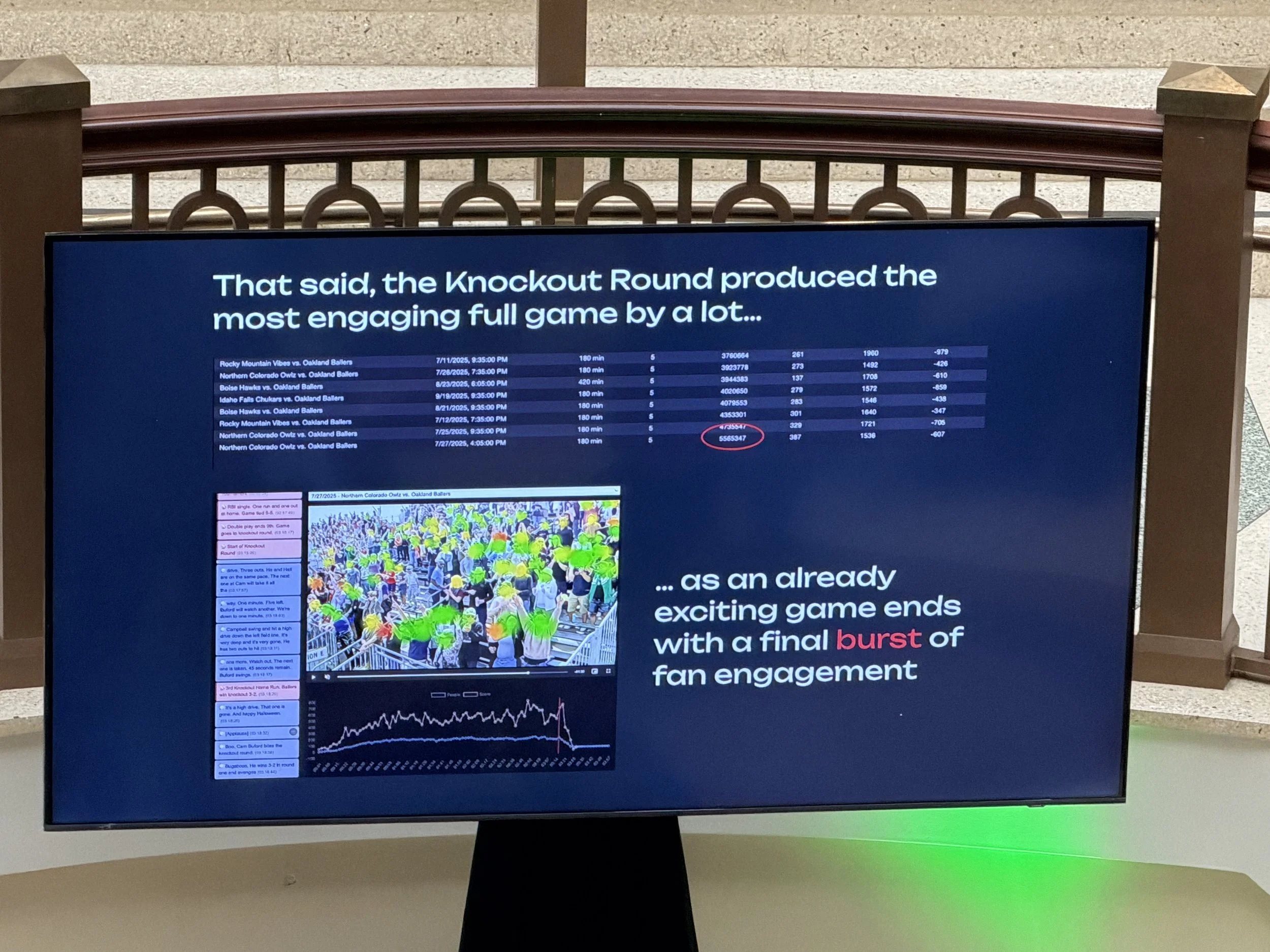
I may have all of this techspeak wrong, of course. Conversations like this felt miles above me, like a satellite pinging back my answer to whatever happened to the Microsoft paper clip guy? But when the talk turned to storytelling, I felt grounded again. Bryan Cantrill, the founder and CTO of Oxide, waxed on what he called the “deep deep narrative” of baseball, the story of the game that fans follow all season. Particularly, he said, the stories of the players: “They have endured so much adversity in their lives and they’re out there living their dreams. And that’s the most human thing I can possibly imagine…I think the Ballers have done a great job pulling us into that narrative.”
I believe it. Even passing knowledge of the team shows how essential that narrative has been, and several panels discussed ways of further breaking down the distance between field and fans. Caitlin Matalone of Gusto: “When you lose is when you start treating your audience like a spectator…When you win is treating them like a…community member.” Or B’s co-founder Paul, about the players, “We would like to make a movie about all of them. We can’t afford it, but to tell their stories, we’re going to need technology.”
“It’s participatory and we’re all building it together,” Cantrill said. “There’s fans and there’s a sports team and we’re trying to tear down the wall between them.”
Nate Houghtelling, founder of Portal A, offered in another crucial ingredient that tech only sometimes replicates: feeling local. Even in a world obsessed with the viral, what feels intimate and curated and not broadly accessible is special. And Houghtelling would know, as the creator of Ghostride the Volvo and other hits that hit different for Bay residents and Oakland sports fans.
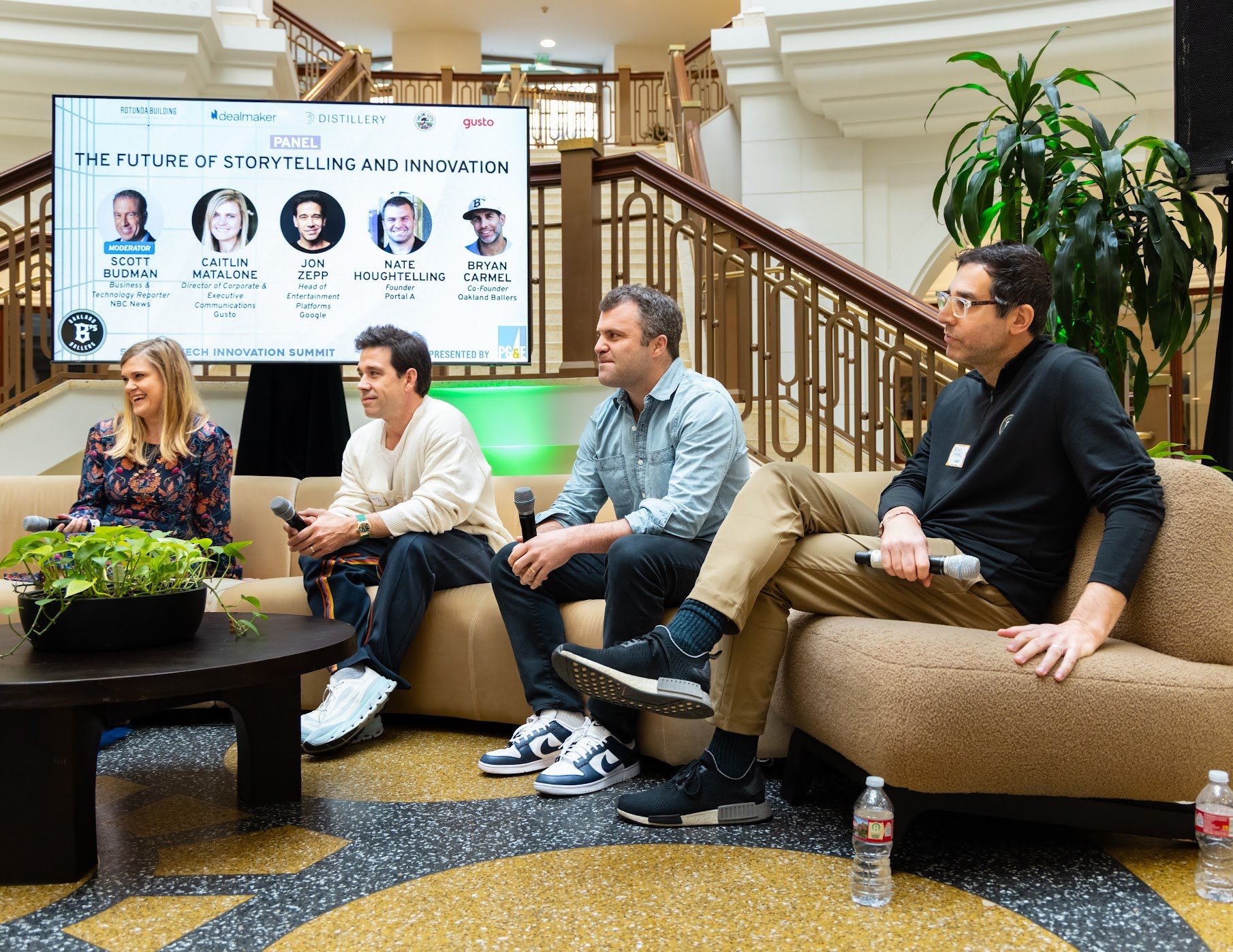
Photo @Darrell Lavin
Like most of us, I don’t know enough and will never catch up to knowing enough to assess the tech on its merits or to see or be satisfied with the guardrails in place. I don’t know where we draw that line between can and should. So, like with all of this rapid change, I’m left to trust our humans.
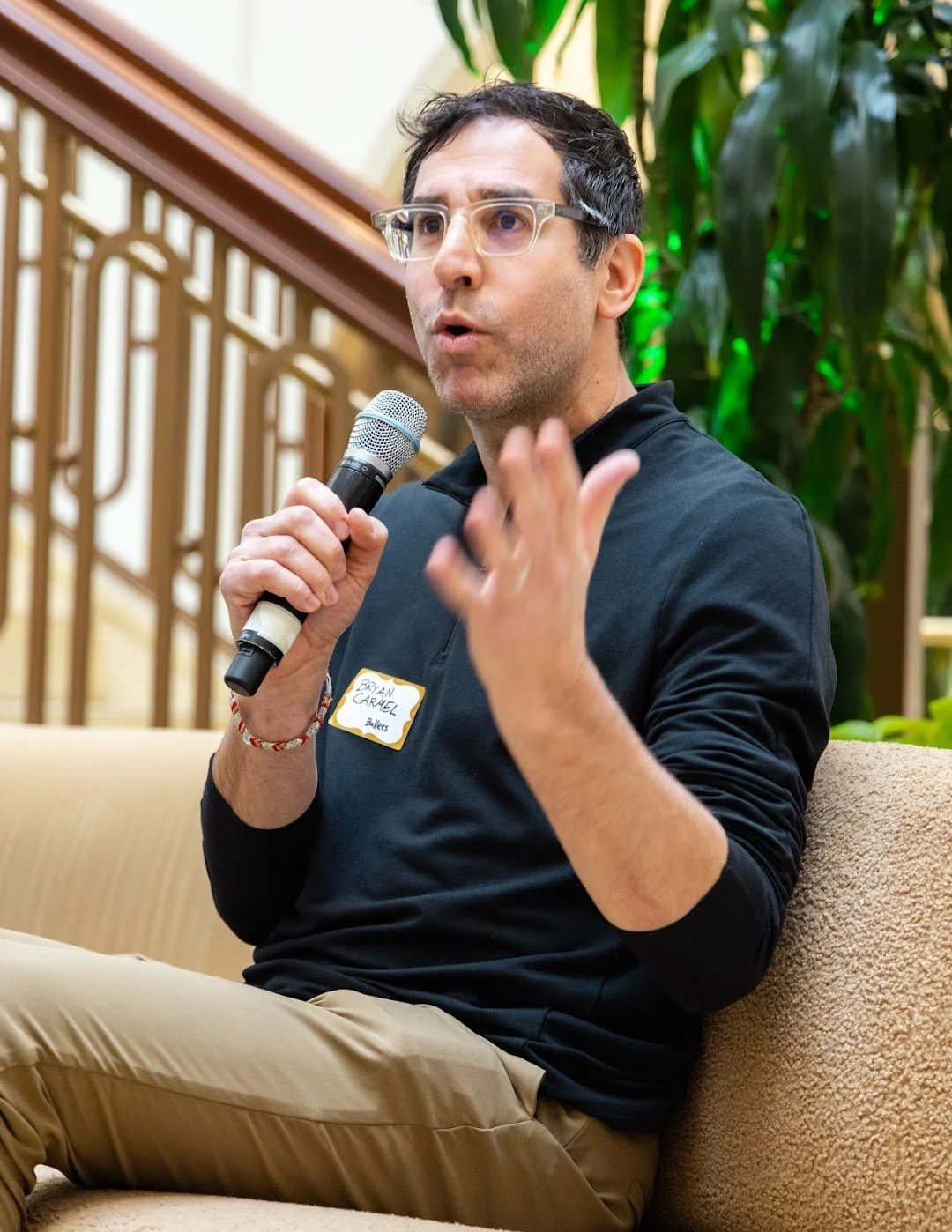
“What are the traditions we want to preserve,” Bryan said, explaining the team’s approach. “And what are the ways can we innovate and change the game so that it’s a more impactful experience?” That’s the question, isn’t it?
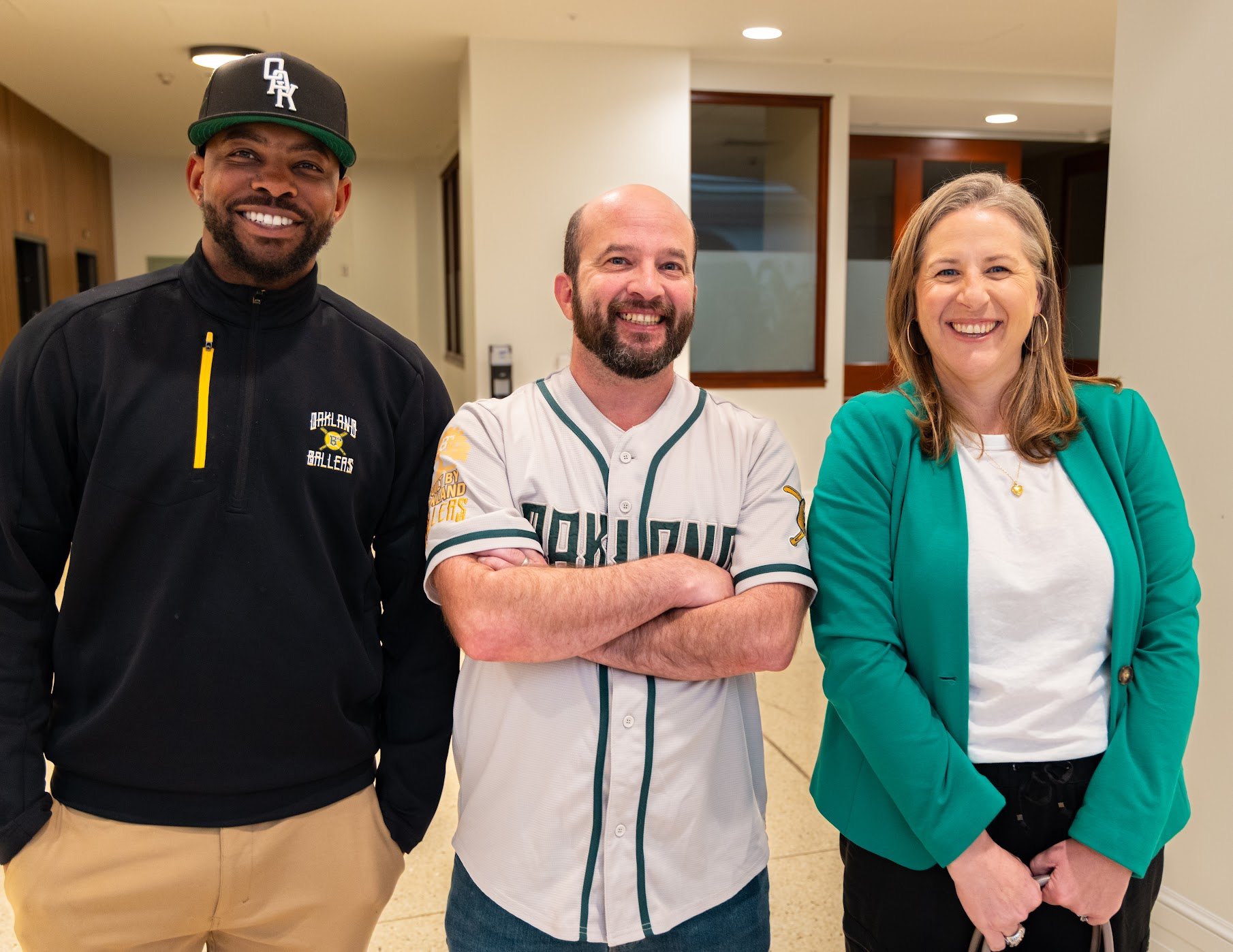
Gallery @Darrell Lavin
On the one hand, I left this summit of innovation knowing that Dispatches is a yellowing newspaper on a bus bench after the arrival of the internet, the scrolling blog gathering digital dust behind the afterglow of nuclear circus that is TikTok. This site is scribes after the Gutenberg press, the sack on the back after the cart and wheel, telegraph beeps after the crackle of radio. But Dispatches is people writing about people. It’s just me, just you, this Town and this team. That, I think, matters.
And I also continue to feel that this team, for all its embrace of the new, is steadfast in that oldest of devotions to its people.
Paul talked about the tech’s surprising re-centering of experiences over possessions. With so much content at our fingertips, being there—being able to touch the real thing, being a part and producer of that thing rather than just a consumer—matters. “Your presence is mandatory and it’s meaningful,” Bryan said toward the close. “The fact that you were there in the ballpark really matters.”
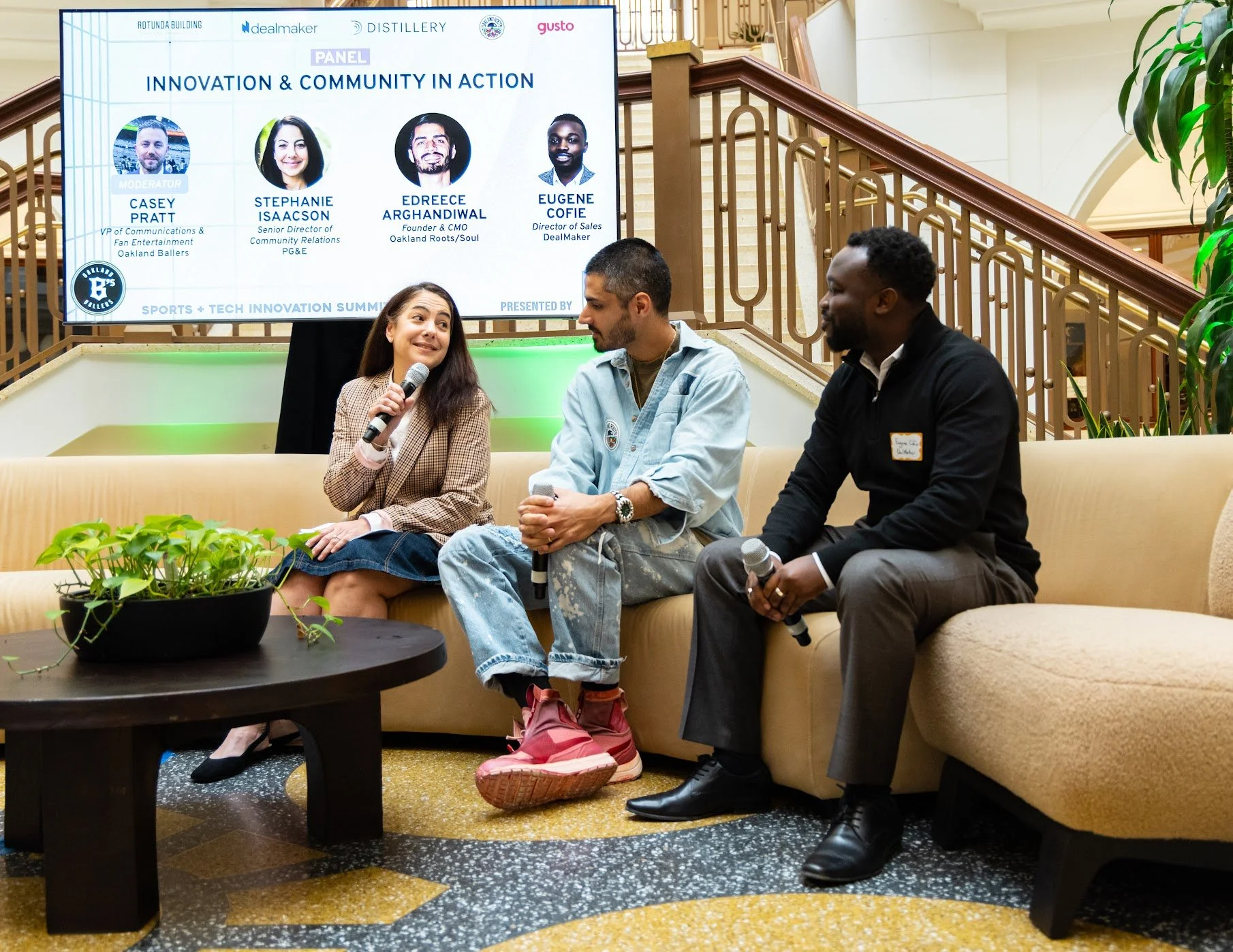
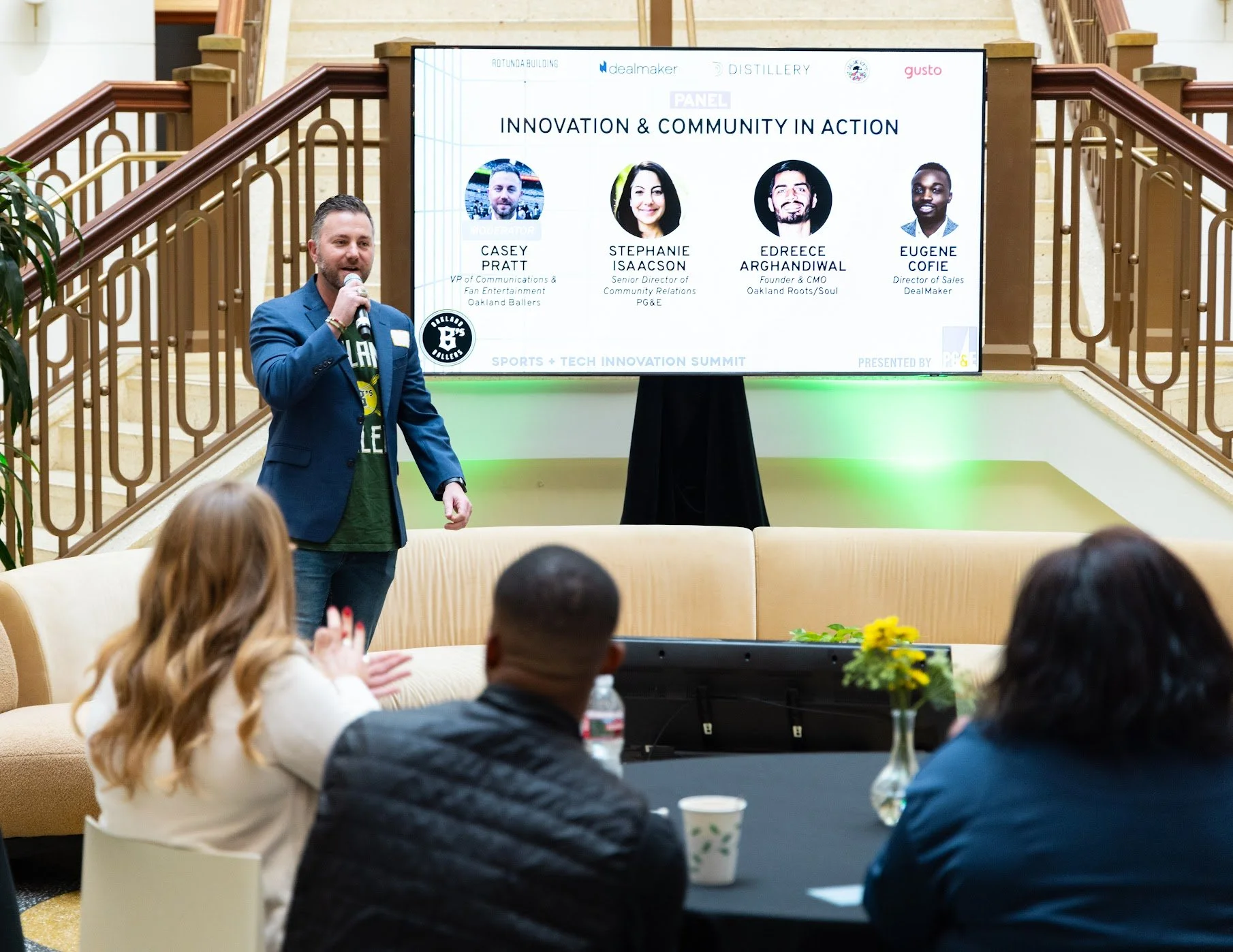
When our Casey Pratt led the first panel, the longest of the day, with Edreece Arghandiwal, the founder and CMO of the Roots and Soul, and Eugene Cofie of Dealmaker, he reminded everyone present that they were allies for the greater good of Oakland. Tech is here, our teams we love are here, the Super Bowl and World Cup are coming. When he asked Stephanie Isaacson of PG&E why Oakland, why now, she said without hesitation, “Why not Oakland?”
The day came in many ways full circle from where we started, with our jokey AI in the intro video realizing in real time what the B’s are all about: a block party and a startup and a family reunion all in one. If the team’s startup innovation helps bring the block together and keeps the party going longer, if we’re getting the family data plan all year for the reunion we look forward to every summer, then Hennything really is possible.
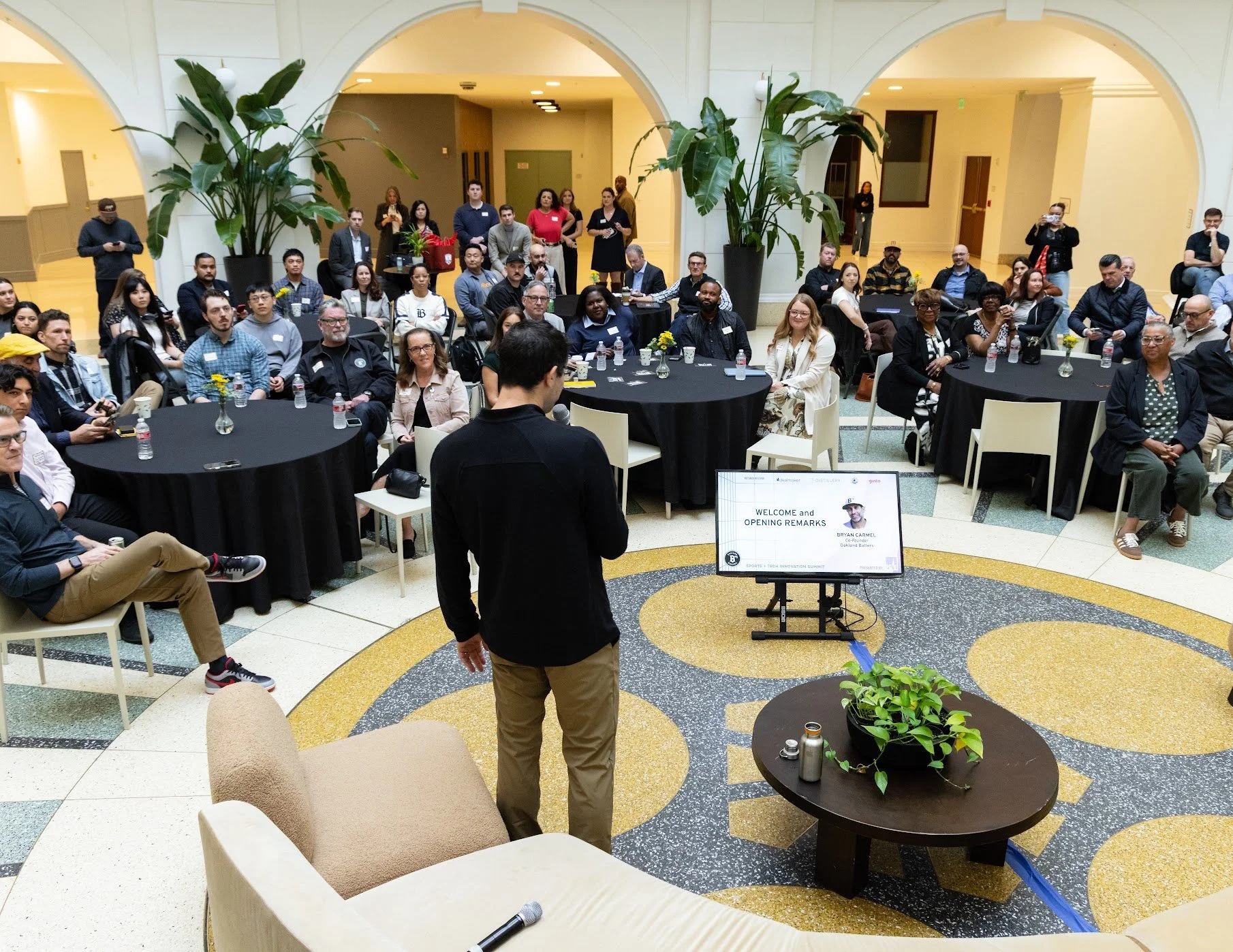
Photo @Darrell Lavin
Joe Horton is the editor of Dispatches from Raimondi.