

Glove of the Series: Yuba-Sutter Freebirds in July
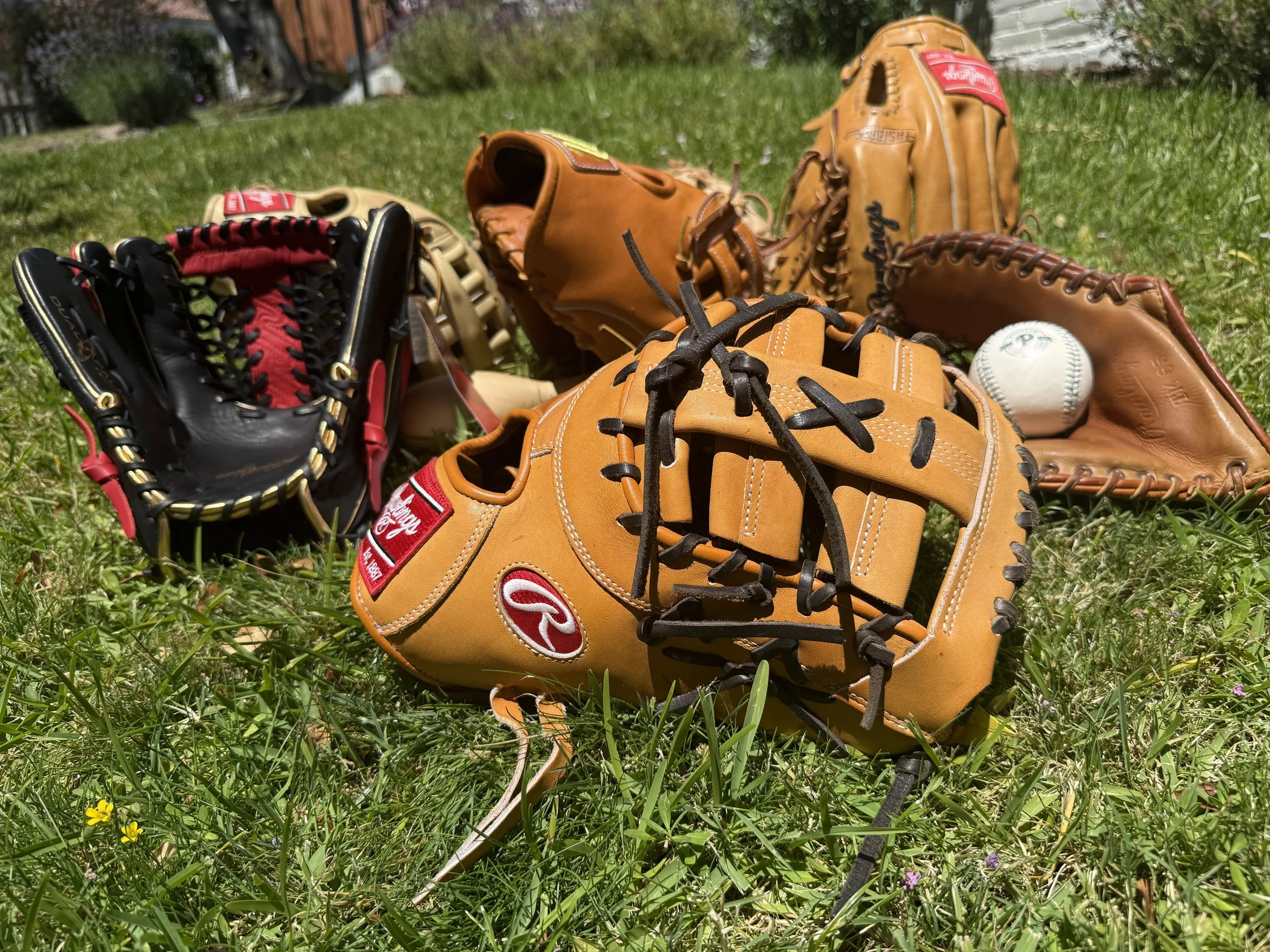
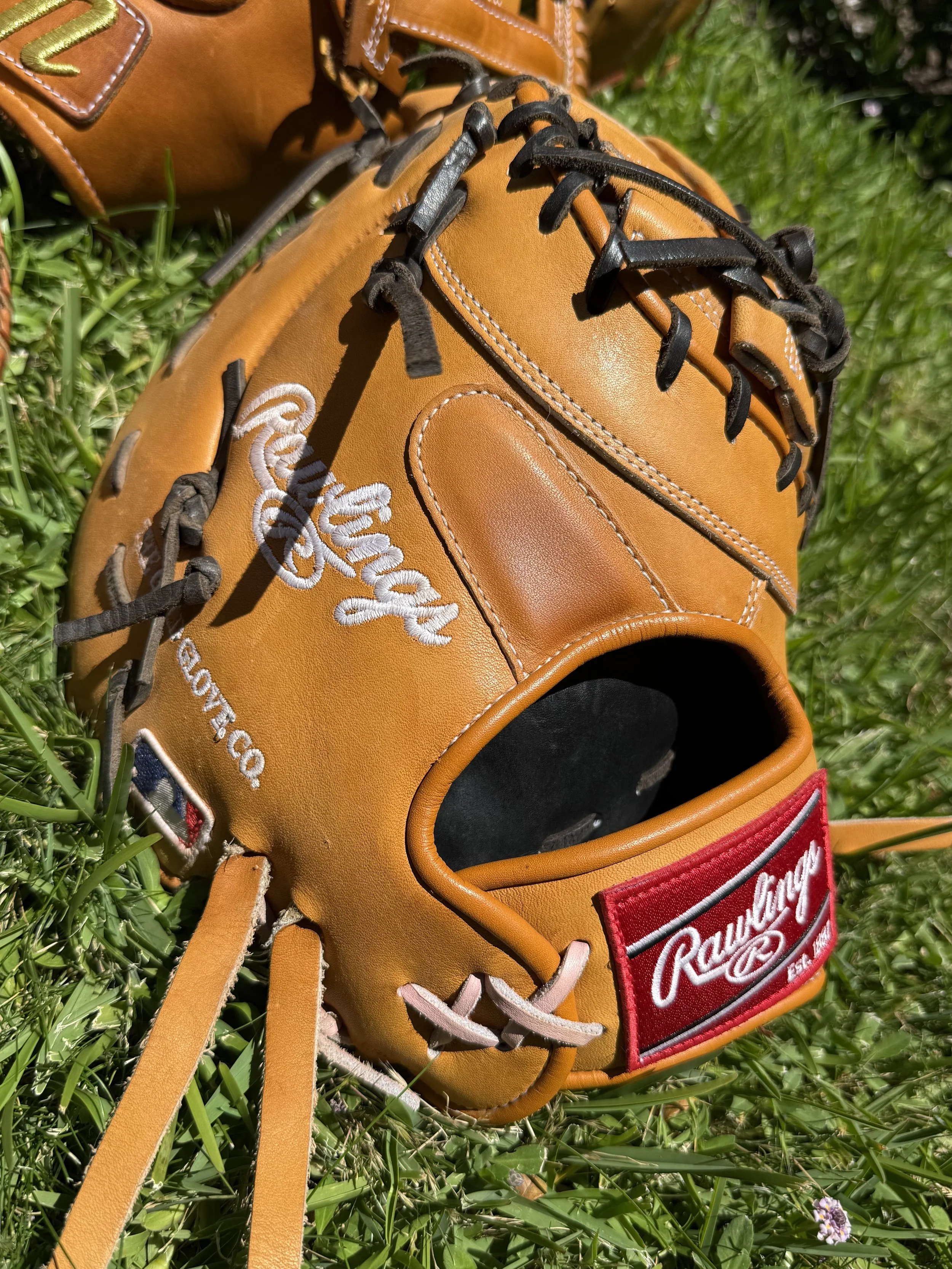
Rawlings Heart of the Hide PROTDCTT 13” 1st Base Mitt
by Kyle Robinson
One Job, One Tool: Ballers Welcome Yuba-Sutter Back to Raimondi
The Ballers return to Raimondi Park this weekend for a three-game series against the Yuba-Sutter Freebirds, a club still finding its shape in the Pioneer League. Oakland enters the weekend at 19–26, while Yuba-Sutter sits at 15–30, making this the kind of home series where the Ballers have a chance to take care of business against a team they need to keep behind them in the standings.
The schedule gives the weekend a little extra personality, too: Star Wars Night on Friday, Enter Possum metal night on Saturday, and Oakland Zoo Day wrapping the series on Sunday. A Raimondi weekend that feels very much like what the Ballers have been building from the beginning — baseball, theme nights, families, weird fun, and a ballpark that continues to feel more lived-in every homestand.
Yuba-Sutter’s current identity is new, but the baseball story behind it is not quite that simple. The franchise began as the Yolo High Wheelers in Davis in 2024, won the Pioneer League championship in its first season (knocking out the Ballers in the playoffs), moved to Marysville’s Bryant Field in 2025, and then rebranded as the Yuba-Sutter Freebirds in 2026 to better reflect the region (and the wild chickens roaming its streets) it now represents. In a very short time, this team has changed cities, names, and visual identities. Still, it carries championship DNA from that first season.
For Oakland, one of the clearest stories continues to be Jeter Ybarra. The Ballers’ first baseman has been one of the most dangerous hitters in the league, and entering this series he continues to lead the Pioneer League with 19 home runs. He talked with Dispatches recently about seeing his name atop the leaderboard. In a lineup that has produced power all season, Ybarra has given Oakland a true middle-of-the-order presence: the kind of bat that changes the way pitchers work through an inning, and the kind of first baseman who makes you think about the position a little closer. That’s where this series’ glove comes in.
For most of my baseball life, first base was somebody else’s problem.
I was a catcher. That was my position, my identity, and probably the only place on the field where I ever really felt comfortable; first base was never home. The few times I ended up over there in high school felt less like a position change and more like a dare someone forgot to warn me about.
Then adult baseball happened. The older I get, the more I appreciate that versatility is not just useful, it is necessary. (B’s catcher Jaden Collura just talked about this too.) Guys miss games, arms and bodies get sore, someone shows up late from work, someone else insists they can make the throws from shortstop even though everyone knows the truth. Eventually, you learn that you might not always be at your most confident position, and having the right equipment for the job matters, especially if the job you’re taking on is not the one you grew up doing.
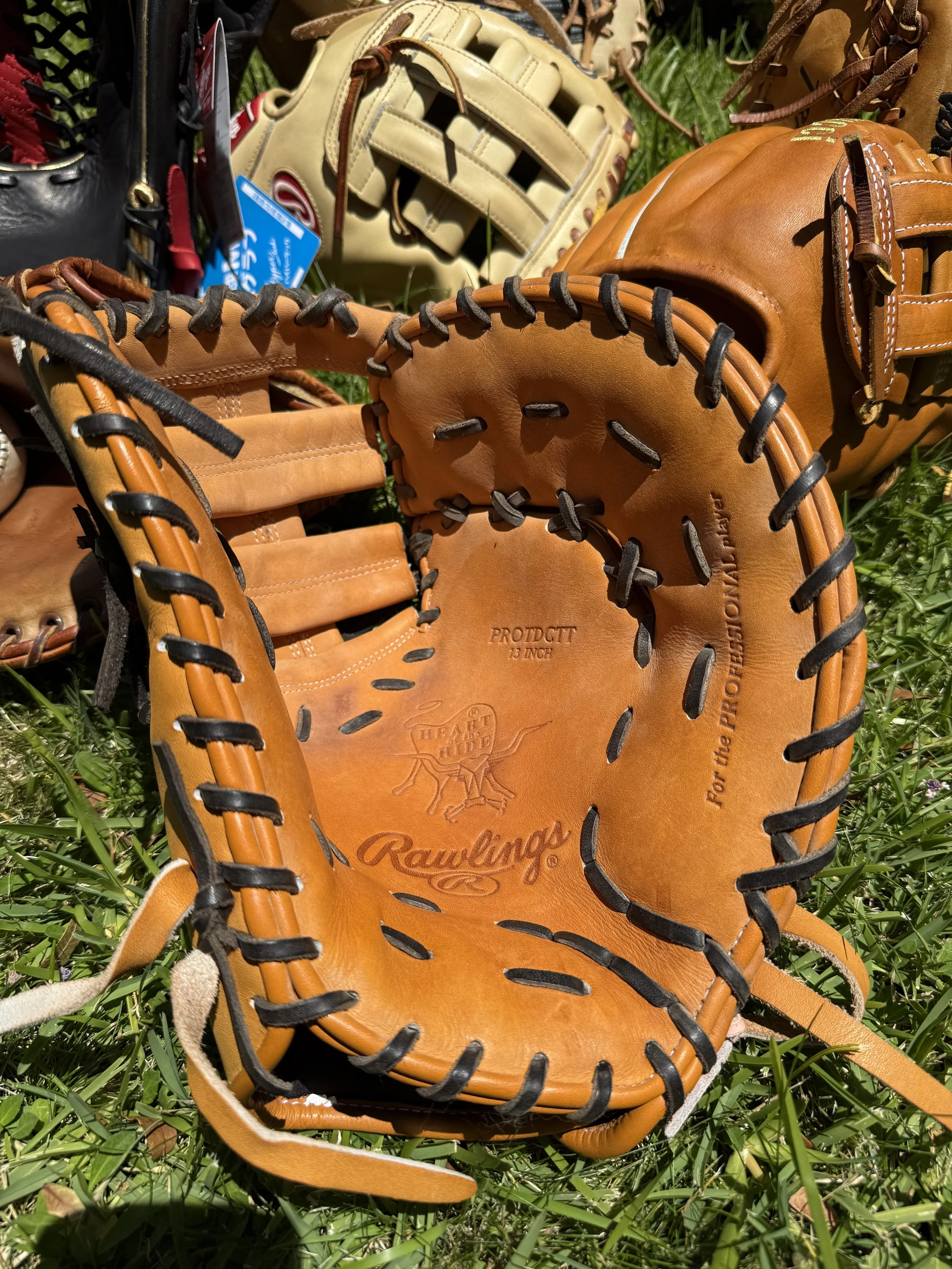
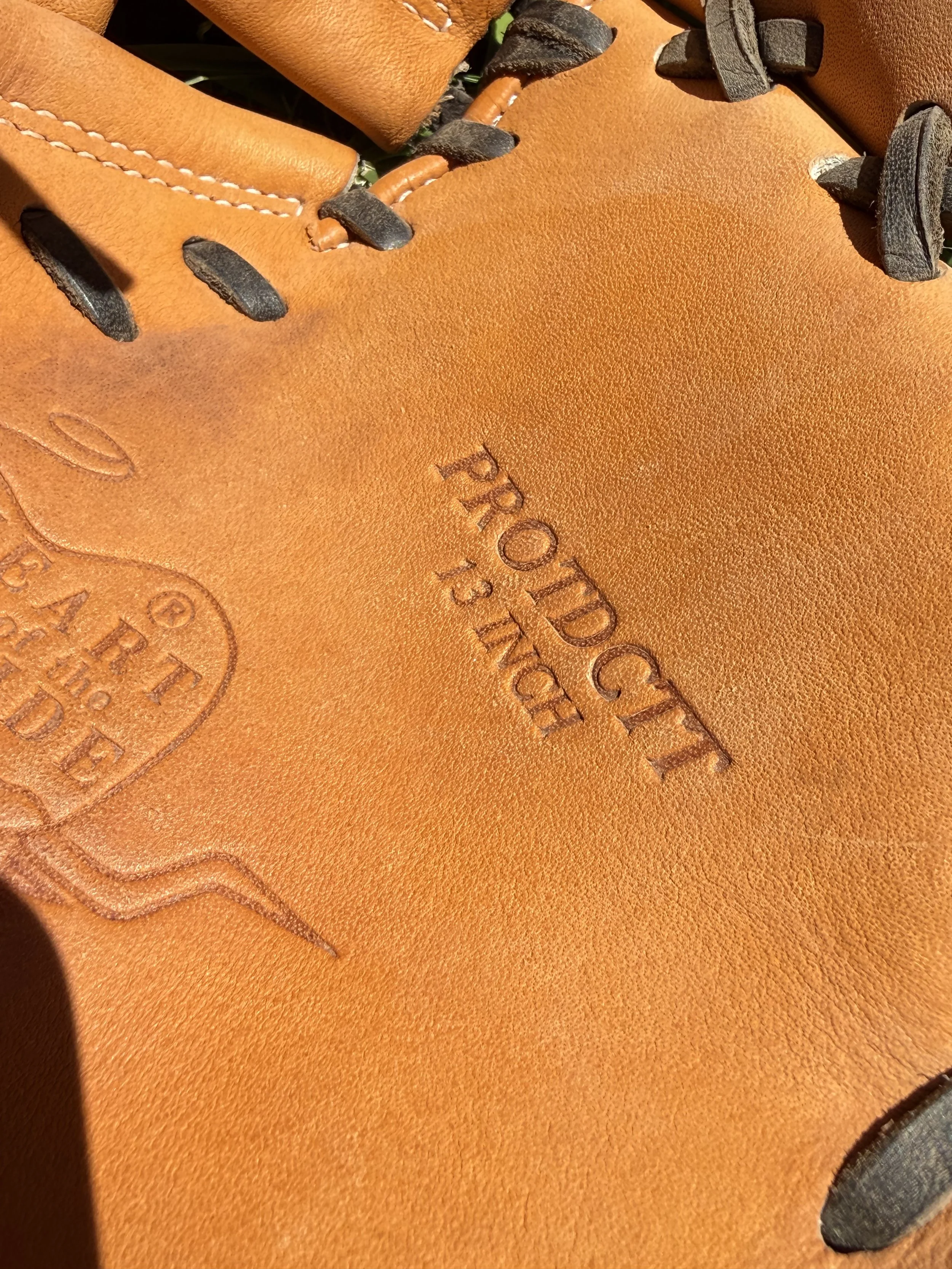
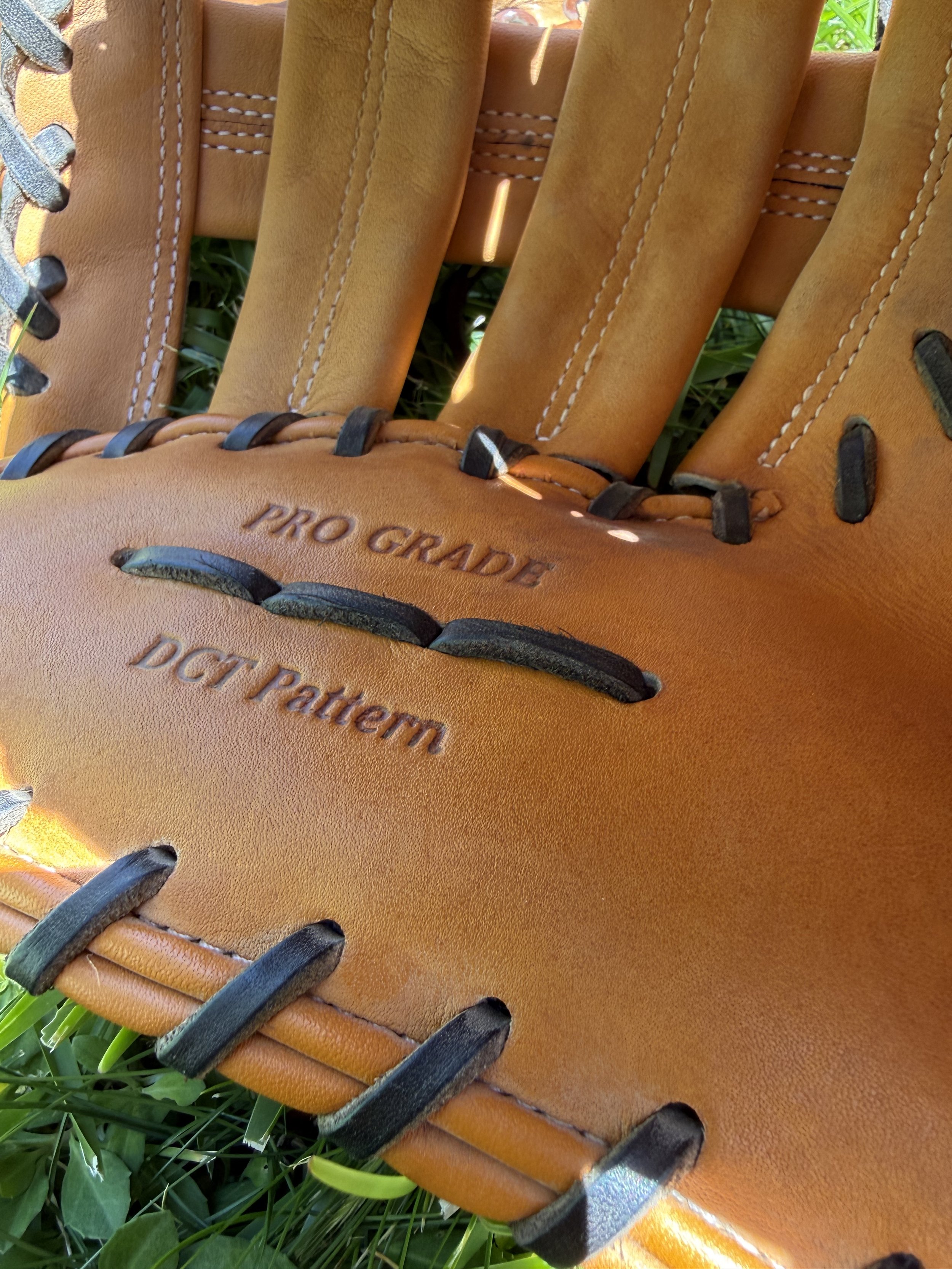
That is how I ended up with a first base mitt. First it was a throw down Gold Glove Elite, and as my innings at the position grew so did my need for a better piece of equipment. Specifically, a Rawlings Heart of the Hide DCT First Base Mitt in a very traditional color-way, so much so that the at least one of the T’s in PROTDCTT model number stand for Traditional in the Rawlings catalog.
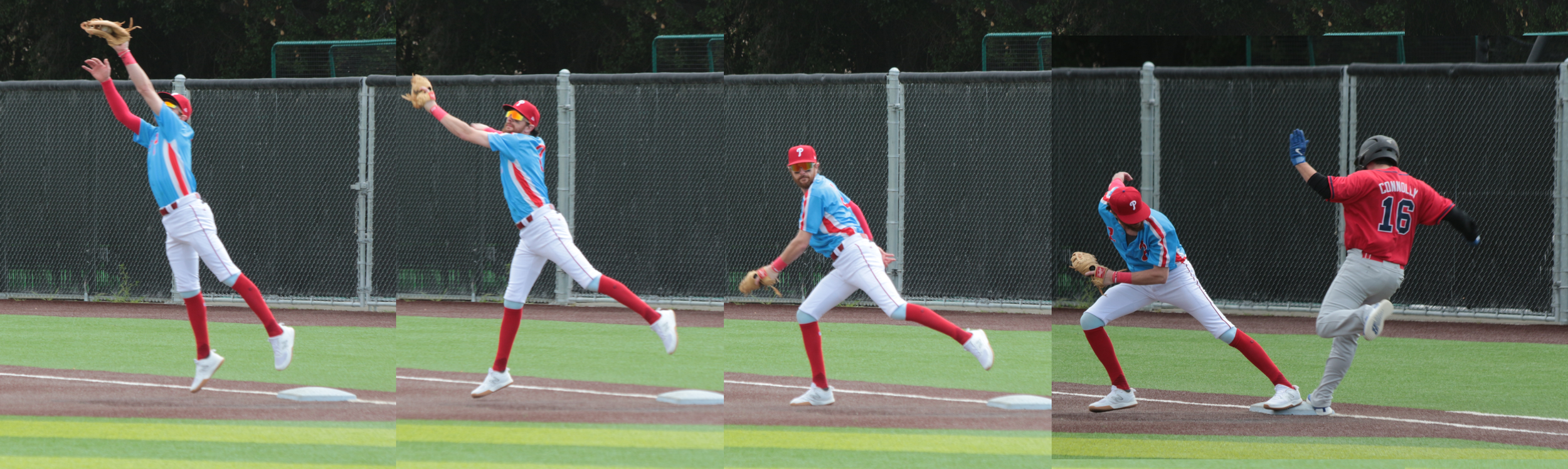
First base mitts are strange pieces of equipment when you really look at them. They are not quite gloves in the way an infielder’s glove is a glove, and they are not quite catchers’ mitts either. A first baseman needs to stretch for throws, dig balls out of the dirt, handle bad feeds from across the diamond, and give every infielder a big enough target to believe the play is still alive. That kind of job eventually demanded its own tool.
The history of the first base mitt is part of the larger history of baseball realizing that one glove could not serve every position forever. As we've discussed, those early beige gloves were mostly hand protection. Then came webbing, pockets, deeper shapes, and eventually position-specific designs. By the late 1930s and early 1940s, first base mitts were already undergoing major experimentation. Hank Greenberg famously pushed the boundaries of what a first baseman’s mitt could be, and Rawlings designer Harry Latina helped move the position forward with designs that emphasized pocket, reach, and the ability to close around the ball.
The DCT belongs to that lineage, and even the name feels like something only baseball could produce. My favorite fact about the DCT model coding translates officially as “Double Ca-Thud,” a wonderfully strange description of the sound a ball makes when it hits a mitt and settles into the pocket. It sounds like clubhouse language, which is probably why it works so well. A good first base mitt does not simply catch the ball. It swallows it. There is the first sound when the throw hits leather, and then the deeper second thud when the pocket closes around it.
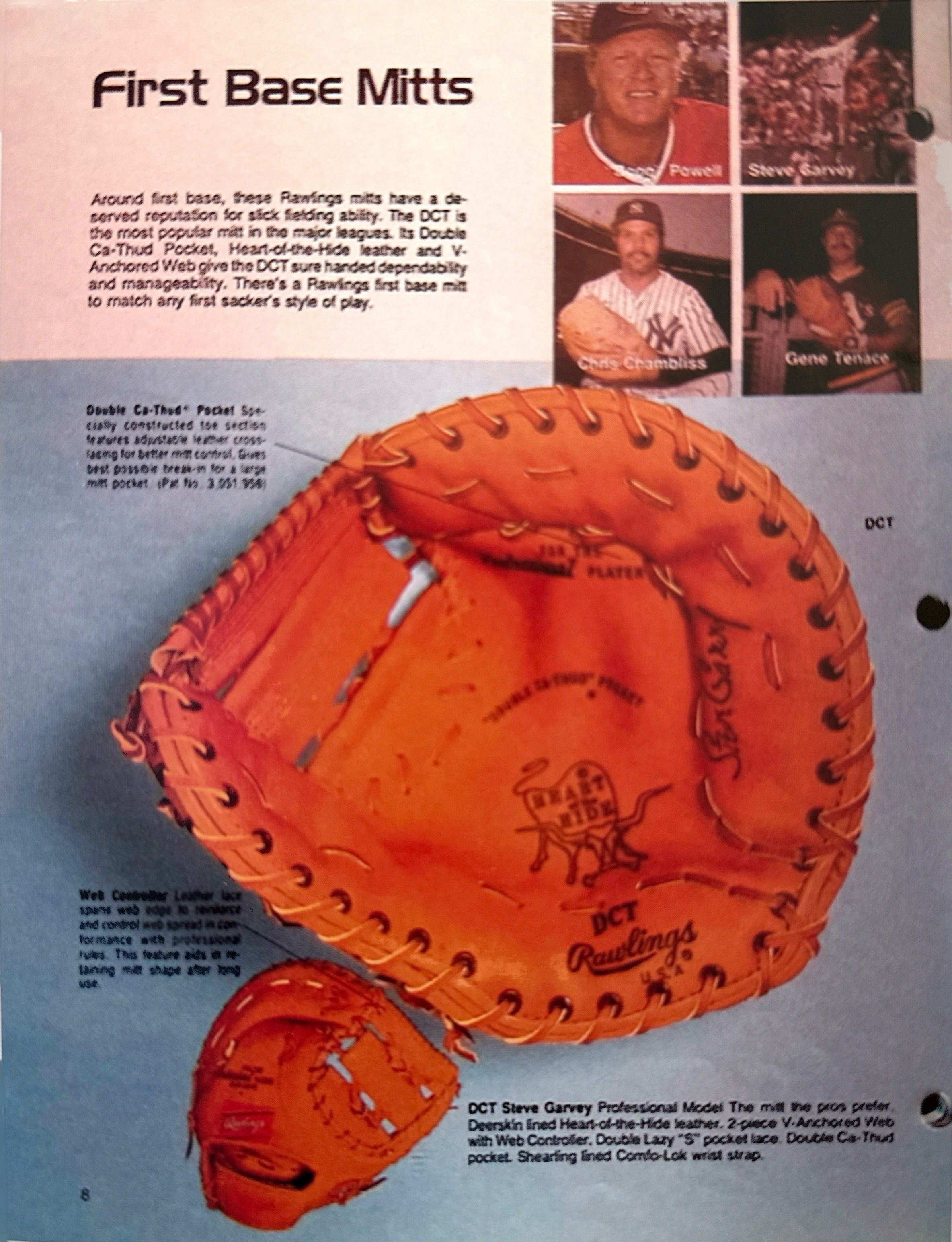
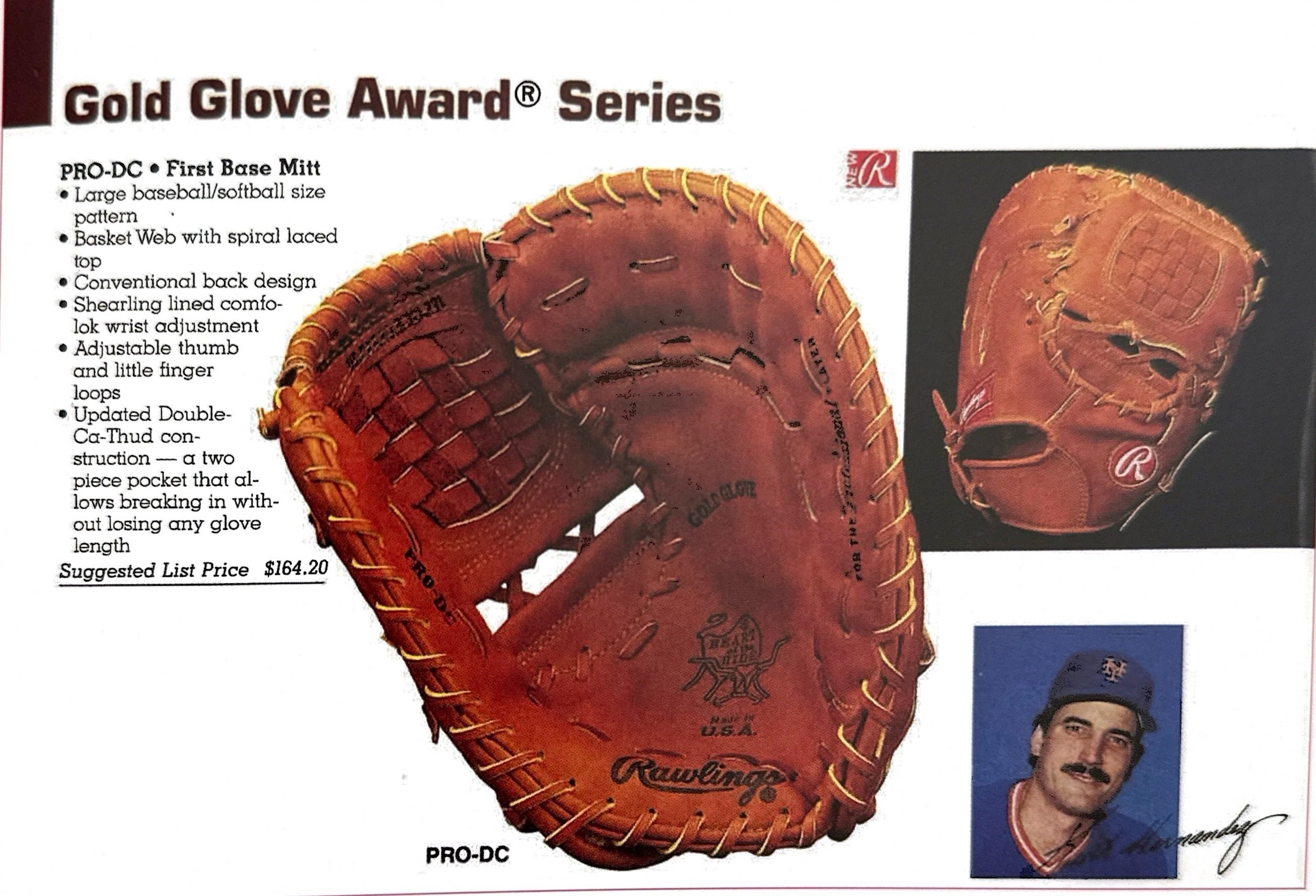
The exact history gets a little messy, as glove history usually does, but collector references point to Rawlings introducing the Double Ca-Thud pocket in the early 1960s. The description of the original Harry Latina design describes the 1962 DCT mitt as using lacing to isolate the pocket from the stiffer perimeter padding of the mitt. That detail matters because it explains the baseball problem Rawlings was trying to solve: give a first baseman a wide, flexible, forgiving pocket without turning the entire mitt into an inflexible slab of leather.
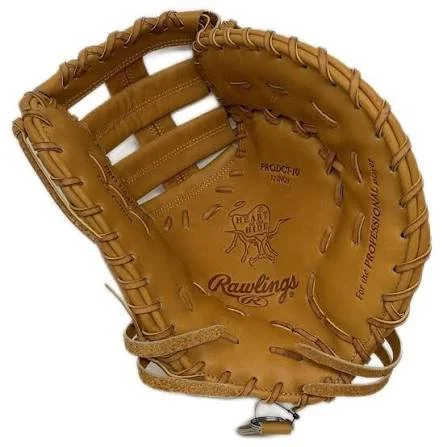
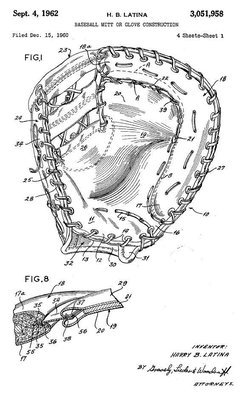
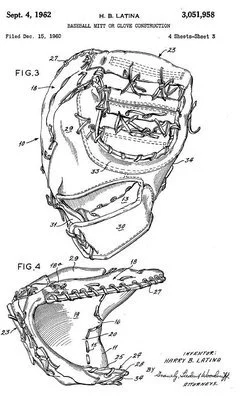
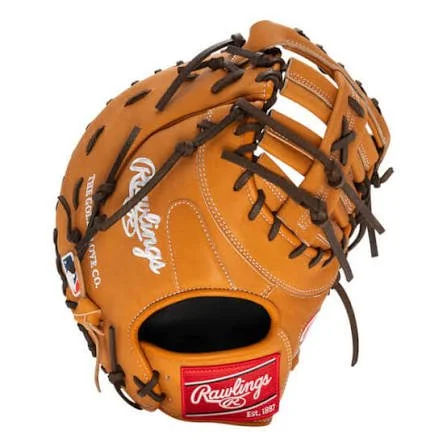
The patent has long since ran out, and many other glove manufacturers have adopted the same or similar design ideas. Rawlings is still leading the charge with today’s modern DCT offerings. Rawlings’ current DCT first-base mitts still emphasize a roomy pocket, reinforced web, and single-post double-bar construction designed to help pick throws out of the dirt. The web has changed over the years, and some of the old lacing patterns may have lost their original elegance, but the job has not changed much at all.
That is likely why the DCT has lasted.
Some glove patterns survive because they become collector favorites. Some survive because a famous player made them iconic. The DCT survives because first basemen keep needing the same basic things: reach, control, pocket, and confidence. It is not trying to be an infielder’s glove. It is not trying to be a catcher’s mitt. It knows exactly what job it was built to do. That might be the best thing about position-specific equipment. It admits something baseball players learn eventually: not every job on the field asks the same question. A shortstop needs speed. A catcher needs trust. An outfielder needs reach. A first baseman needs to make the rest of the infield look a little cleaner.
There is an old baseball truth in there somewhere: a Gold Glove first baseman can make the whole infield look like Gold Glovers. Not because he changes the throw, but because he finishes it. The shortstop gets credit for the range. The third baseman gets credit for the arm. The second baseman gets credit for the turn. But a first baseman who saves the low throw, handles the short hop, and keeps his foot on the bag has a way of cleaning up everybody else’s mistakes. The mitt reflects that. It is longer, wider, deeper, and more forgiving because the position demands it.
That idea has probably pushed my gear hobby into overdrive more than anything else. At first, I thought I needed a glove. Then I needed a catcher’s mitt. Then an outfield glove. Then an infield glove. Then another infield glove because that one played differently. Then an ambidextrous glove (more on that later), etc. etc. And obviously a first base mitt or two, because apparently adult baseball has a way of turning “I only catch” into “you’re starting at first today.”
This mitt is not subtle, and it is not pretending to be anything else. It is a first baseman’s mitt in the fullest sense—biggest size they offer: big pocket, deep shape, built to take the throws that do not always arrive cleanly. It is specialized because the position is specialized.
Which brings me to our very own Jeter Ybarra.
When your first baseman leads the league in home runs, it is easy to think about the bat first. That is understandable. Power is loud. Home runs get clipped, shared, and remembered. But the position still asks for the dirty work too: scoops, stretches, footwork, targets, and the steady assurance that an infielder can finish the play.
This weekend, the Ballers need both versions of first base.
They need Ybarra’s bat in the middle of the lineup, especially against a Yuba-Sutter club trying to claw its way back into the standings. But they also need the steady, position-specific baseball that turns innings from messy to manageable. The kind of baseball that does not always show up in a highlight reel, but absolutely shows up in wins. I cannot personally speak to what particular mitt our very own Jeter might be using these days, but I am certain that some version of “DOUBLE- CA THUD!” will rattle around Raimondi this weekend.
Kyle Robinson is a transplanted Texan with a lifelong passion for the game of baseball. Residing in Oakland with his wife Randi, their daughter India, and a menagerie of pets. When he’s not slyly convincing his wife to name their pets after legendary baseball broadcasters (e.g. our corgi Milo Hamilton Robinson) he is probably balancing parenthood with trying to cram in as much baseball as possible. Whether it’s keeping the dream alive as a weekend warrior behind the dish, or on the sideline as a coach, volunteering, rest assured he has baseball on the brain. Find him on Instagram: @krob452
