

Glove of the Series: Modesto Roadsters July 7
Back to the Beginning: Bill Doak, Modesto, and the Glove That Changed Everything
The Bill Doak Model Rawlings Fielder’s Glove
by Kyle Robinson
The Ballers return to Raimondi Park this week for another three game set against the Modesto Roadsters, a club they have already seen plenty of this season. Oakland comes home at 17–25, still searching for the cleaner, more consistent baseball that can turn a talented roster into a dangerous one. Modesto, meanwhile, arrives at 26–16 and has been one of the steadier teams in the Pioneer League, making this another useful measuring stick series as the calendar moves toward the second half.
At this point, there is not much mystery left between these teams. The Ballers and Roadsters have traded enough innings to know where the pressure points are. For Oakland, the question is not whether the offense can create problems. It has shown that it can. The question is whether the club can turn those flashes into complete games, limit opposing teams’ big innings, and make the small adjustments that separate a frustrating first half from a more promising second.
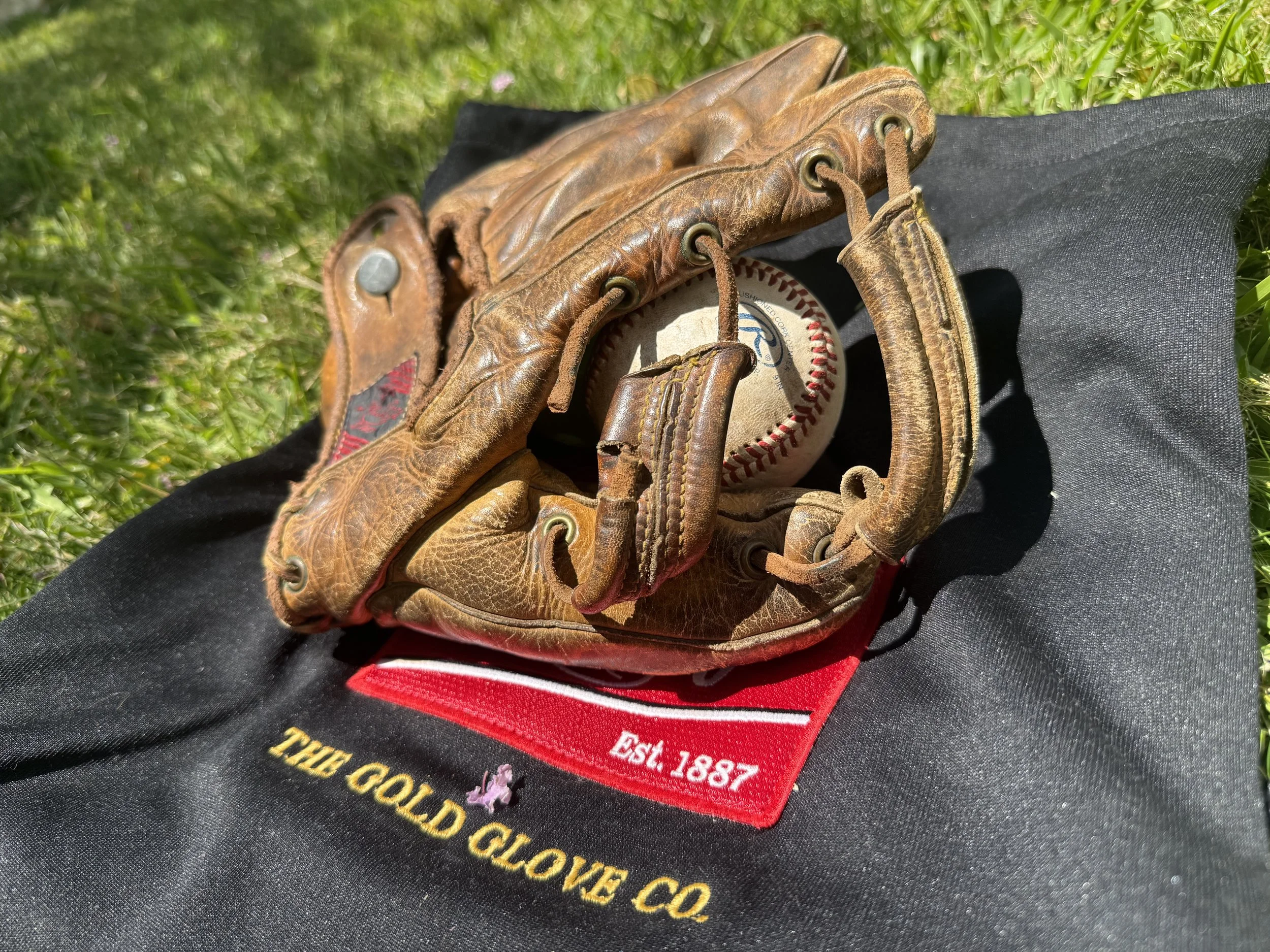
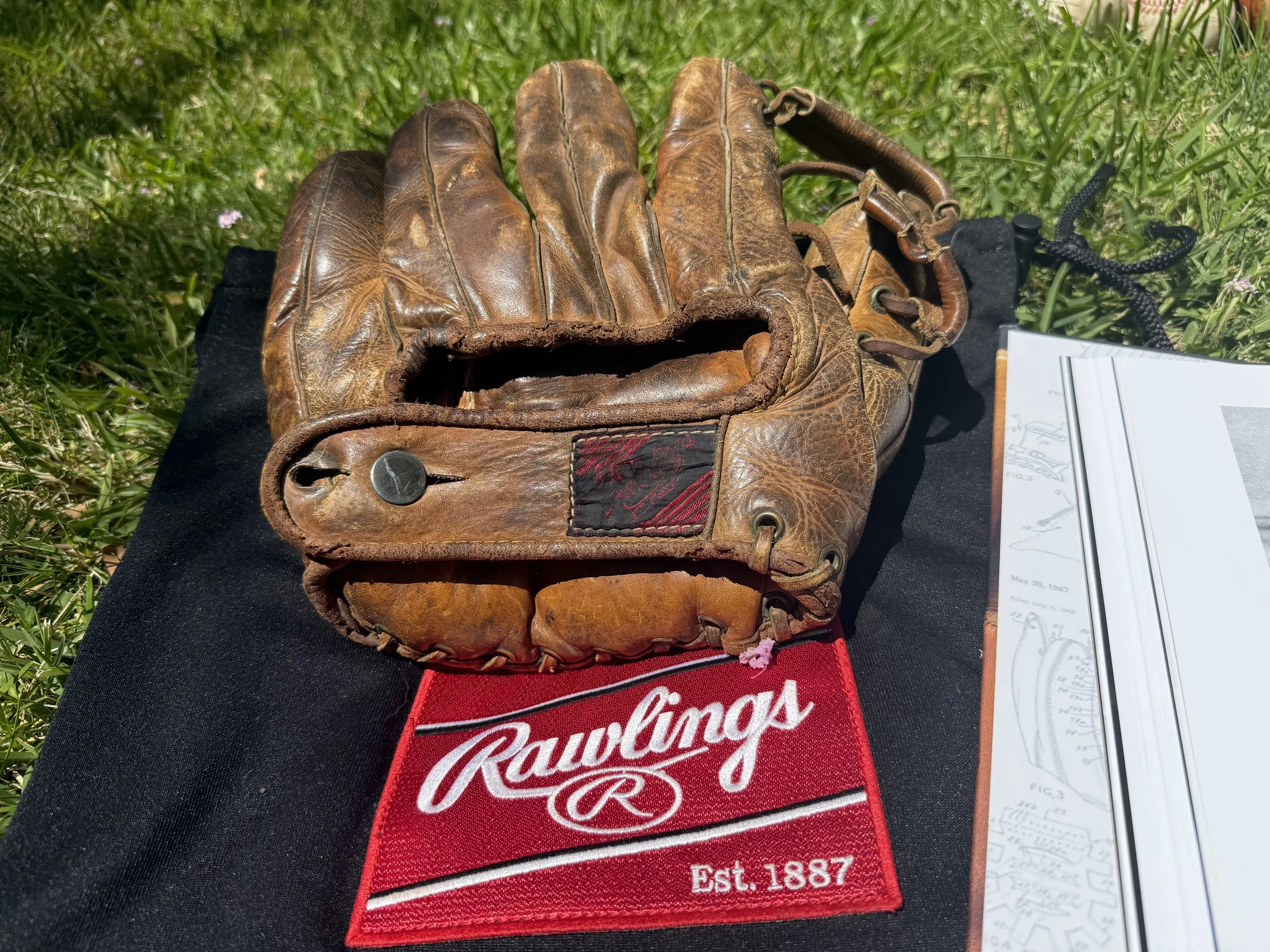
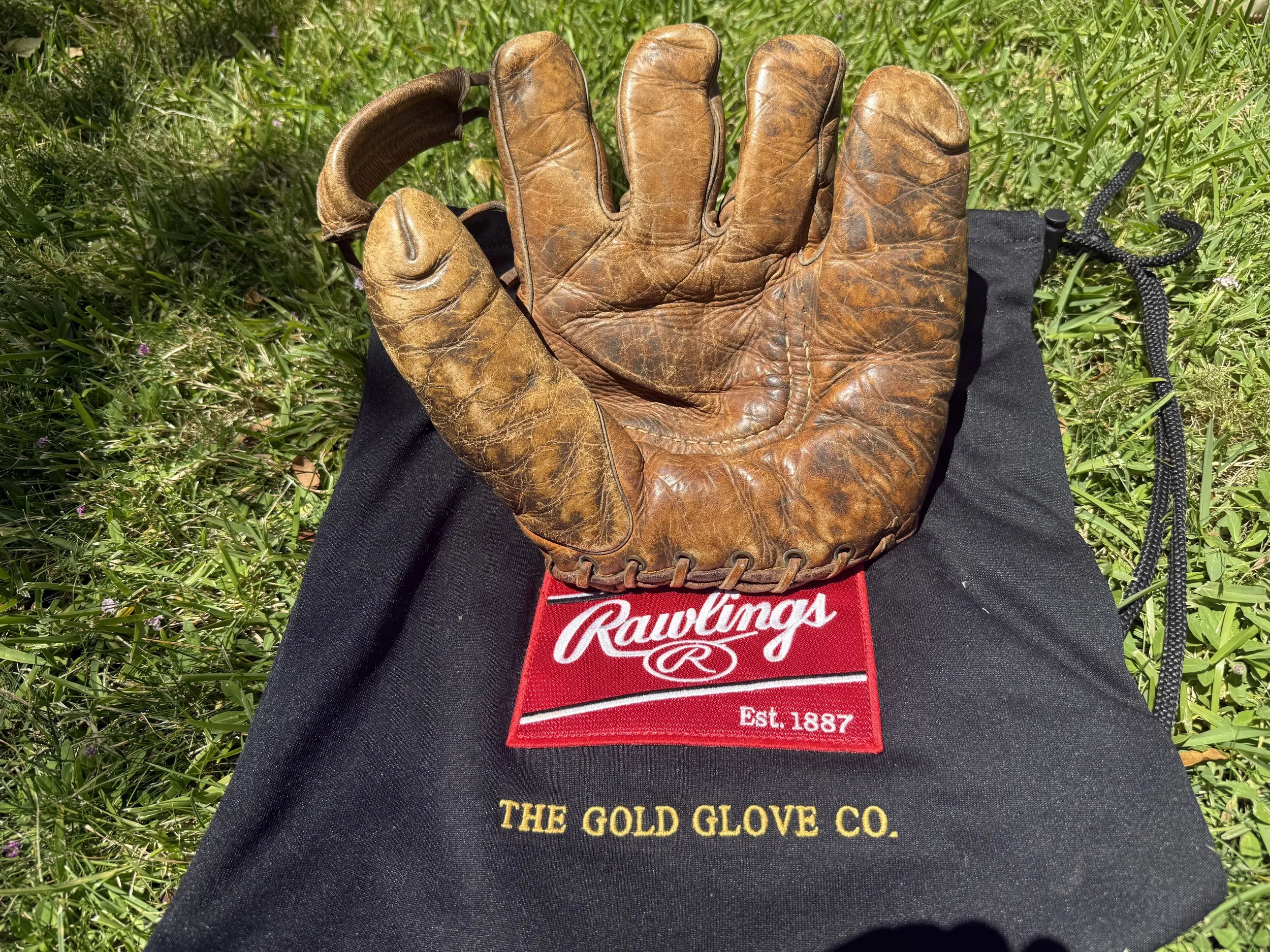
That word — adjustment — kept bringing me back to one of the oldest gloves in my collection. Not the prettiest. Not the most comfortable. Not the one I would reach for in a game this weekend. But maybe the one that matters most to the history of every glove that came after it. The Bill Doak Model Rawlings Fielder’s Glove.
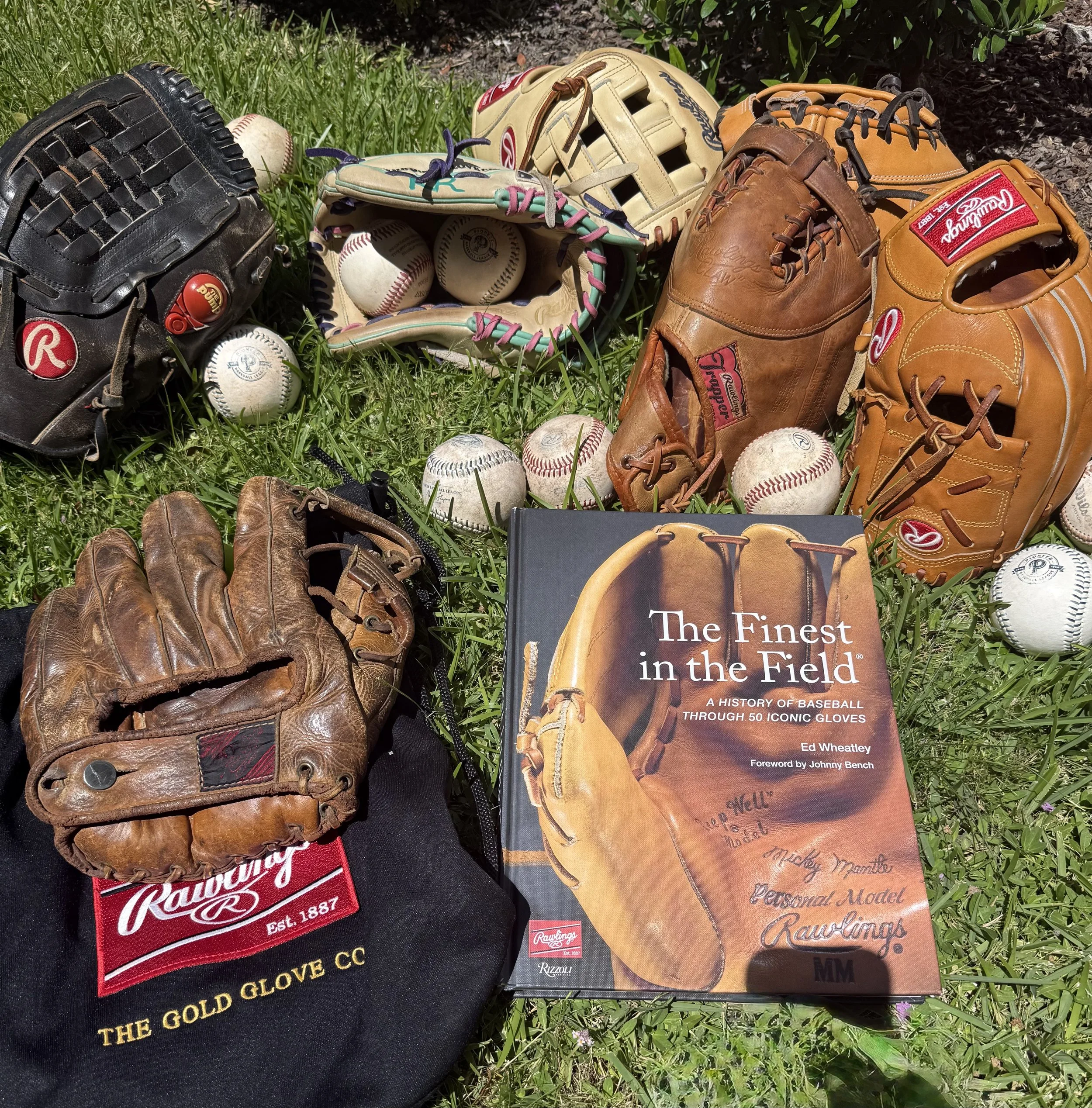
Every glove I have written about this season owes something to Bill Doak. The Trap-Eze, the TT2, the R2G, the catcher’s mitt, the Timberglaze, even the gloves sitting in my bag right now waiting for the next game or the next round of catch — all of them live somewhere downstream from the same basic idea: a baseball glove should not just protect your hand. It should help you field the baseball.
That sounds obvious now, but it was not always the case. Early baseball gloves were much closer to repurposed work gloves than modern fielding tools. Players wore them to protect bruised hands and broken fingers, not to create clean pockets, quick transfers, or reliable closing patterns. The old gloves were flat, stiff, and often treated with suspicion by players who still viewed hand protection as something less than heroic. Doak helped change that.
According to Finest in the Field, Doak worked with Rawlings production chief William Whitley on a new glove design built around a larger leather web between the thumb and forefinger. The idea was simple but revolutionary: give the ball somewhere to go. Create a deeper pocket. Turn the glove from a padded surface into something that could actually receive, hold, and control a baseball. Rawlings first sold the Bill Doak model in 1920, and the design was patented in 1922.
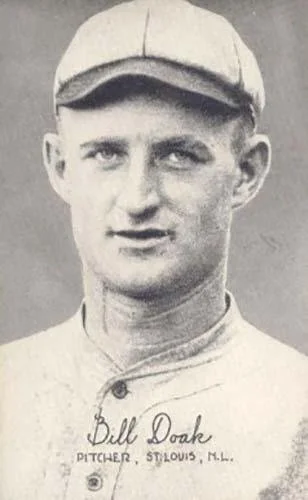
Bill Doak
Spitball pitcher Bill Doak enjoyed a 16-year big-league career that spanned from 1912-1929. Over that span, he threw 2,782 2/3 innings, and finished with a 2.98 earned run average. Twice he led the league in the category, posting a 1.72 ERA in 1914 and a 2.59 mark in 1921.
Doak reached the 20-win mark in 1920 and averaged 15 wins per season from 1914 through 1921. His 30 shutouts while pitching for the Cardinals ranks second on the St. Louis all-time leaderboard behind Hall of Fame hurler Bob Gibson.
Despite such a solid big league career, Doak is best remembered today for his innovation in baseball gloves.
In 1920 he suggested to Rawlings that they place a web in the position between the thumb and the index finger to form a pocket in which to catch the ball. The Bill Doak glove became the standard throughout the game. Doak earned more money through the sale of his innovative gloves than he did from playing baseball.
The National Baseball Hall of Fame describes Doak’s idea as one of the most important changes to glove design in the first half-century of baseball equipment history, and that feels right. Once you put a true web between the thumb and forefinger, you change what a glove can do. You change how a player receives the ball, how the glove closes, and how much control a fielder has after the catch. It was not the end of glove evolution, but it was one of the clearest beginnings of the modern glove.
The Rawlings book adds another detail I love: the Doak model became a bestseller for years, reportedly earning Doak as much as $25,000 in royalties in a single year. That is a remarkable number for a player whose lasting fame is tied less to a box score than to an idea. The glove remained part of the Rawlings line well into the middle of the 20th century, long enough to make clear that this was not a gimmick or a short-lived experiment. It worked, so baseball kept it.
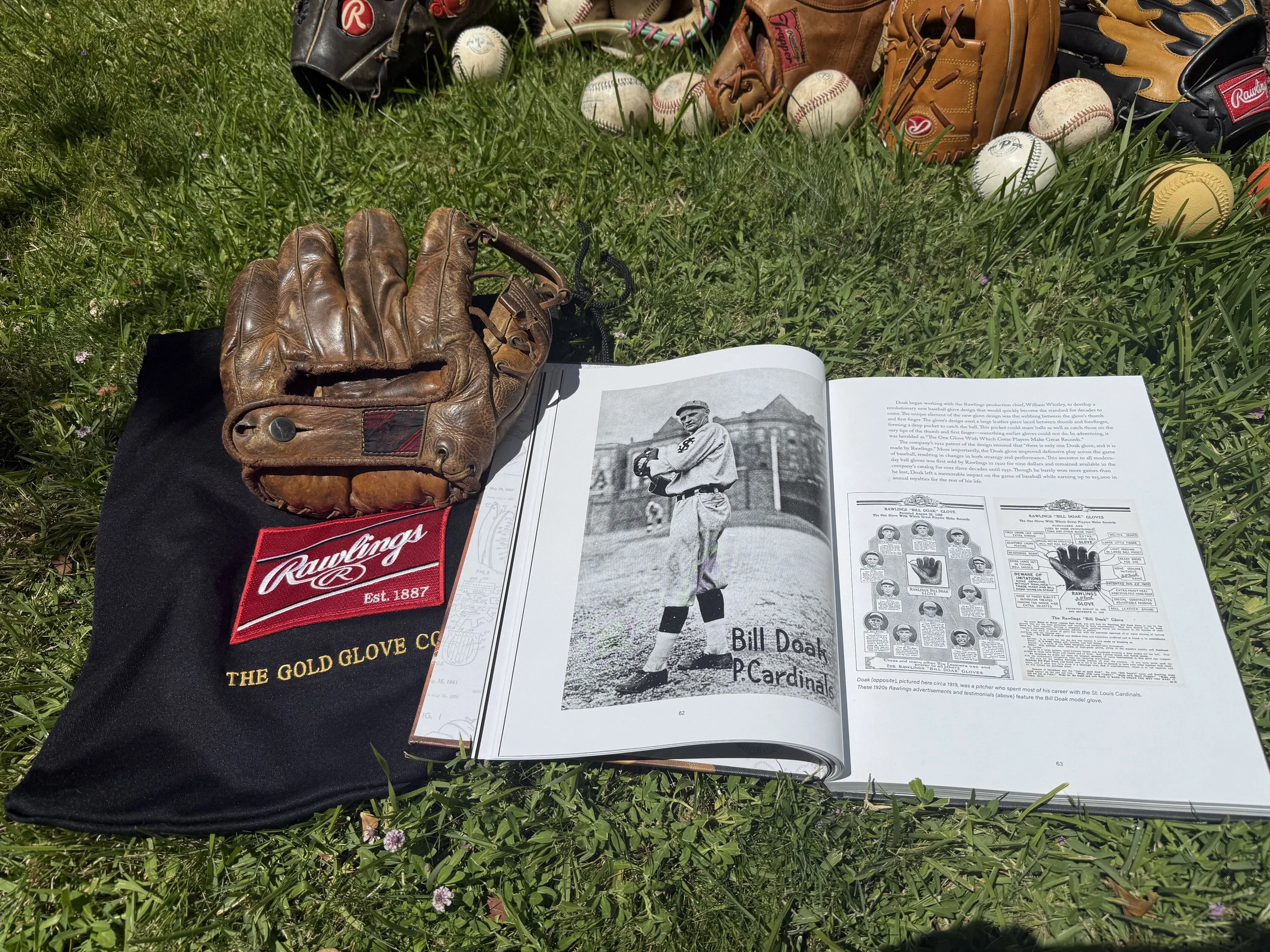
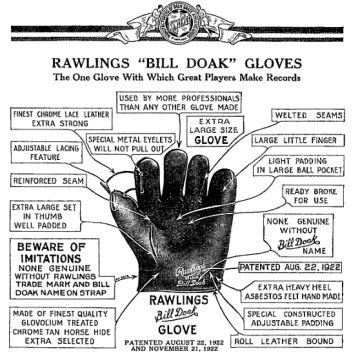
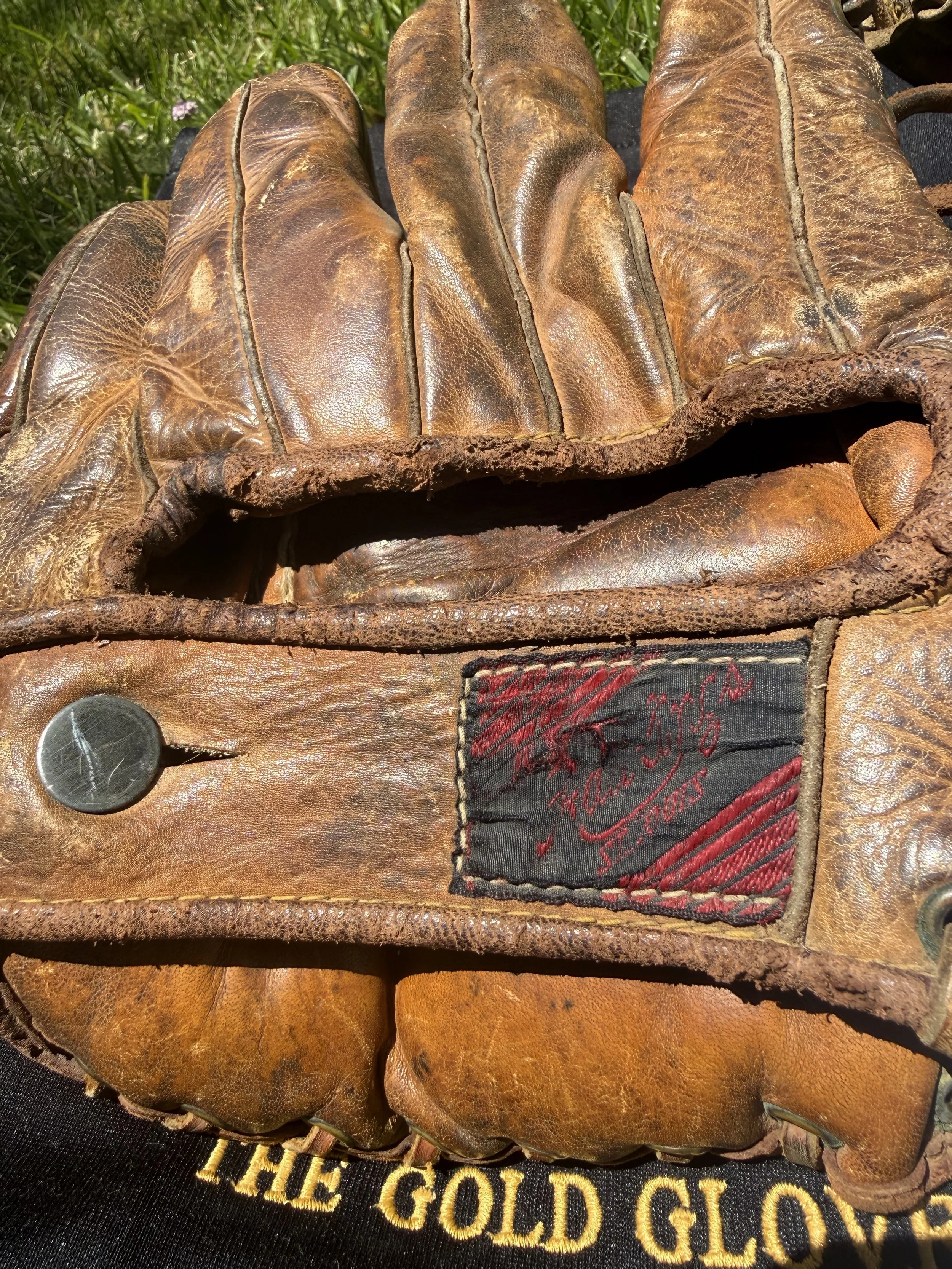
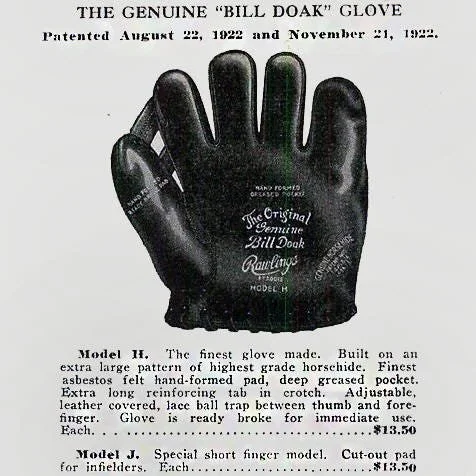
The glove I have is not pristine, and honestly, I prefer it that way. The leather has aged, the shape has softened, and somewhere along the way it picked up a broken lace from nothing more glamorous than playing catch. It is now sitting in the offseason repair queue with several other glove projects around the house, waiting its turn for cleaning, conditioning, and whatever lace work it needs to become whole again. I like that detail because it keeps the glove from becoming too precious. That might sound strange to someone who does not spend much time thinking about gloves, but to me it feels like part of the same story. These things survive because somebody keeps taking care of them.
That connects back to this week more than I expected. The Ballers are not trying to reinvent themselves overnight. They are trying to make the right adjustments: cleaner innings, better execution, more complete baseball. The same is true for any club moving from the first half into the second. You do not erase what came before. You study it, work on the weak spots, and try to give yourself a better chance the next time the ball finds you.
That is what Doak’s glove represents to me. A small adjustment that changed everything. Before the deep pockets, before the specialty webs, before the position-specific patterns and premium leather lines and game-ready models, there was a player who looked at his glove and thought it could be better. Every glove I own lives somewhere downstream from that idea.
The Ballers get another look at Modesto this week. Another chance to apply what they have learned. Another chance to start the second half with something sharper than what came before. Baseball does not always move forward in giant leaps. Sometimes it moves forward because someone pays attention to a detail everyone else had learned to live with.
Kyle Robinson is a transplanted Texan with a lifelong passion for the game of baseball. Residing in Oakland with his wife Randi, their daughter India, and a menagerie of pets. When he’s not slyly convincing his wife to name their pets after legendary baseball broadcasters (e.g. our corgi Milo Hamilton Robinson) he is probably balancing parenthood with trying to cram in as much baseball as possible. Whether it’s keeping the dream alive as a weekend warrior behind the dish, or on the sideline as a coach, volunteering, rest assured he has baseball on the brain. Find him on Instagram: @krob452
