

Glove of the Series: Rawlings RCM40 Signature Series - Lance Parrish
A mitt that’s brand new from 40 years ago, another shot at Modesto, and when it’s time to take the tags off
by Kyle Robinson
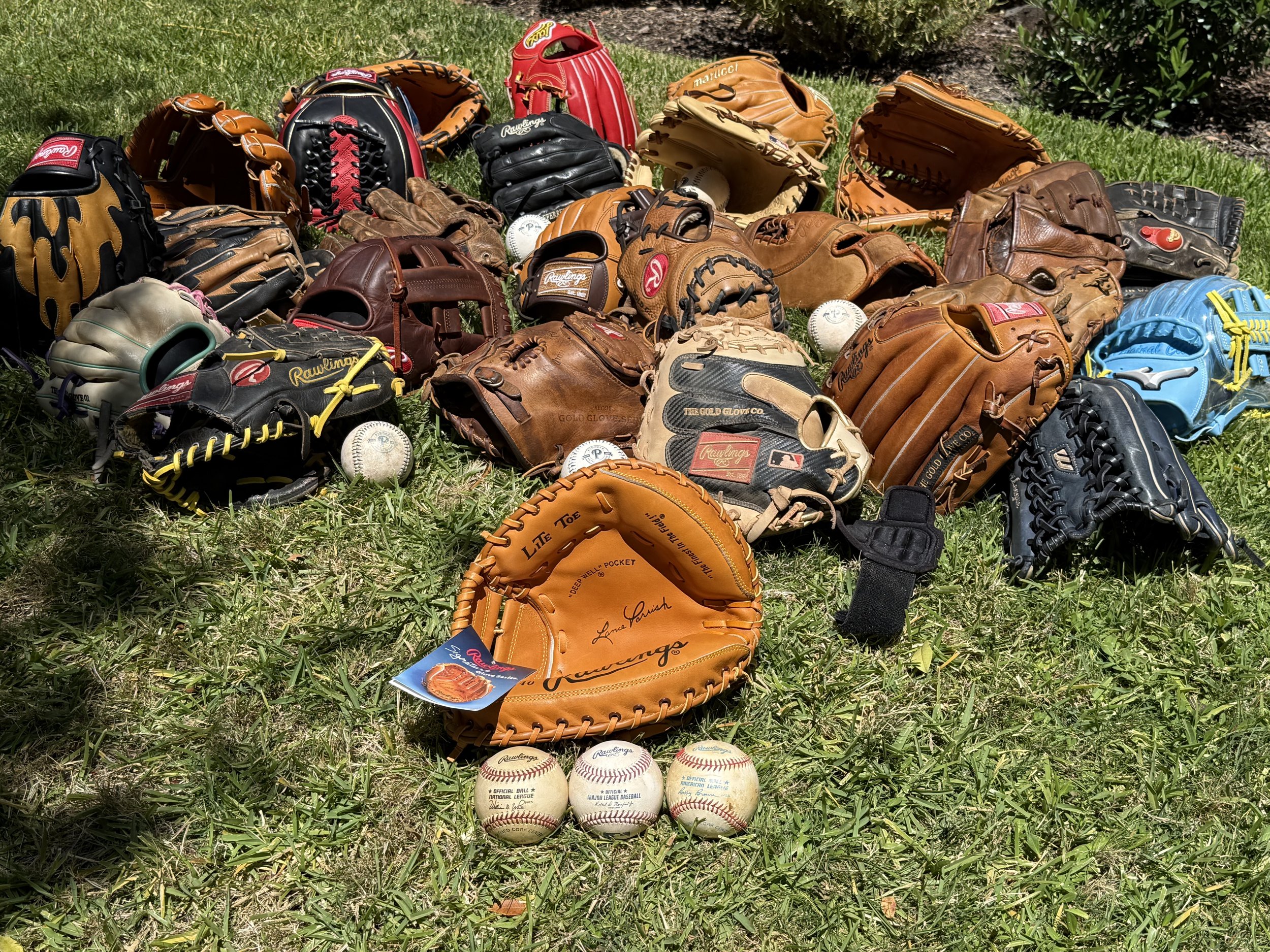
For more than four decades, this catcher's mitt has been ready to play, yet nobody ever asked it to. The tags are attached, the original Rawlings plastic bag is still with it, and the pocket has never really become a pocket, as far as I can tell, because no baseball has ever been anywhere near it.
Even the original instructions are still hanging there, explaining exactly what its owner was supposed to do next—oil the glove, let it dry, play catch, and Rawlings gets wonderfully specific about that last part: 10 to 15 minutes. Fifty to seventy throws. Enough to stretch the pocket and begin conforming the glove to your hand, then do it again; ultimately, that's how a glove becomes your glove. Nobody got around to step one with this one, so this mitt sat on a shelf, and sat, and sat some more, until all these years later, it sits on my bookshelf.
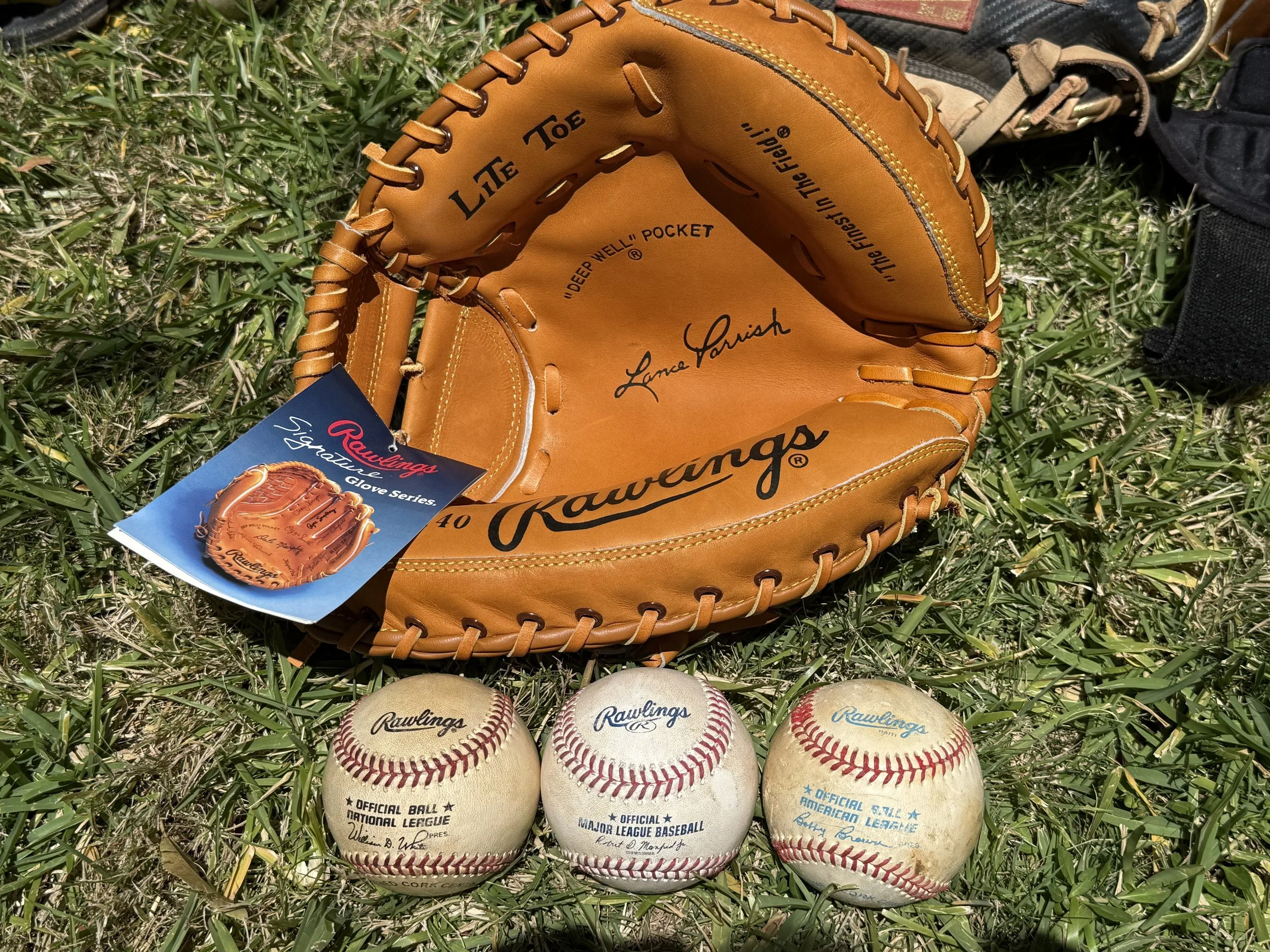
The name stamped into the palm is Lance Parrish. I knew that name long before I really knew who Lance Parrish was, back during Little League. I spent plenty of time behind the plate, and the catcher's gear usually belonged to everybody and nobody alike. You didn't arrive carrying some perfectly shaped premium mitt inside its own embroidered bag. At least I didn't.
Somebody reached into the team equipment: chest protector, shin guards, mask, and of course a pancaked old mitt. Put them on, take your position, catch. On more than a few occasions, the mitt that was dug out of that bag and handed to me had the same name stamped on the palm.
I didn't really know why that name mattered. I didn't know Parrish’s career with the Tigers, the All-Star Games, Gold Gloves, Silver Sluggers or the World Series. I knew something much more immediately useful: this was the catcher's mitt, and I was catching.
That's one of the funny ways baseball players entered our lives before the internet made everybody instantly searchable. Sometimes you knew the player first; a baseball card, your dad told you somebody was good. Sometimes a professional ballplayer became familiar because his name was stamped into a piece of communal Little League equipment that smelled like dirt, sweat, and whatever had been living at the bottom of the team bag since last season. Lance Parrish reached me through the glove before he reached me through baseball history.
Decades later, I saw this one, similar enough to those old mitts to immediately bring the name back, but this one had lived a completely different life. The Parrish mitts I remember survived in my memory because kids used the hell out of them, this one survived physically because apparently nobody did. I knew I had to have it.
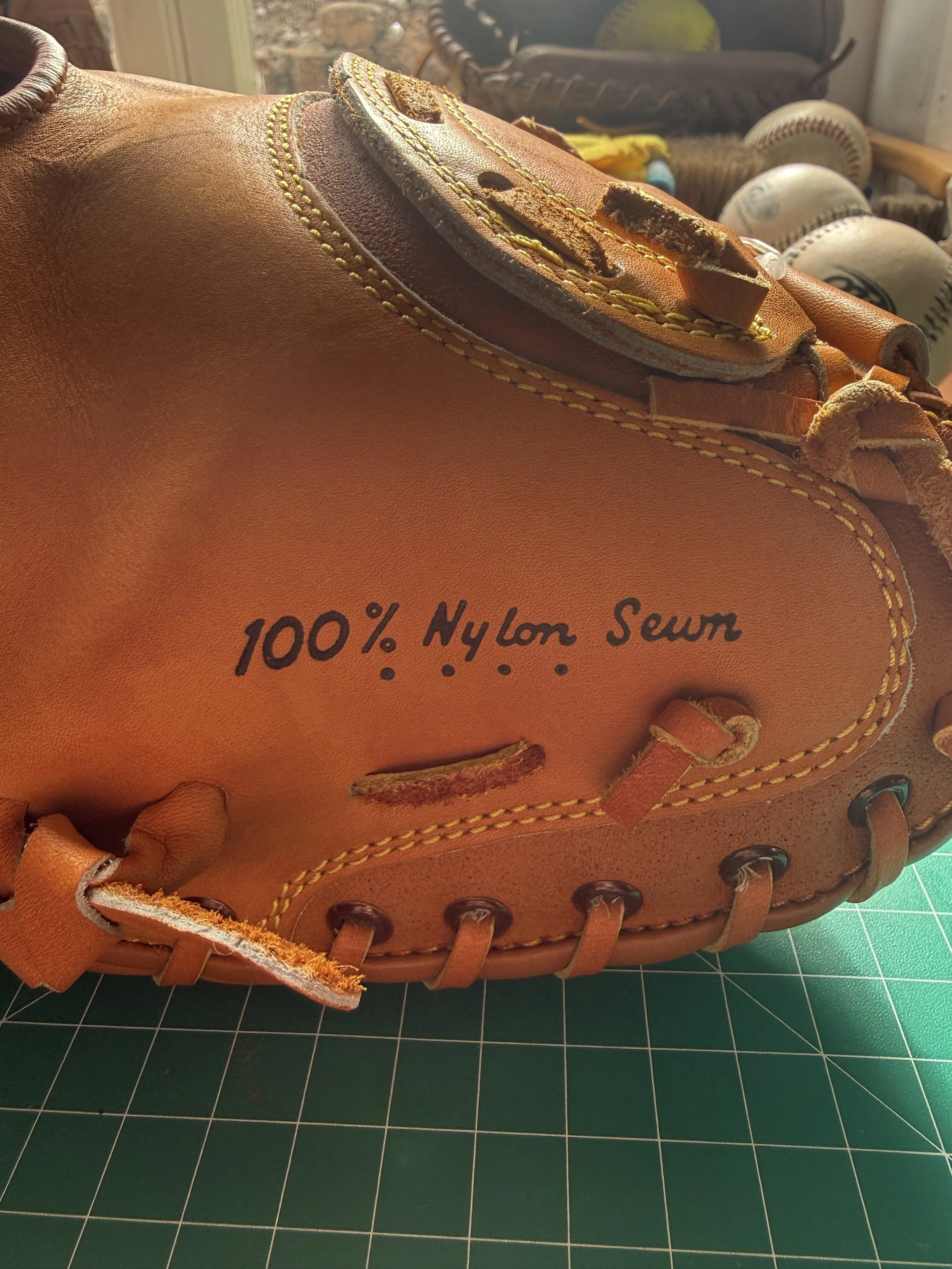
This particular mitt is a Rawlings RCM40 REG, a Lance Parrish signature model, and the palm is a little time capsule of Rawlings terminology; Lance Parrish. Deep Well Pocket. Lite Toe. The Finest in the Field. Turn it over and there is another marking that sent me down one of those glove-history rabbit holes that have become increasingly familiar. Beneath “100% Nylon Sewn” are four tiny dots.
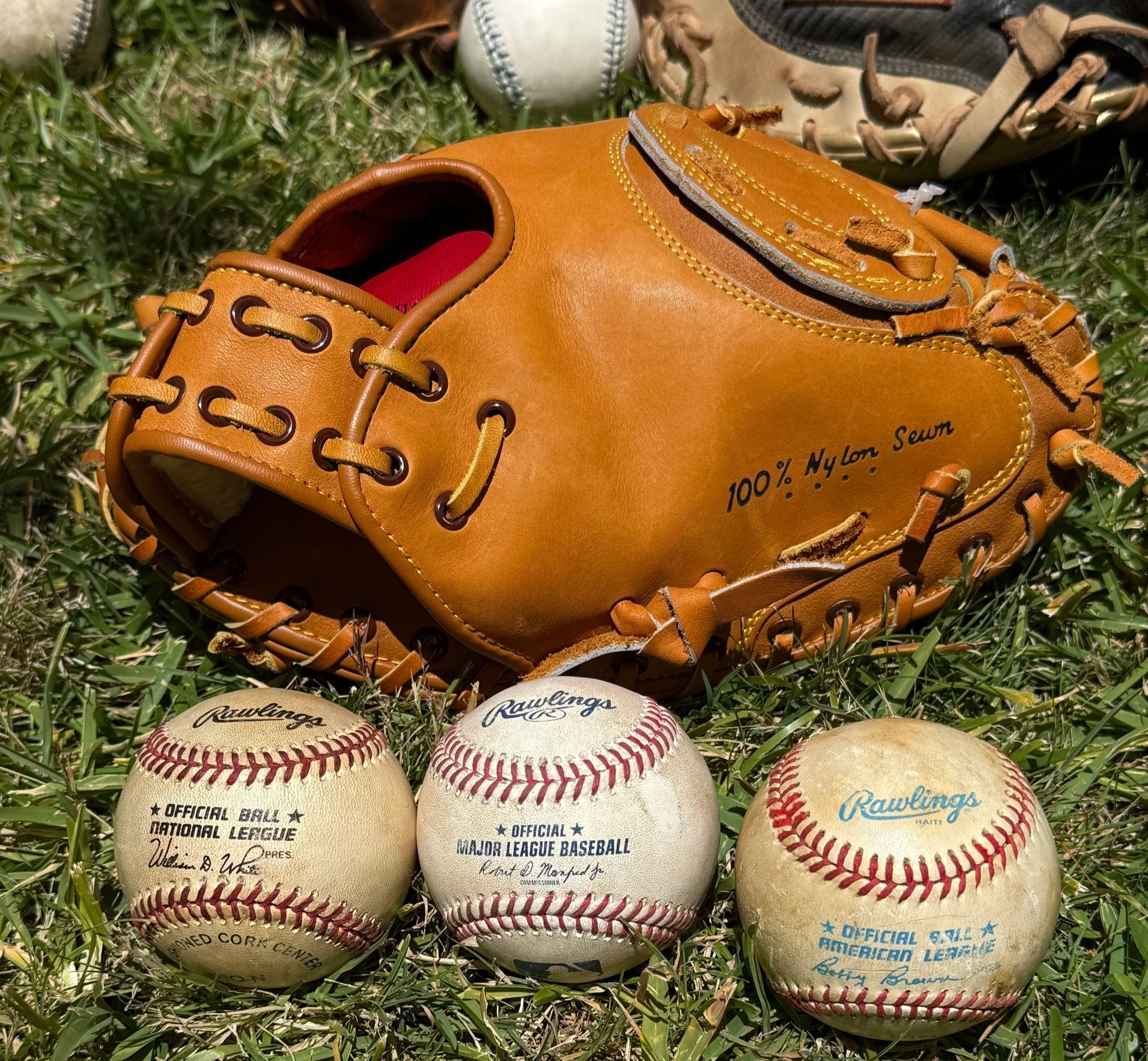
Apparently, those dots matter.
Rawlings used a repeating dot-code system during this era for dating and inventory purposes. Under the commonly documented sequence, four dots point to either 1974 or 1979. 1974 can essentially be dismissed for a Lance Parrish signature model. Parrish was still a teenager and had only just been drafted by Detroit that year.
1979, however, makes sense. Parrish had made his major-league debut with the Tigers in September 1977 and established himself as Detroit's primary catcher the following season. Somewhere in between, in one of those wonderfully strange details that baseball biographies occasionally produce, Parrish even spent part of the winter of 1977 working as Tina Turner's bodyguard.
Does that absolutely prove this RCM40 was manufactured in 1979? No way.
I've learned better than to expect an old glove to surrender every one of its secrets that easily. I haven't found the Rawlings catalog page or factory record that closes the case. But based on the four-dot code that others have shared their knowledge on, Parrish's career timeline, and everything else I've been able to piece together, 1979 is the guess I’m going with.
I've learned to appreciate that while collecting old gloves—every one of these things seems to keep at least one secret. Catalogs disappear, manufacturing systems change, stamps fade, stories often get repeated until nobody remembers exactly where they began. Sometimes, four decades later, three dots in a piece of leather are all you have left. That's part of the fun.
What I do know is that this mitt is older than I am, and there are plenty of others that hold that distinction, but this one is special. Before I entered this world—before I ever stepped across the white lines of a Little League field, squatted behind home plate or had somebody hand me another Lance Parrish mitt from an equipment bag—this one was already somewhere waiting. Tags and instructions still attached, pocket untouched, ready.
The tags might actually be my favorite part. The break-in card carries the name of Bob Clevenhagen, Rawlings Master Glove Designer, and walks the new owner through the aforementioned process; apply Glovolium, let it dry, work the glove, then play catch for those 50 to 70 throws. Another Rawlings insert explains what a player should look for when choosing a glove: fit, quality, size and design. And then comes the line that makes this particular survivor almost absurd, with Rawlings telling the buyer: “Most importantly, your glove should feel like a natural extension of your hand.”
This mitt has spent more than forty years being nobody's extension. It remained exactly what Rawlings sold: potential, with instructions.
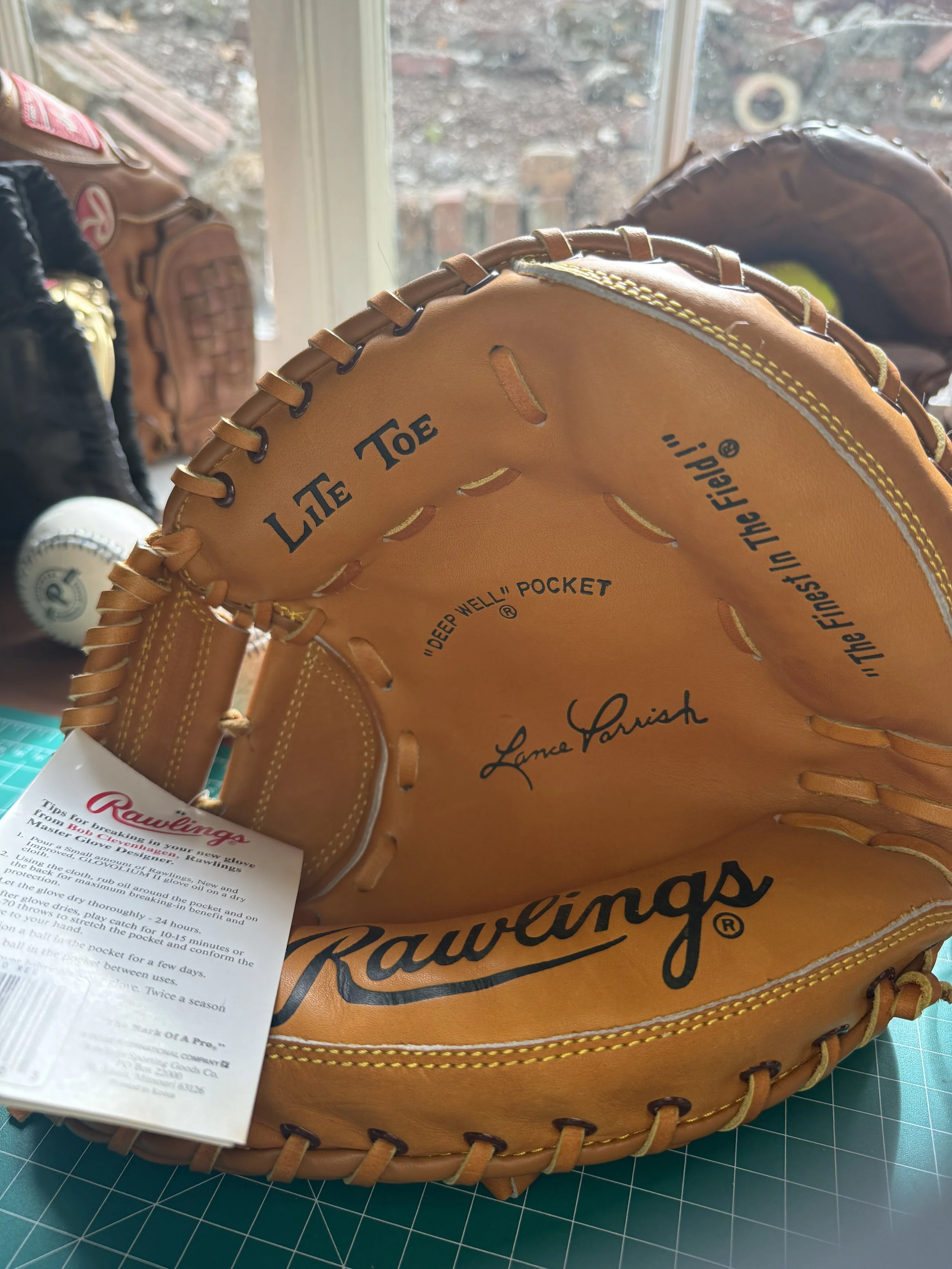
Collectors love unused equipment because unused equipment preserves information. Tags survive, stamps stay sharp. The original shape remains visible. Even the Rawlings plastic bag somehow made the trip. But there's also something strange about a baseball glove surviving by avoiding baseball, especially a catcher's mitt; those aren’t supposed to be delicate, they only exist because catching hurts. A catcher's mitt earns its shape through abuse, and this one never got the opportunity to get hurt into being.
If you were catching, you grabbed a mitt, and sometimes it fit and more likely it didn't. You figured it out, because the pitcher was waiting, and that’s where it all starts. The team calls you two “The Battery” for a reason. That's baseball—there is the preparation, there is the equipment, there are instructions, but eventually somebody has to throw the ball.
After the last week, the Ballers have reached that point beyond direction into action. They know what they're capable of, and they also know exactly what happens when the execution is lacking. Modesto made sure of that at Raimondi, scoring 45 runs and allowing only 11 in the sweep. But then taking two out of three in Long Beach—all in razor-margin games that needed every effort, every tight play—flipped that script. After Saturday's win, catcher (of course) Conner Smith summed up the weekend better than I can: “We know we can play with these top teams, it's just a matter of execution.” Exactly, and now they get Modesto again to see what’s changed. The Ballers don't need another theoretical explanation of Modesto. They've seen them, they know how good the Roadsters can play, how quickly mistakes become runs, what happens when the starting pitching can't settle in.
The Ballers are 37-41 overall and 15-15 in the second half after the Long Beach series. The path to the postseason is still there, though it's narrow. There aren't enough games remaining to spend much time talking about what a team could become; eventually potential has to turn into something measurable. That's the uncomfortable thing about baseball, everybody who wins gets prepared, but nobody gets credit just for being ready.
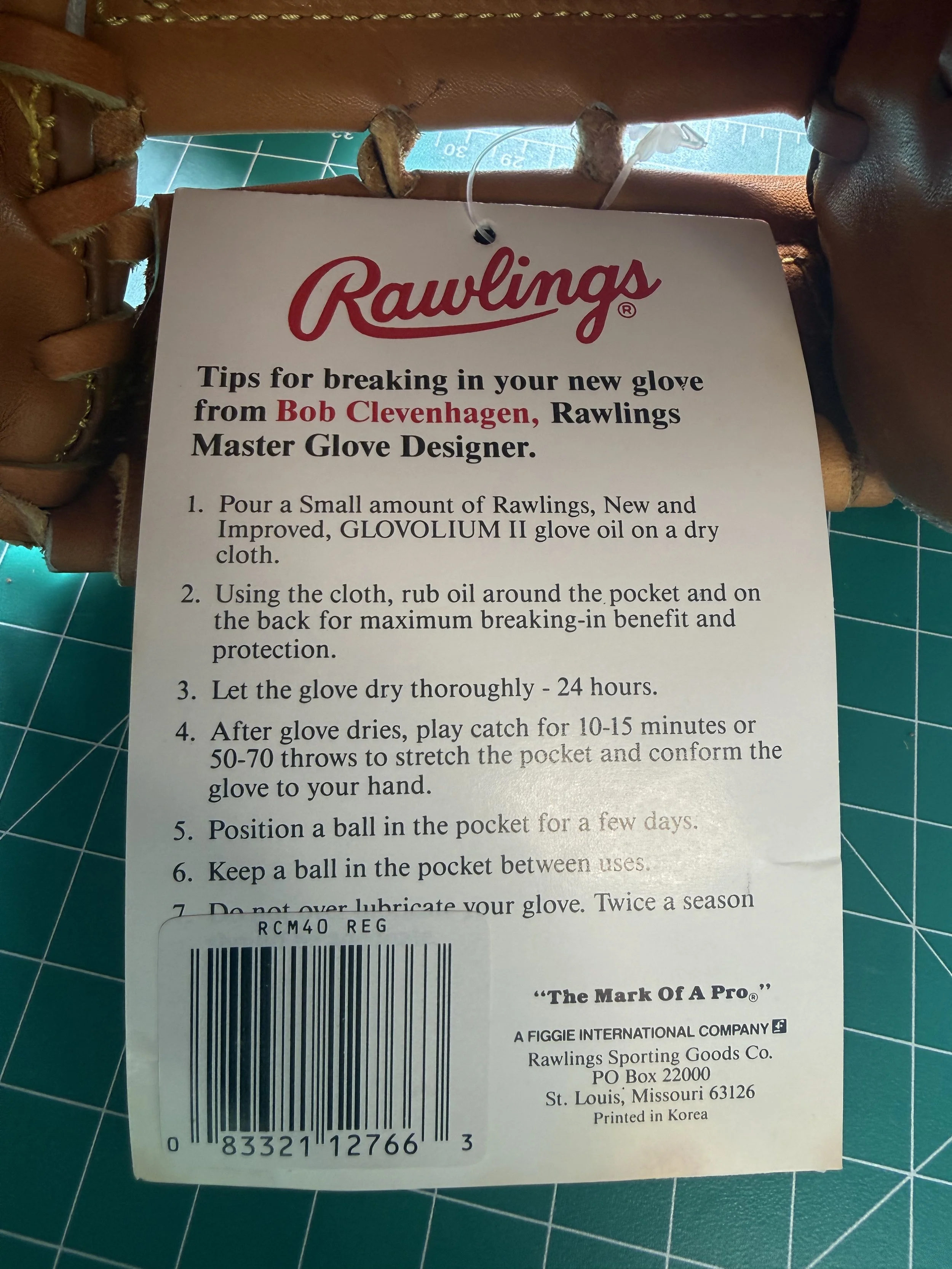
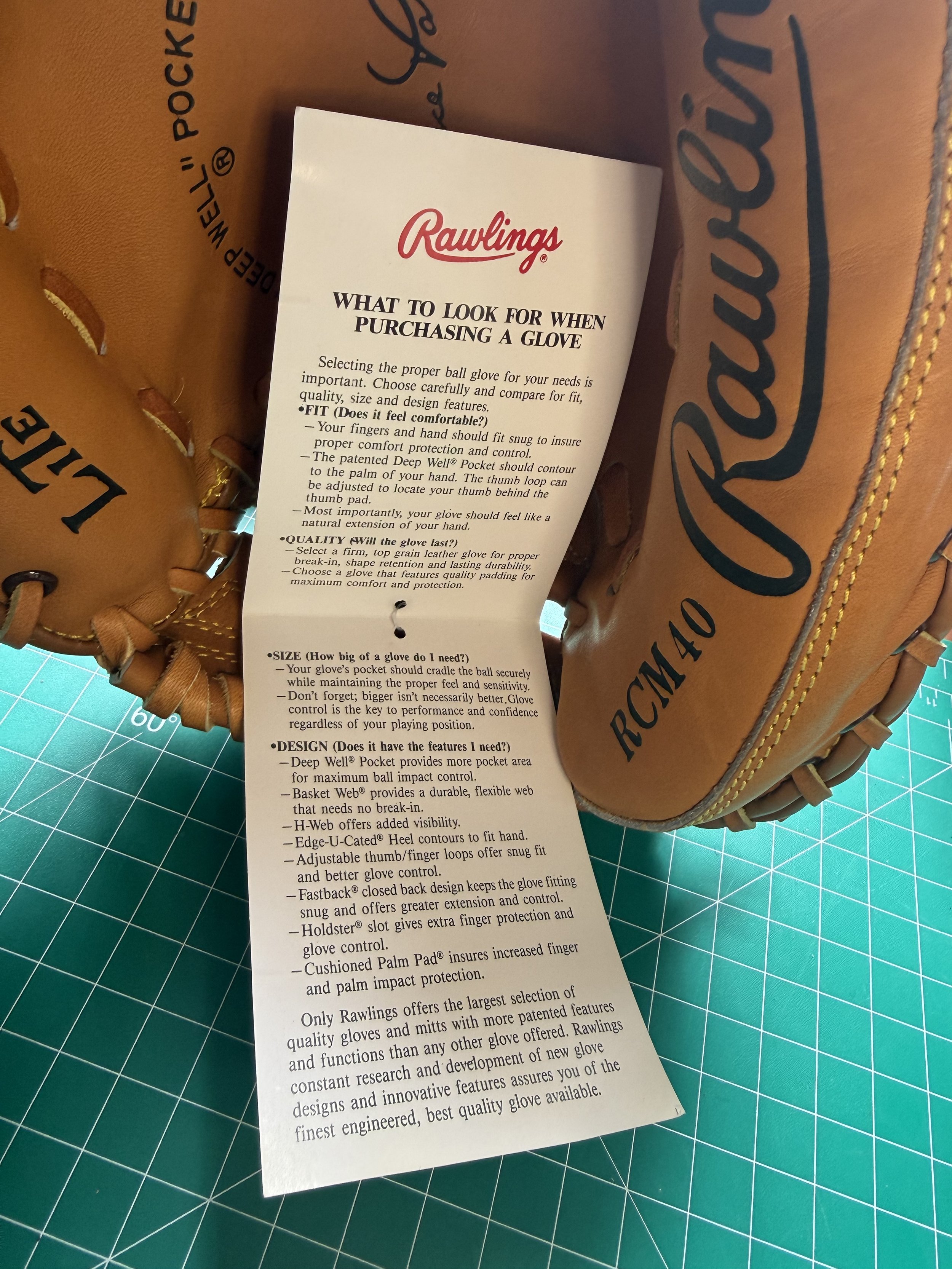
The old Lance Parrish mitts I remember from Little League were probably disasters by collector standards. They had somebody else's pocket, somebody else's sweat, somebody else's idea of how a catcher's mitt should close, and if one of those somehow survived today, I'm sure it would look considerably worse than this one. But those gloves did the job, plenty of kids caught baseballs with them, myself included, and they became what Rawlings intended.
I'm not rushing in to taking the tags off this mitt, just to be clear, after forty-something years. Somebody else already made that decision for me, and at this point, leaving the tags attached is part of preserving what the glove has become. But I understand the temptation. Because everything hanging from this mitt is essentially begging someone to use it, make it theirs. There's something wonderfully optimistic about a new baseball glove; this one has been waiting longer than most, but the feeling is still there.
Today, Oakland gets another opportunity too. Same opponent, different ballpark, and just a week after Modesto showed them exactly how far things can get away from you, the Ballers get to find out what they learned. Maybe they win, maybe they don't. Preparation isn't supposed to guarantee anything except to give you a chance when the opportunity arrives. Then somebody asks, and eventually...you have to say yes.
You have to step across the line. You have to play. At some point, you have to take the tags off.
Kyle Robinson is a transplanted Texan with a lifelong passion for the game of baseball. Residing in Oakland with his wife Randi, their daughter India, and a menagerie of pets. When he’s not slyly convincing his wife to name their pets after legendary baseball broadcasters (e.g. our corgi Milo Hamilton Robinson) he is probably balancing parenthood with trying to cram in as much baseball as possible. Whether it’s keeping the dream alive as a weekend warrior behind the dish, or on the sideline as a coach, volunteering, rest assured he has baseball on the brain. Find him on Instagram: @krob452
