The B’s Story, from the UK
Why the Ballers’ Story Resonates Loudly in the UK
by Sam Wormald
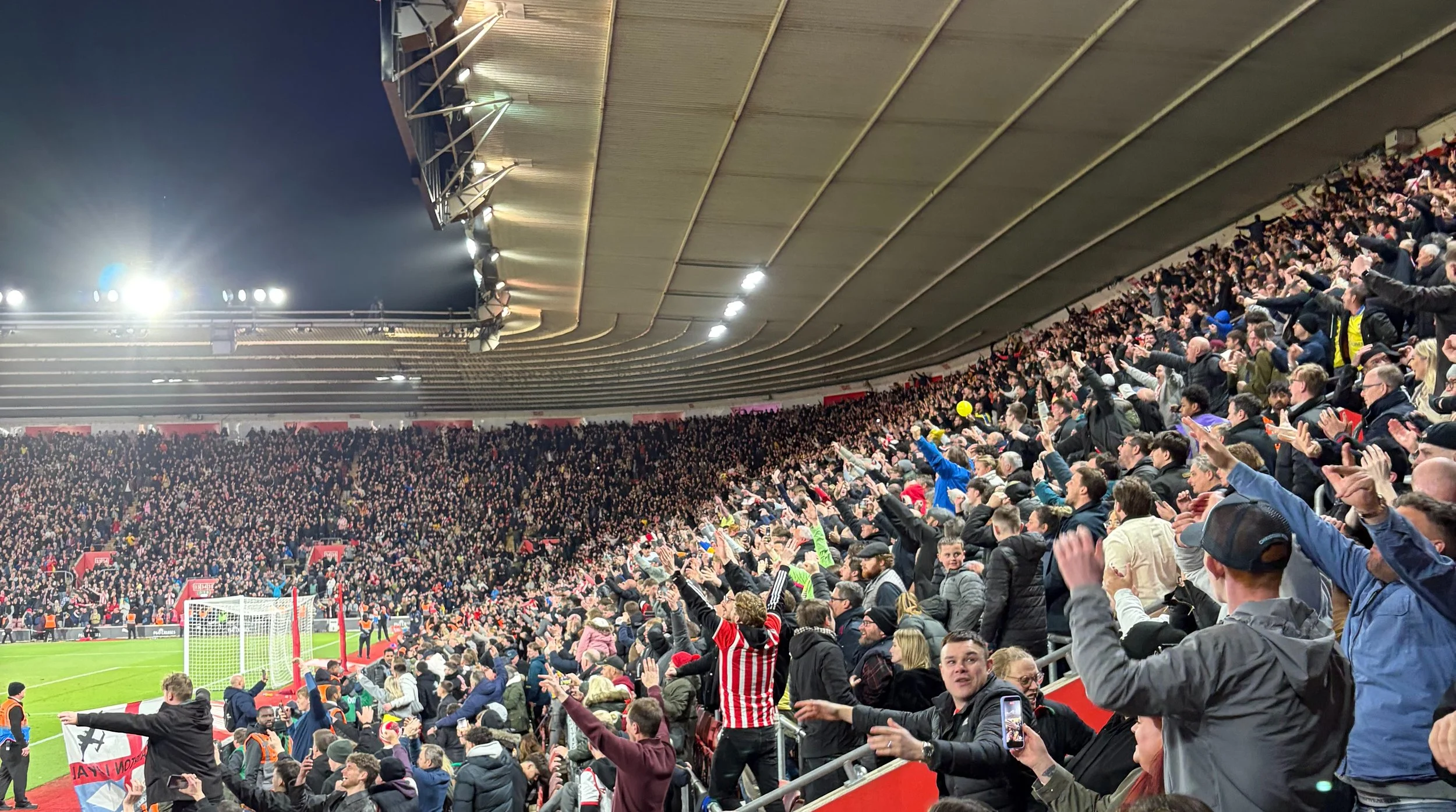
Southampton supporters celebrate the club's FA Cup Quarter-Final victory against Arsenal in April 2026.
When the news landed on 16th November 2023 that the Oakland Athletics had been officially approved by Major League Baseball to relocate to Las Vegas, it resonated loudly in an unsuspecting, upper-class corner of London: Wimbledon. Rewind to 2003 when Wimbledon Football Club left their South London home of over 100 years for Milton Keynes in a radical and fiercely unpopular move by its owners. It was one of the most controversial moments in English football history. Fans of Wimbledon FC had broken away in anger a year before the move, forming the “phoenix club,” AFC Wimbledon, and to this day, the club remains fan-owned.
Sound familiar?
The A’s story, and the rise of the B’s, quickly grabbed my attention from the UK, and my interest in Oakland baseball began. Oakland feels like the football story I know rewriting itself in baseball. Not only was the foundation of the Ballers remarkable, but going on to win the Pioneer League in 2025, in only their second season, reminds me of the possibilities in the English football system. Against the odds, AFC Wimbledon now play in a higher league than the renamed MK Dons in Milton Keynes, who have become one of the most hated clubs in the country.
Sound (almost) familiar?
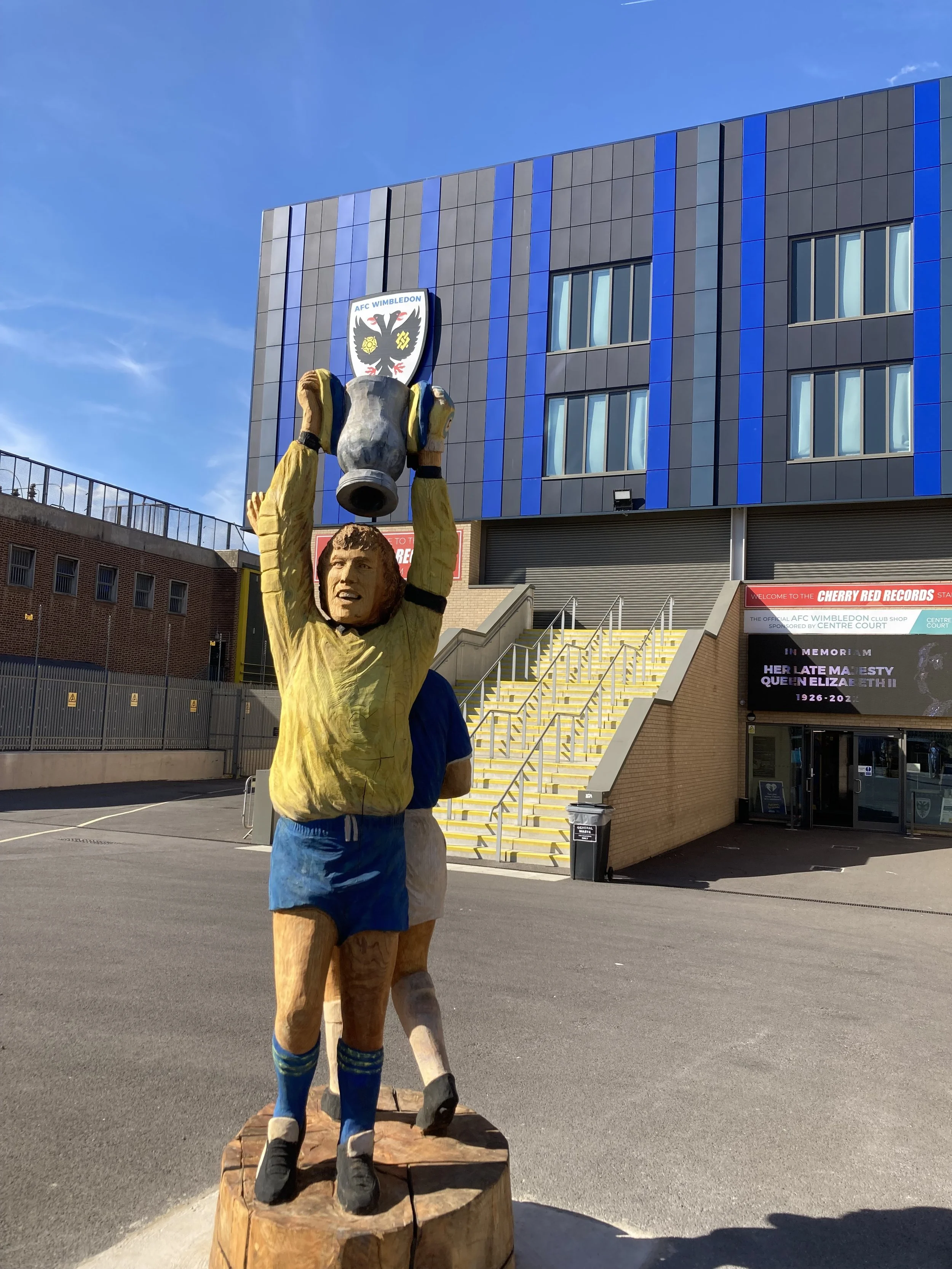


Wimbledon played their first game at their new Plough Lane Stadium in 2020, yards away from the original club’s home. It was a full-circle moment for English football, particularly when the ground hosted MK Dons in 2024 for the first time with fans. Wimbledon, as fate would have it, won the match 1-0, courtesy of a last minute goal.
While the equivalent–the Ballers hitting a walk-off homer against the Athletics at Raimondi Park–may be relegated solely to the cathartic dreams of true Oakland fans, the idea of the B’s returning to the Coliseum site is not, nor the possibility of playing teams in different leagues (see, of course, the recent Battle of the Bay.)
Oakland supporters and many American sports fans across the country often look longingly at the English football system with its promotion and relegation between competitive tiers. Good teams move up, bad teams move down. Theoretically, the rules allow small village clubs to play all the way up in the Premier League, the world’s wealthiest football league, so any team could make the “big time.” Relegation fights to avoid dropping into lower leagues are part of soccer’s attraction, leading to sell-out crowds and rowdy atmospheres–not to be the best, but to avoid being the worst.
However, from my side of the pond, be careful what you wish for. The Ballers not being able to play the Athletics in a league has its advantages. Promotion and relegation allows for the dramatic rises of clubs like Wimbledon, but it also creates huge financial inequality between soccer divisions. For example, in 2023 and 2024, the six teams to be promoted to the English Premier League were relegated back to the Championship tier the following year. They were unable to compete, as they couldn’t afford the best players.
In the UK, financial guidelines are less restrictive for owners than in the US, and several UK cases in recent years have highlighted the total neglect of clubs, allowing them to freefall through the divisions. At the top, in the Premier League, critics complain that infractions by the biggest clubs are punished more slowly and leniently than similar breaches for smaller teams. At the bottom, although anyone can set up a team, a report in 2022 showed that 2,600 grassroots clubs shut down due to the impact of Covid. In the US, the economic environment for start-up clubs can be advantageous within leagues, giving time for teams to establish themselves without the danger of relegation.
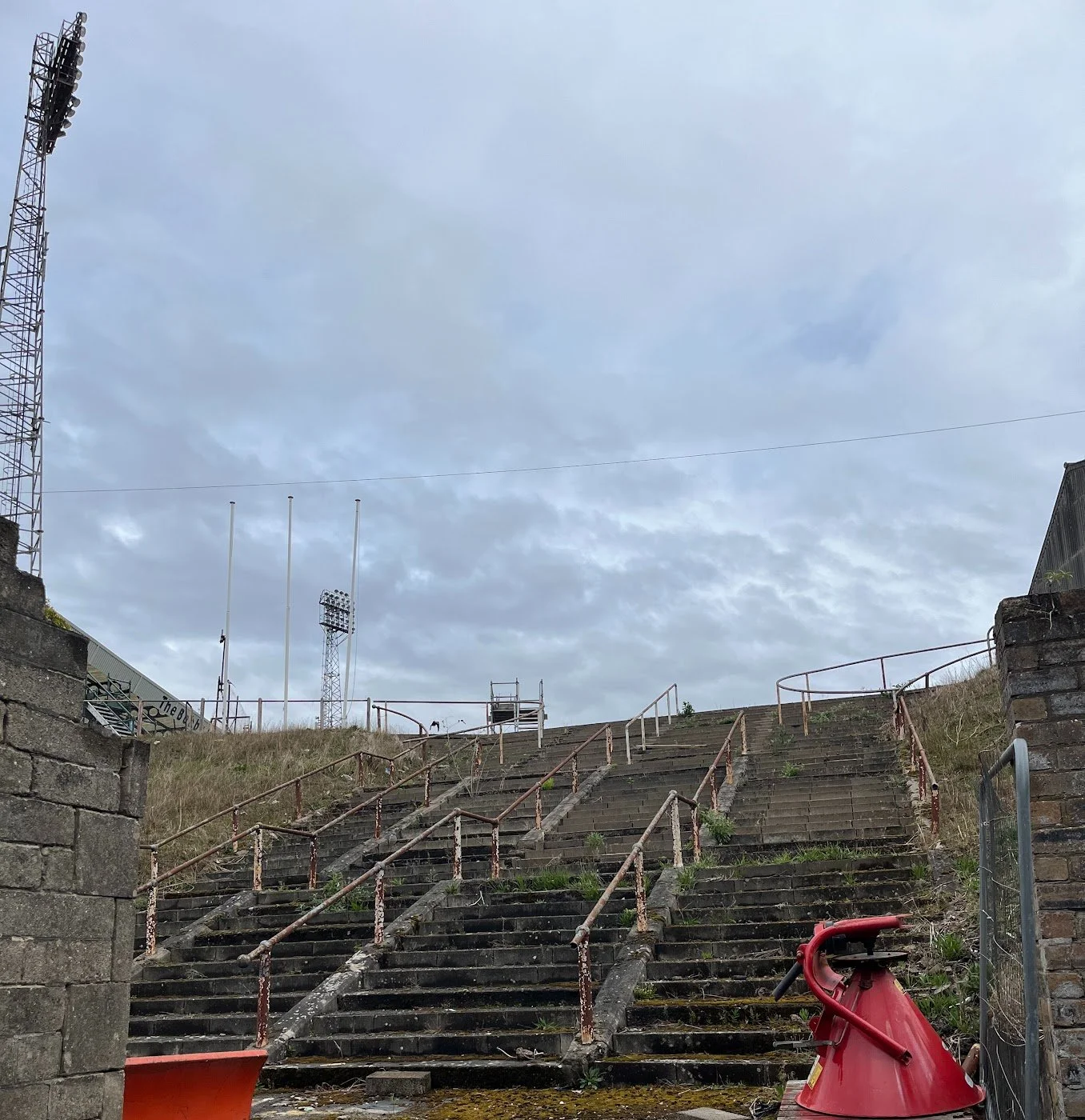
Scottish side Dundee FC have had to close part of their stadium as it is no longer safe - no strict criteria on stadium facilities mean games can continue to be played there.
The key in any system–as Oakland fans know all too well–is having owners and management who care. Owners are motivated by their fans and held to account by their leagues (and maybe even their governments). In the UK, both rugby league and union have recently scrapped pure promotion systems, changing to merit-based systems that look holistically at teams for their performance, facility quality, and attendance. Although the British tabloids and rugby traditionalists have been critical of these decisions, and games can be considered uncompetitive for the weakest teams who will not be relegated, these alterations have arguably been beneficial. Owners are now incentivised to invest in both stadium improvements and the playing squad. An example is the Bradford Bulls, which installed new LED advertising boards and a big screen at the stadium to improve the matchday experience. In turn, this brought in more supporters and retained their place in the league. The advantage of a graded franchise system is that if the governing body deems a team to not be pulling its weight, it will be replaced by a club from a different tier in the league, and no places are taken for granted.

A game between Bath Rugby and Exeter Chiefs (rugby union) in January 2026. Bath are the current champions, but play in a temporary stadium due to planning issues.
Ballers’ fans may not be able to share the feeling of those Wimbledon fans when they beat the team they previously worshipped. But if Oaklanders take anything away from this story, it should be to feel their rightful pride and to keep hoping for more–the Ballers have won their league and are punching above their weight (here I am, a Ballers fan in Berkshire, as proof!). You have a phoenix club to be proud of. The future is bright, and the UK supports you!
Sam Wormald is passionate about all sports, specifically football (soccer!), baseball, NFL and cricket. He is a student living in the south of England and is about to finish high school before starting university in the autumn/fall. He runs a sports blog, 'The Opinionated Saint'. Find him on Instagram, or at opinionatedsaint.wordpress.com.