

Managing for the Future, Staying in the Present
Managing a career is a lot like managing a game: a conversation with Aaron Miles and James Harris
By Roberto Santiago
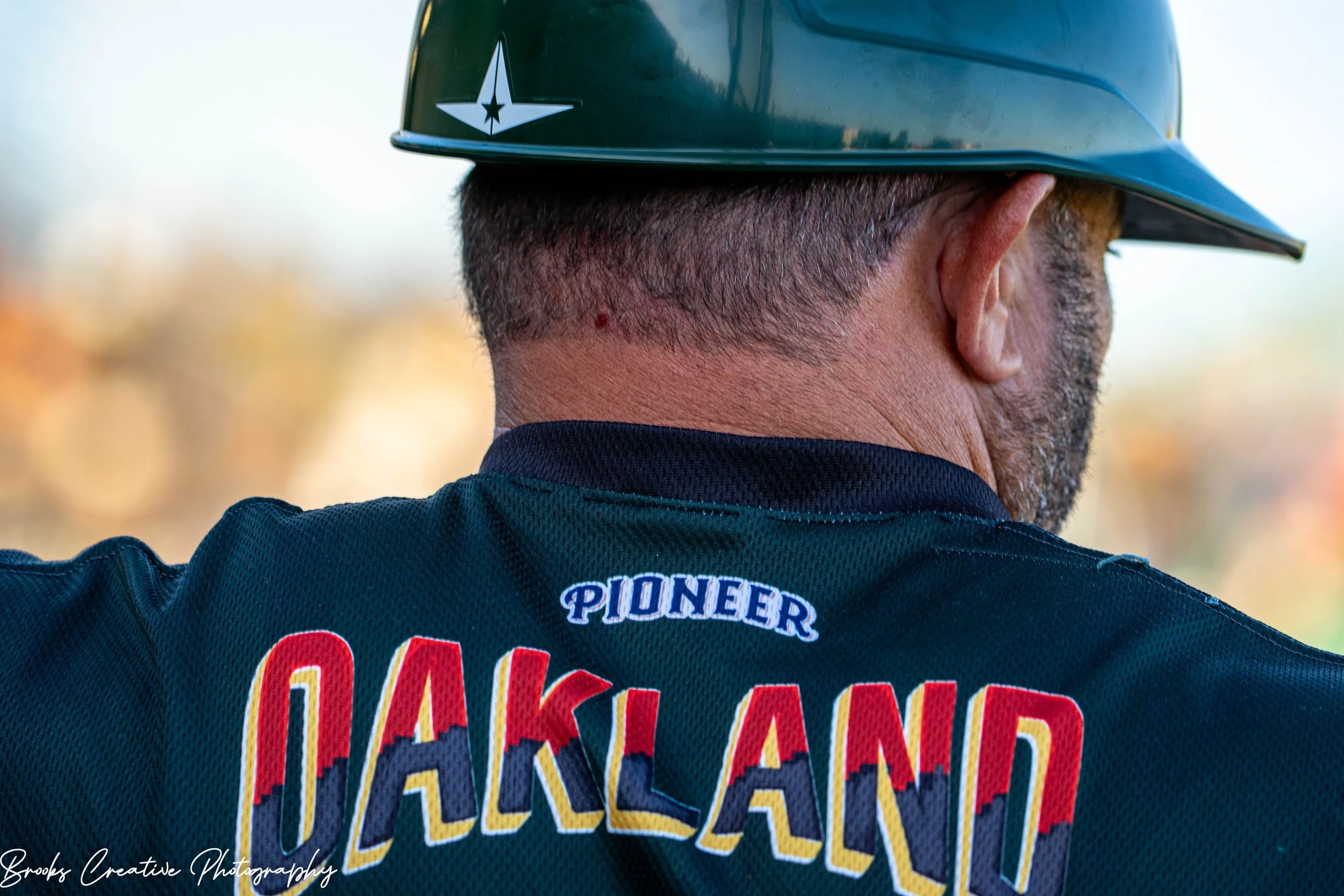
Aaron Miles is a good manager. This is not just a commentary on how he creates his lineups or handles the pitching staff. It’s not only about his in-game strategy or knowing when to send or hold runners at third. Aaron Miles is a good manager because he cares about people.
Miles’s journey through professional baseball wasn’t a straight line. He wasn’t a ready-made star. He was a grinder. Miles rode the bus in the minors for eight years after being taken by the Houston Astros in the 19th round of the 1995 MLB draft. He had an eight-game cup-of-coffee stint with the White Sox in 2003 before finally sticking with Colorado for 134 games in 2004. Over the next eight seasons, Miles would appear in 798 more major league games, including 135 for the 2006 World Series champion St. Louis Cardinals. 2012 saw Miles back in AAA followed by three seasons of independent ball as a player-manager.
In his 21 years of pro baseball, Miles has seen it all. He knows what it’s like to come from a place of low organizational expectations and make it as far as a player can go. It’s this background that informs his perspective on the players he coaches now, with a focus on development and advancing their careers even when it comes at the short-term expense of the team’s goals. “They're playing not to continue to be in the Pioneer League,” Miles once said. With that development in mind, Miles and the Ballers front office have not only refrained from blocking a player’s move to a better situation, they have been an open shop for teams from higher leagues, always trying to keep players’ interests at heart.
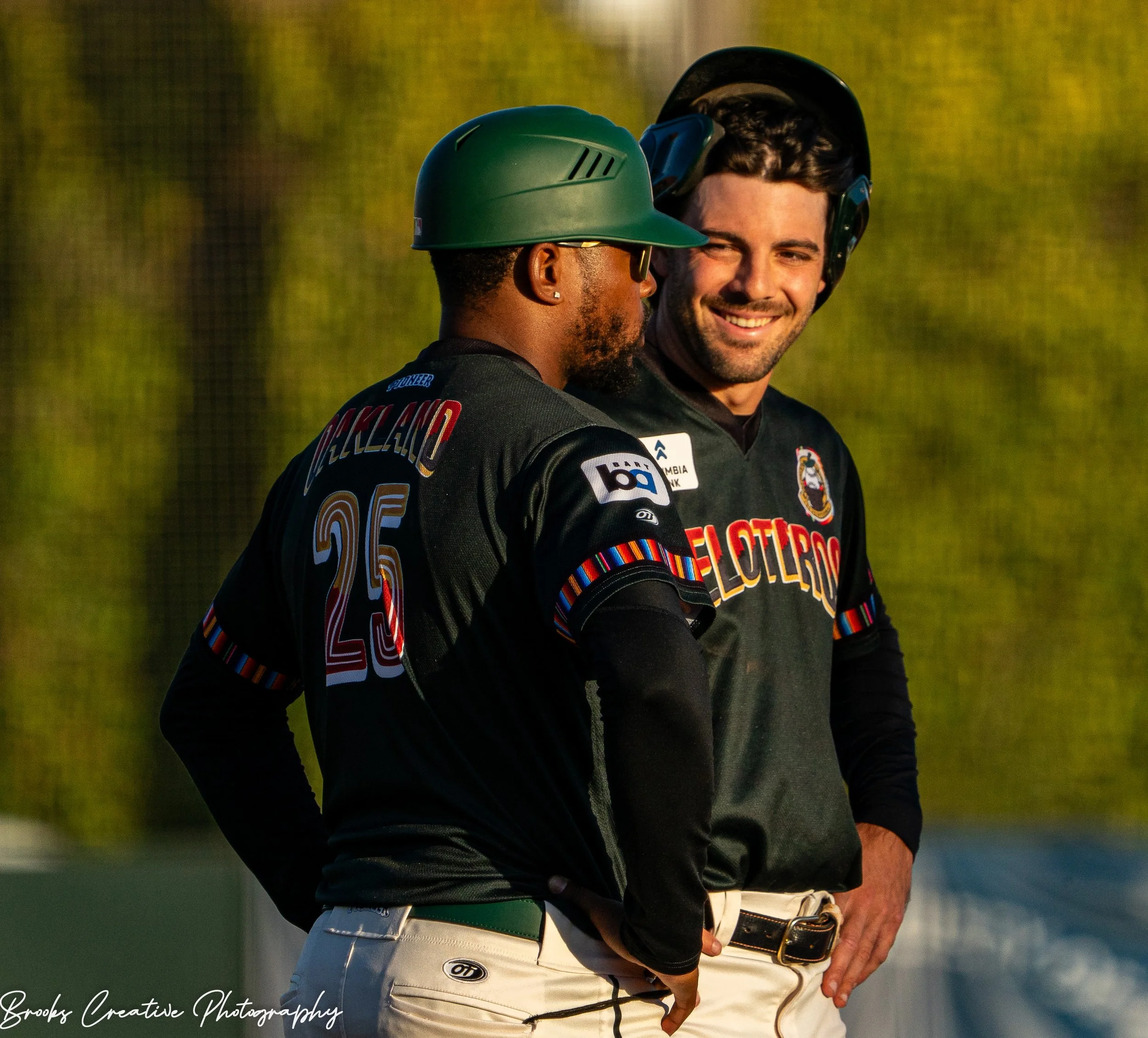
James Harris took a different path through baseball. A first round draft pick of the Tampa Bay Rays, Harris played nine seasons in the affiliated minor leagues, reaching as high as AAA Nashville in 2015. Like Miles, Harris also finished his career in independent baseball. In 2024, the two men’s paths converged with the Oakland Ballers, though in different roles than they now hold. Miles was the bench coach, Harris was running community development and baseball operations. Over time, Miles took over as manager and Harris as bench coach. In addition to those duties, Miles coaches third base during games and Harris first base while also acting as hitting coach.
And on August 29, 2026, Harris took on another role—manager. Fans in the right field bleachers noticed Harris coaching third base, unaware that he and Miles has switched roles for the day.
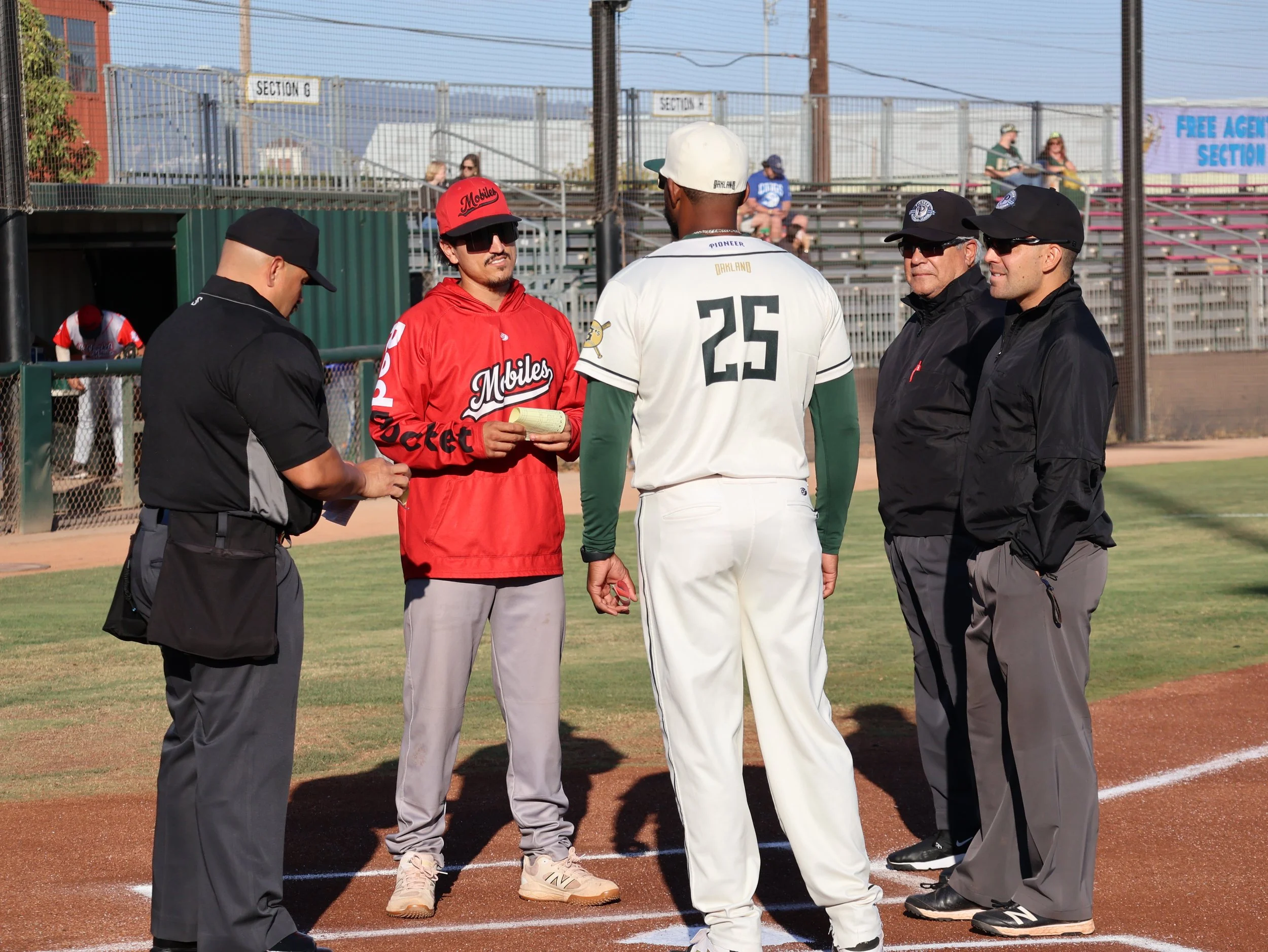
I caught up with both coaches the next day, after the last home game, to ask about the move. “Well, we talked about it earlier in the year,” said Miles. “You know, if I was ever kicked out of a game…we agreed that he should have a run at it. He's been my bench coach all year. So we thought we'd swap roles and we might do it one more time in in Yuba as well.”
I pitched my theory that this was an extension of the club’s player development philosophy. After all, one need only look as far as Modesto to see a former B’s coach managing a Pioneer League team. Are they trying to get Harris ready to take a manager position with the reality of openings in Irvine and possibilities elsewhere with new teams being added to the league next season? “I think he's absolutely qualified and ready for managing,” Miles answered, then added with a smile, “Hopefully it's not with the Ballers, because I still want to be here.”
Miles continued his praise of his bench coach. “I think there's many teams in indy ball and affiliated ball that would benefit from him in any capacity. And obviously, I think he's ready to manage as well, being a bench coach for this long and and sitting here and talking about baseball for the last two years with me.”
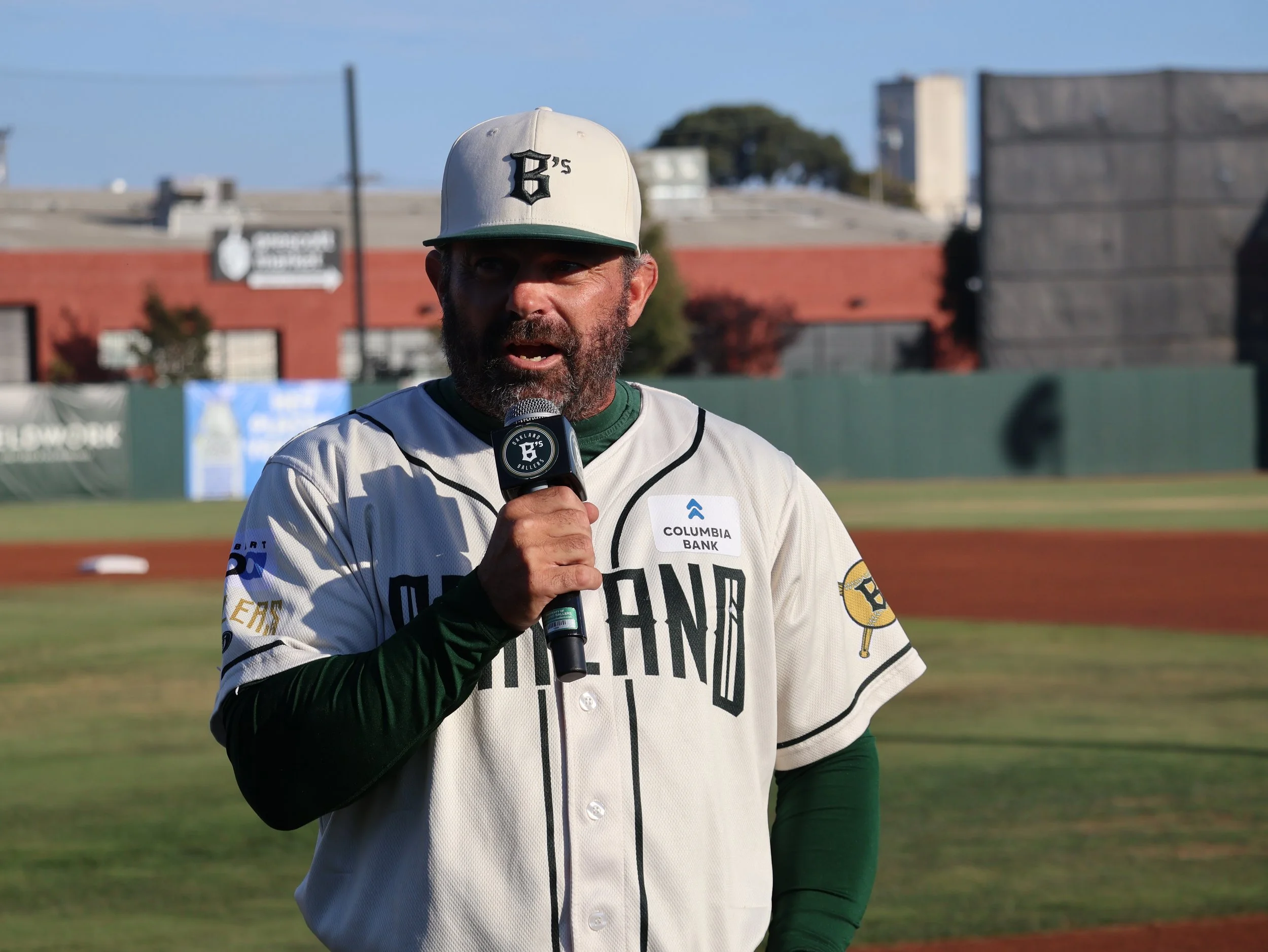
Harris, who did everything for the Ballers in the first couple of years, now having a day as manager with another one that would come, talked about what these opportunities might mean. And not just for him as an individual, but for him and Miles as a coaching staff. “I mean, ultimately, I think it gives me an opportunity to grow as a coach working alongside Aaron. We want to be able to stay on the same page and kind of have a little more of that nonverbal communication. When it comes to managing the game to win, there's certain things that I see from my perspective and things that he sees [that] we have a lot of conversations around—moves that we can make to try to win the ball game. It's good to be able to see the game from two different perspectives and be on the same page.”
What about Harris’s goals for the future? Dispatches had put the question to Miles a few days prior. So what about Harris? “Honestly, that's been a question for me as well, but I love what I do here, working alongside Aaron. I had an opportunity to learn the game at such a higher level. Playing the game at a high level and coaching the game at a high level are two different things.”
He continued, “When you're playing, you're looking more from a monetary perspective, but when you're managing, you're basically putting the rest of the team in position for success.”
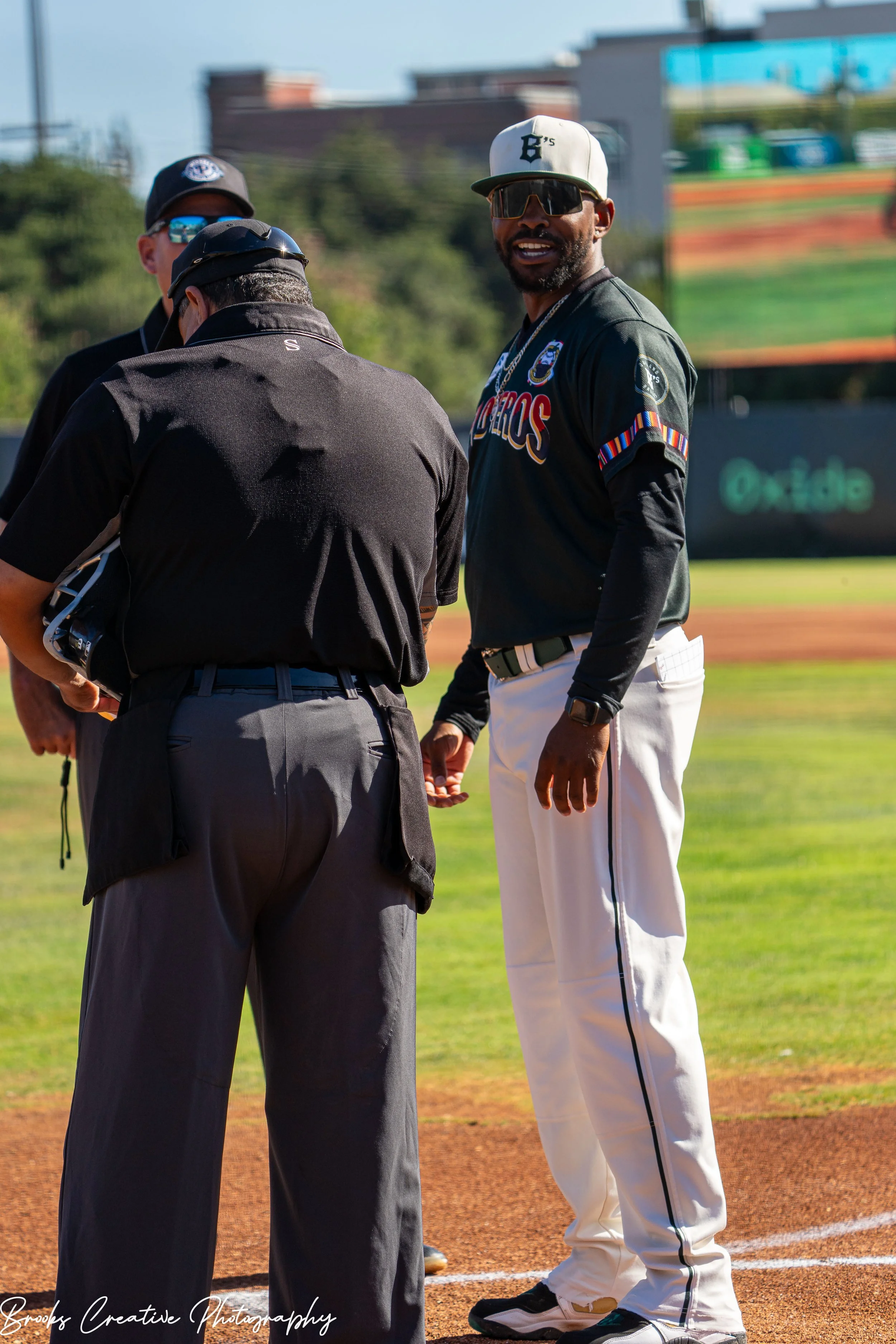
While players may be looking toward the next at-bat while also focusing on what the pitcher is throwing now, managers need to take a longer view. Harris describes it as, “You're thinking one pitch ahead, one play ahead, one inning ahead, and often one game ahead. And with us playing three-game series, a series ahead. So you're in the present. You’re managing in the present with still being able to have everything you need for the future. So it opens my mind up around where the game is and where we are as a team and how we can continue to be a winning ball club over a full season, more so than only in a moment for one game.”
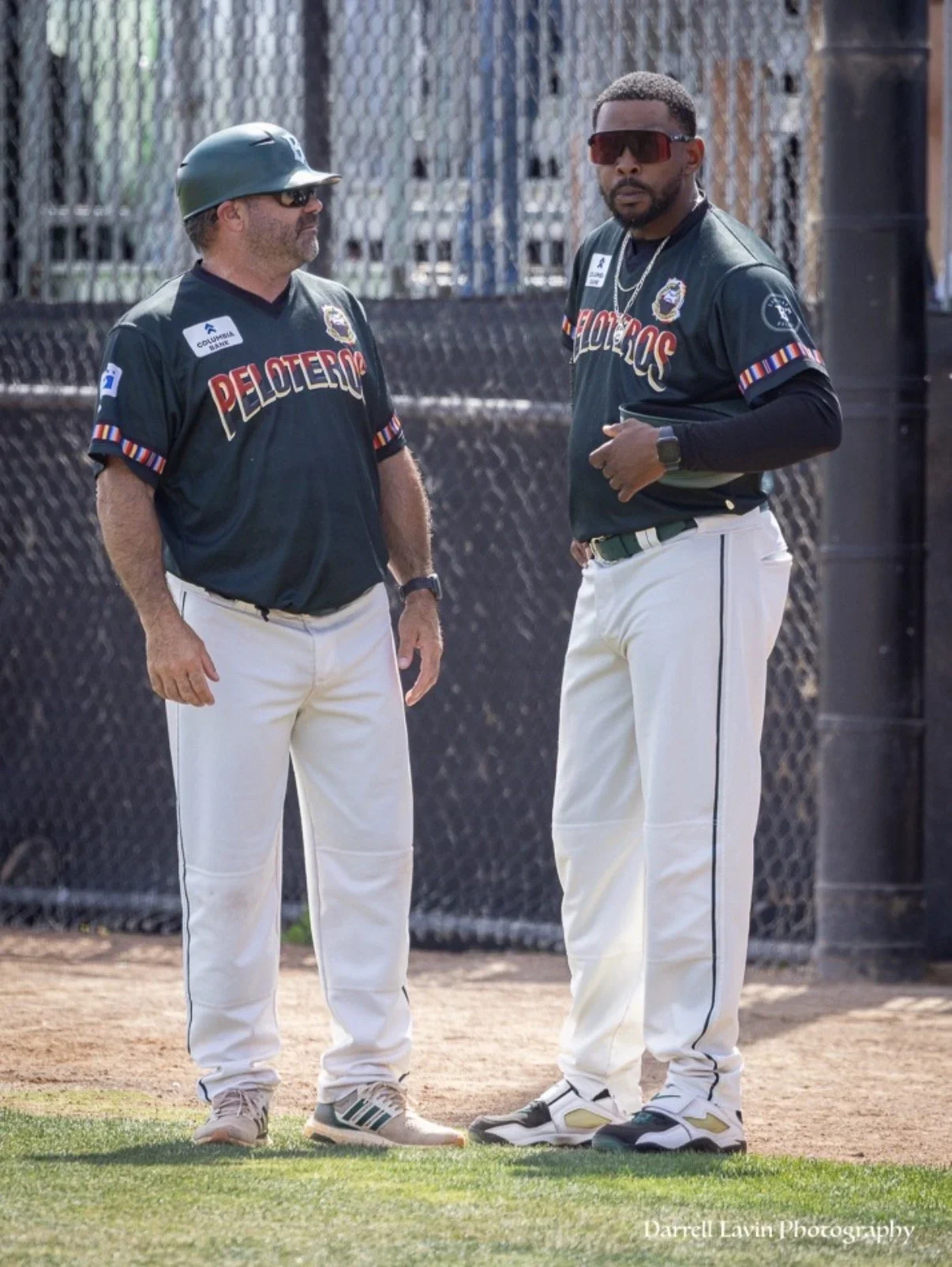
To me, this sounds like a similar approach to managing a career. While you’re focused on the task at hand, you’re thinking about how this year’s performance becomes next year’s opportunity.
“Nothing is predetermined,” said Harris, now talking about all the variables of handling a pitching staff during a game rather than his coaching career.
“We like to come in with a game plan…you want your starter to go at least six to get to the back end of your bullpen. You kind of go with the flow and at times you're reading the game, you're looking at pitch count, you're looking at the lineup, you're looking at matchups. Then you're also going based on who's available in the bullpen because guys need their rest as well.”
Harris did manage again in Yuba-Sutter on September 4th. That game was a barnburner that included six lead changes in an eventual Ballers victory.
In the Pioneer League, almost everyone is on a one year contract. No one knows what next year will look like, though coaching stability has been for Oakland the norm over the first three seasons.
If opportunities arise, Miles and Harris will weigh them, just as players do. Harris closed with a nod to his manager’s philosophy, “Aaron says, you play the scoreboard, and the scoreboard's gonna dictate what moves you make.”
As true in the course of game as it is in the course of a career.
Photos from Darrell Lavin Photography and Brooks Creative Photography.
Roberto Santiago is a third generation Berkeley boy currently raising the fourth generation. Roberto’s writing has appeared in Latina, Parents, and various online outlets. A lifelong baseball fan, Roberto worked briefly with the Boston Red Sox and once hit an RBI single off Spaceman Lee on a 2-2 changeup. It was his only at bat ever in a real baseball game. Find him on Instagram.
