

Glove of the Series: Yuba-Sutter Freebirds
Rawlings Heart of the Hide PROCM41CCF
by Kyle Robinson
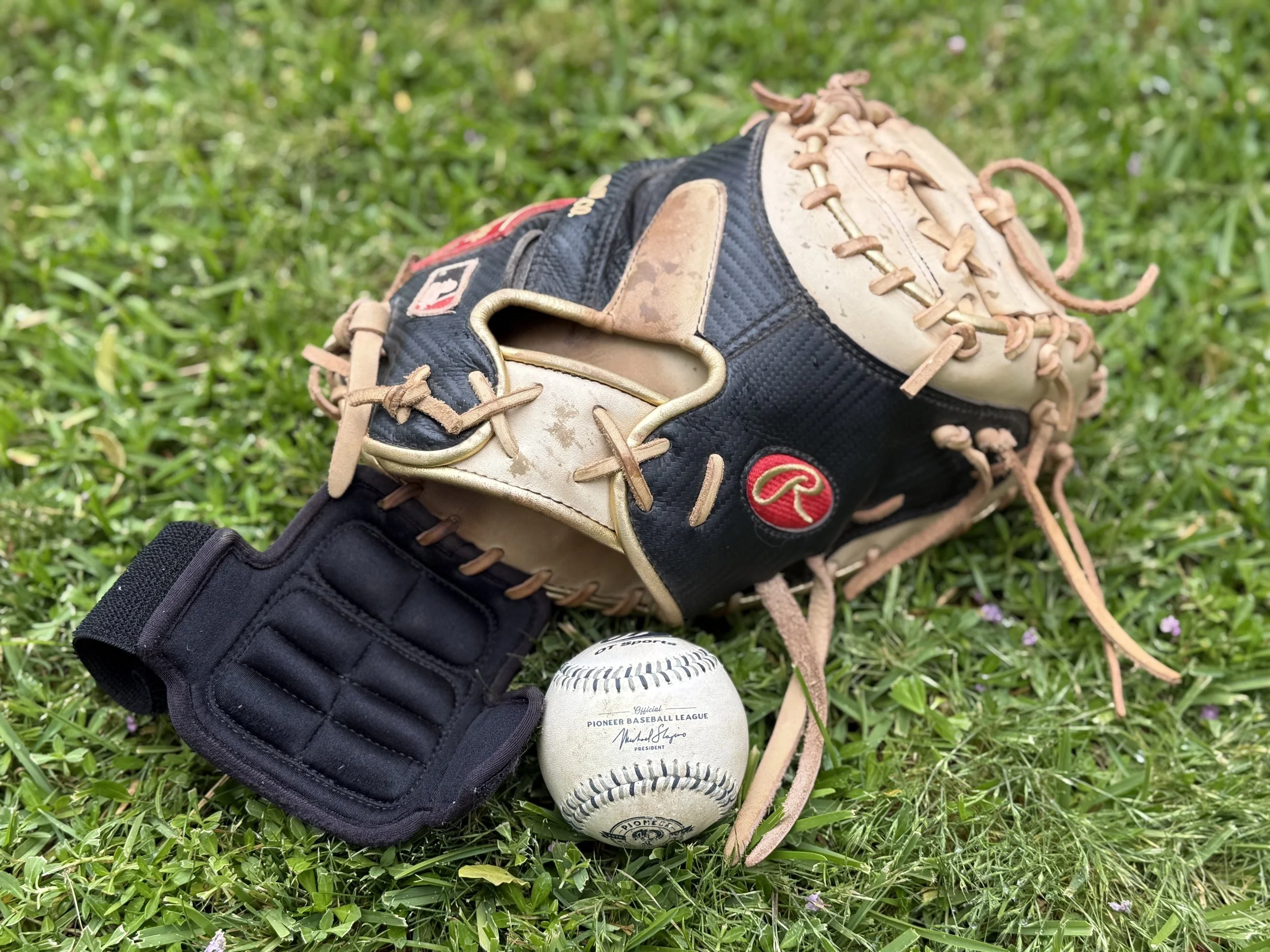
The Ballers return home to Raimondi Park this weekend after dropping two of three in Modesto, and I think if you asked anyone with this team, the standings aren't where they'd like them to be. But one thing hasn't changed: when it is right, this club can score with anybody in the Pioneer League. Pitching has shown moments of lockdown ball. The challenge these days is turning those pieces into complete baseball.
That thought keeps bringing me back to one position, and back home.
I spent nearly my entire baseball life behind the plate. It started in Little League, when we finally graduated from hitting off a tee and went up to a pitching machine. Then on to Pony League, and Colt, then into high school, Connie Mack, fall ball, on and on.
Aside from a handful of dreadful innings in left field—and four truly terrifying ones at first base—I don't remember playing anywhere else until adult rec ball gave me the luxury of experimenting a little. Even then, I always found my way back behind the plate. Catching never really felt like a position in the field to me; it felt like home.
That probably explains why my collection includes more than one catcher's mitt. There's my old Gold Glove Series mitt from my Pony and Colt League days, the unboxed Lance Parrish model that nods to the one I had as a kid. Then there is the hunt for mitts connected to the catchers I grew up watching—Pudge Rodriguez, Brad Ausmus, Yadier Molina, Sandy Alomar Jr., Benito Santiago, Jason Kendall—and plenty of others who made the position feel like something more than just another spot on the field.
And then there's this one. My current gamer. The one that's still covered in dirt every weekend, strapped to my wrist almost every Sunday, and spends the rest of the week wrapped around a baseball at the bottom of my catcher's bag, waiting for the next bullpen, long toss session, or first pitch.
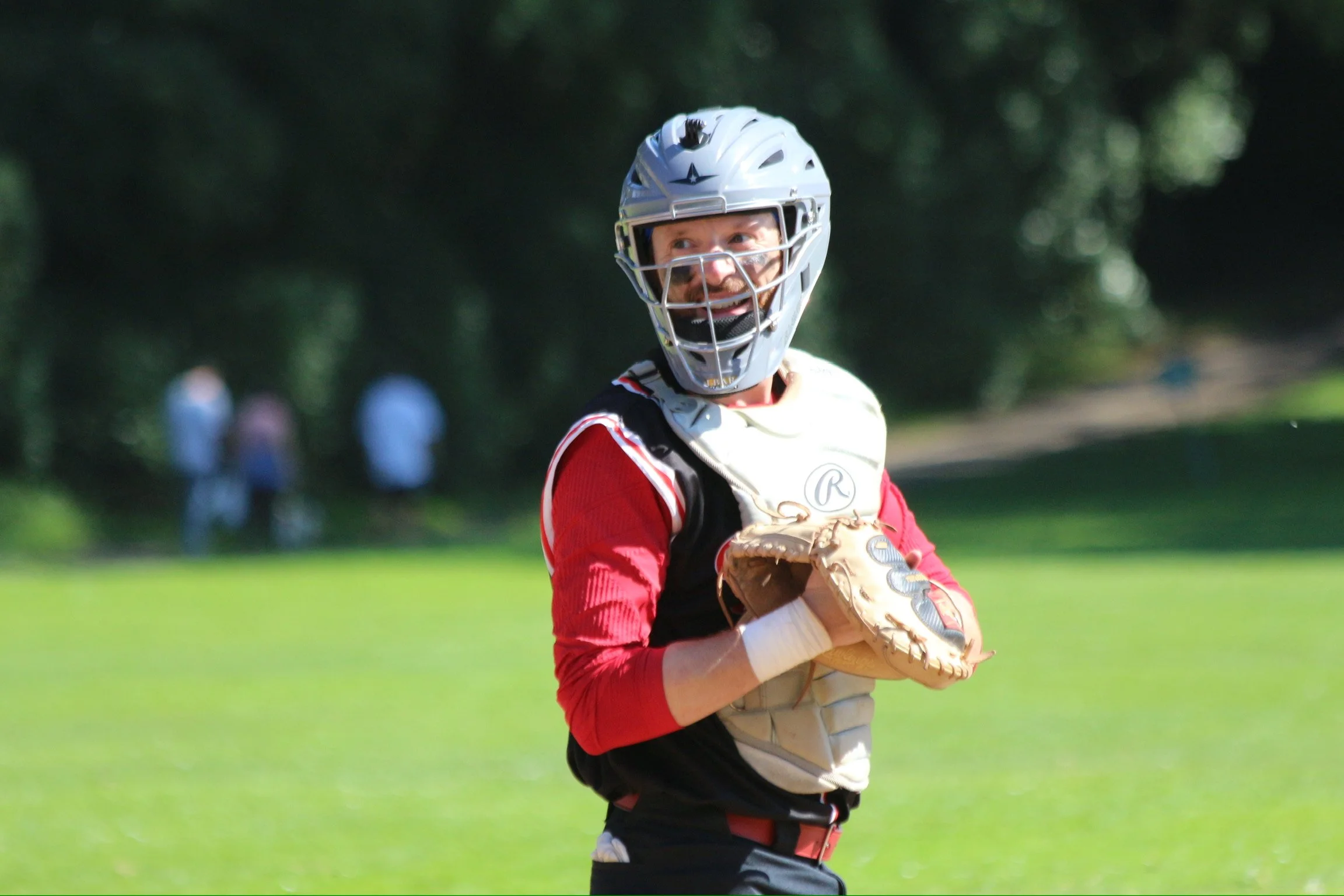
When my wife and I moved to the Bay Area, I knew her family, I knew her friends, but what I didn't have were any of my own. So I did what I've always done and I looked to baseball. I signed up as a free agent and waited.
It turns out that if you list "catcher" as your position, your phone usually rings: not because catchers are special but we are rare. There simply aren't many people willing to put on the gear, squat for nine innings, block baseballs in the dirt, and gladly wear foul tips for the sake of everybody else, especially when paychecks aren’t involved.
One of those calls led me to Caldecott Field one afternoon, where I showed up with my gear bag knowing little more than the location and one guy’s name. Instead, I found a field full of baseball players—some veterans, some younger guys, a few fathers throwing with their sons. When the time came, I put the gear on and got behind the plate; soon after, one of the guys I had just met strolled up on the mound. What followed was a steady diet of two-seam fastballs and some of the nastiest sliders I'd seen in years. At least from my perspective.
That pitcher became one of my closest friends and teammates to this day. We spend likely half of our weekends together playing on one team or another. Over time, so did many of the others, and we see each other almost every weekend for 3-4 hours of the greatest game, and to check in with one another. Life, career, kids, spouses, all discussed during warmup, or in the dugout between pitches.
Not long after that first workout, I realized my old mitt wasn't going to cut it anymore. So I bit the bullet and invested in this Rawlings Heart of the Hide PROCM41CCF that still serves as my gamer today. It was broken in the only way that really sticks. Bullpens. Heavy-ball sessions. Long toss. Thousands upon thousands of catches. It's been borrowed to warm up pitchers between innings; it's caught more bullpen sessions than I could ever count.
And somewhere along the way, as many of them do, it became more than just a glove.
This mitt was on my hand when I caught an immaculate inning during a tightly contested fall ball game against our biggest foe.
It was there for a near-perfect game that became a no-hitter after a certain pitcher decided to shake me off early in the third inning and promptly hit a batter. I still love to remind him about that one.
The longer I play, the more I realize certain pieces of equipment become attached to moments. It’s not because they're rare, not because they're expensive, because they were there.
This mitt was there while I built friendships across the Bay Area, when a new place slowly started to feel like home. When baseball kept giving me reasons to stay. It’s giving me reasons to stay optimistic about this B’s squad and what can happen when the pieces come together.
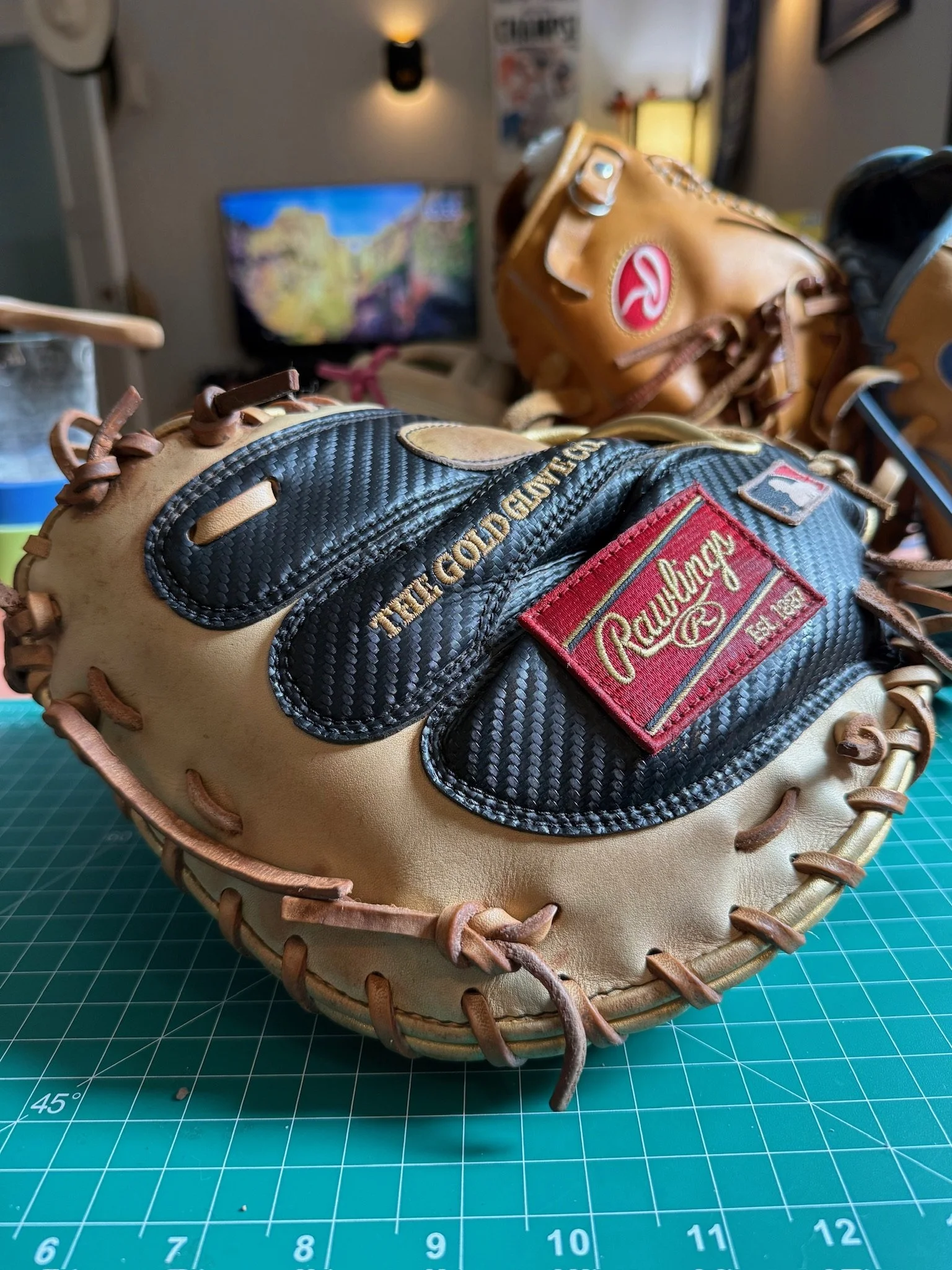
And the history of the catcher's mitt mirrors the evolution of the position itself.
The earliest catchers worked barehanded before turning to modified work gloves simply to protect bruised fingers. As the game sped up and catchers moved closer to the plate, the equipment evolved with them. Flat pillow mitts became true catcher's mitts. Masks were added. Chest protectors. Shin guards. Hinged mitts. Deeper pockets. Lighter materials. Every advancement solved a problem because catchers kept asking more of themselves than any other player on the field. The mitt stopped being just hand protection and became a tool designed to receive, block, frame pitches, absorb foul tips, and withstand thousands of baseballs over a lifetime.
One former catcher famously called it "the tools of ignorance."
Maybe.
But I think there's another way to look at it. Behind every catcher's mitt is trust. A pitcher trusting someone to receive every pitch. An infielder trusting someone to control the running game. A coach in the dugout trusting someone to be a leader. A team trusting someone to see the field a little differently. That's always been my favorite part of catching. Not the gear, not even the position, it’s the relationships.
The Ballers return home this weekend looking for rhythm, and baseball seasons have a way of testing every team. The good ones keep showing up, they keep communicating, they keep trusting one another. One pitch at a time.
That's why I still find myself watching the catcher first, in every game.
Some habits never leave you. Neither do the people you meet and teams you love because of them.
Kyle Robinson is a transplanted Texan with a lifelong passion for the game of baseball. Residing in Oakland with his wife Randi, their daughter India, and a menagerie of pets. When he’s not slyly convincing his wife to name their pets after legendary baseball broadcasters (e.g. our corgi Milo Hamilton Robinson) he is probably balancing parenthood with trying to cram in as much baseball as possible. Whether it’s keeping the dream alive as a weekend warrior behind the dish, or on the sideline as a coach, volunteering, rest assured he has baseball on the brain. Find him on Instagram: @krob452
