First Flyovers: The B’s and the Memorial Squadron
How the Ballers Pulled Off the First Flyovers in Pioneer League History
by Roberto Santiago
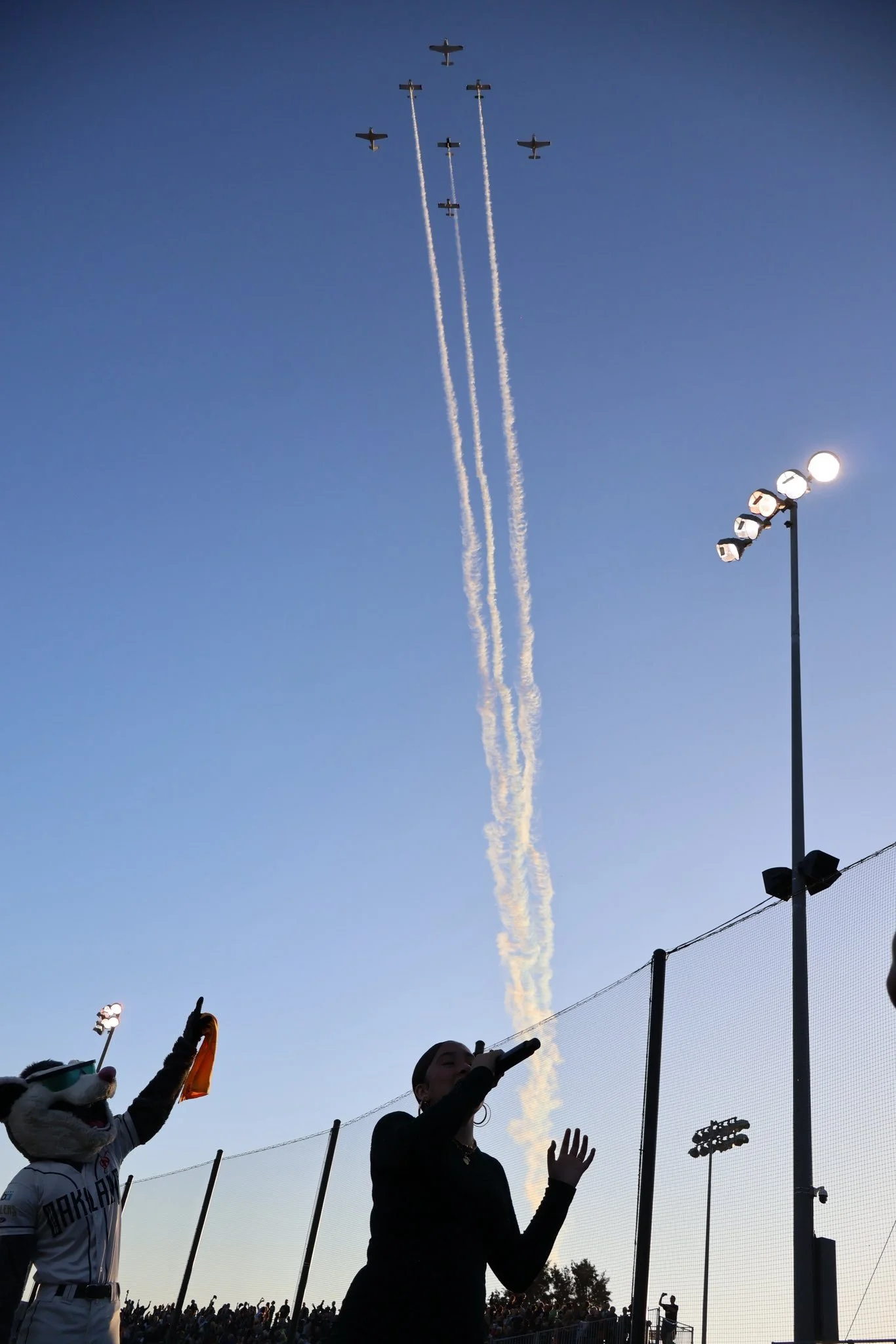
Don’t underestimate the impact of pomp. An inspirational moment can propel a team to great heights. If you can come up with something unexpected, it can rattle the visiting team just enough to make a difference. When the two factors are mixed in the proper amounts, you can witness magic. Thus was the impact of the flyover. With the stands at Raimondi Park packed to capacity, at the crescendo of the national anthem, the crowd was suddenly awed by a majestic flyover that propelled the homestanding Oakland Ballers to a much-needed win.
Validation from the Universe
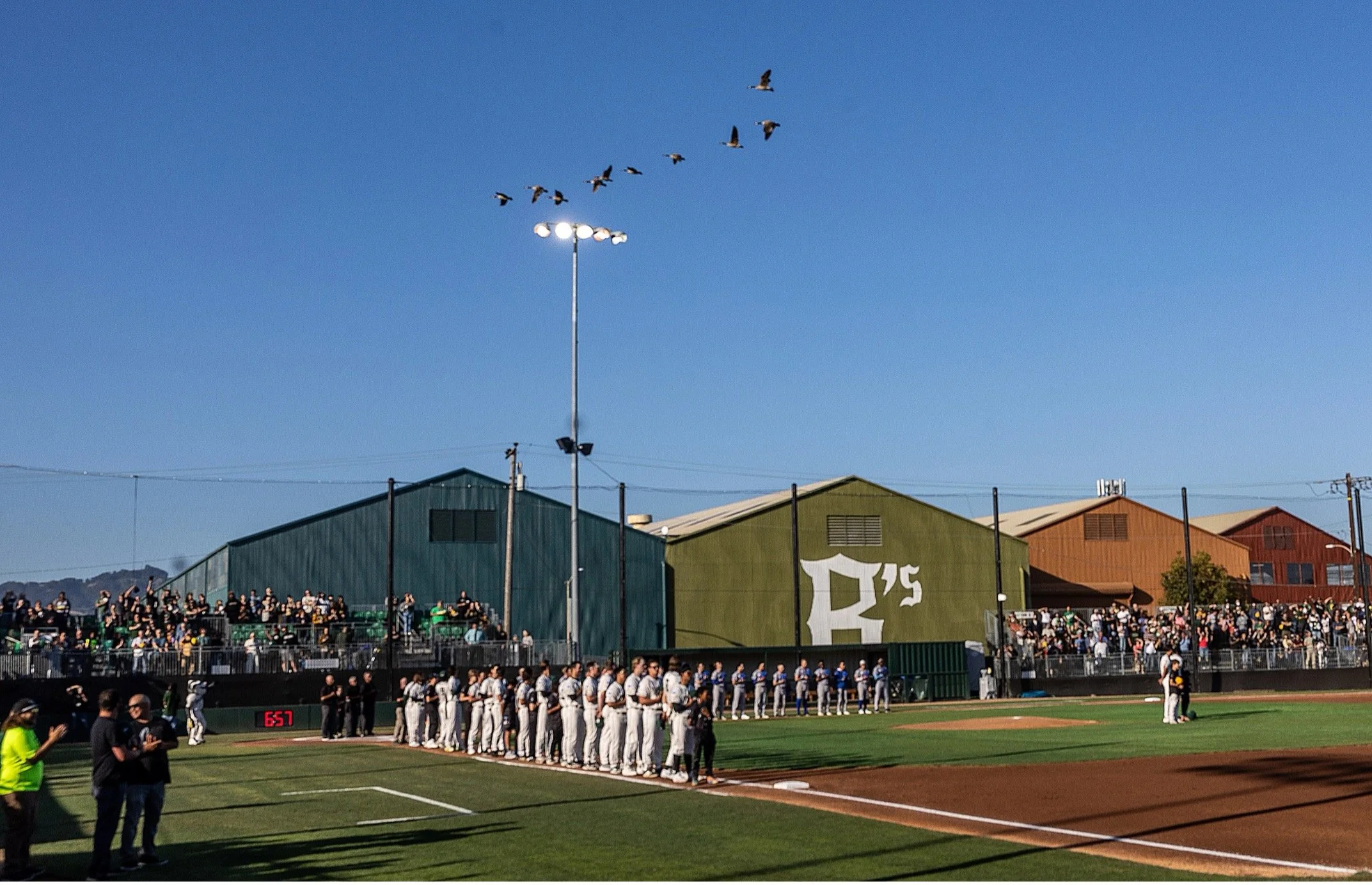
We’re talking about Opening Day, of course. May 2025. Casey Pratt, the Ballers VP of Communications and Fan Entertainment smiled, tucking the crowd reaction away for the future. “I spent months training those geese,” Pratt jokes months later. “I run the pre-game show,” he continues, “We had LaRussell throwing out the first pitch. We had Jwalt performing. We had the phenomenal saxophonist [Ayo Brame] from Oakland doing the anthem. I remember, as he hit the crescendo, seeing that perfect V formation and I was like, ‘Oh my gosh.’” At that moment, caught up in the goose glory, Pratt knew it was going to be a special season. He wasn’t the only one who witnessed the moment. In the stands, fans also took note.
Courtesy Nina Thorsen
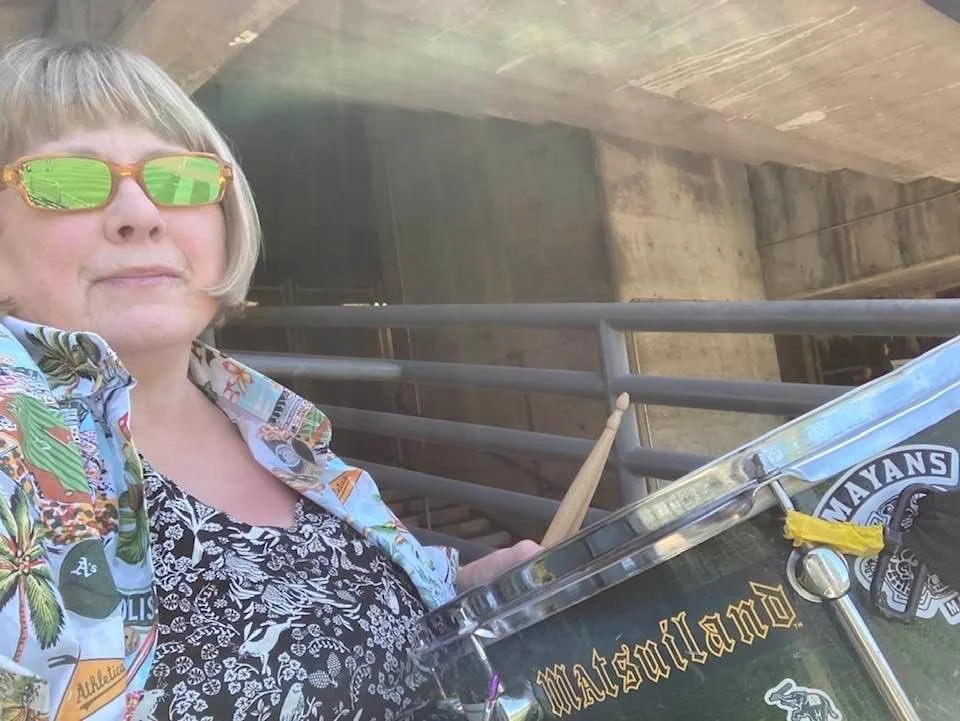
Nina Thorsen is a longtime Oakland baseball fan. Originally from Minnesota, where she watched her Twins win a World Series, Thorsen moved to the Bay Area for work and eventually adopted the baseball team at the Coliseum. Thorsen recalls that “At the end of 2007…I started going to more games, and I developed friendships with a bunch of people who mostly sat in [section] 216. I thought the drummers were the cool kids, and obviously I was not a cool kid.”
Eventually, Thorsen overcame her trepidation and began drumming in right field. Along with many of her fellow Oakland 68s, Thorsen brought her drum to West Oakland when the Ballers started playing. Remembering that opening night, Thorsen says, “Everyone got used to what MLB Opening Nights were like. The fireworks, the gigantic flag on the field, the magnetic schedule that’s going to [demagnetize] everything in your wallet. We had none of that. It felt lower key and that was fine. Then we all saw these geese coming and we said, ‘Ha ha, it’s almost like a flyover.’ Then they just kept coming.” As the geese completed their improbably timed and perfectly executed flyover, Thorsen felt “like the universe was validating the Ballers. Like we were being told, yes, you have come to the right place. And this is the universe reaching out to us and saying the Ballers may not have every kind of major league trimming and sideshow going on, but they are legitimate baseball, and this is Opening Night, and you guys are getting a flyover.”
Karl Mondon | Bay Area News Group
Formation with a Purpose
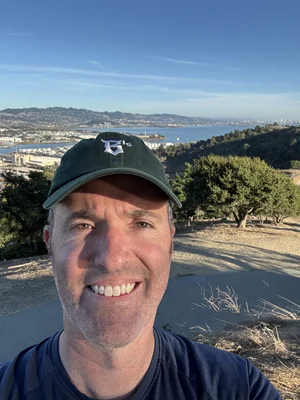
Mark Becker had also been thinking about a flyover. Becker moved to Danville when his kids were school-age where he became friends with Michael “Big Mike” O’Hara. Becker hadn’t seen the geese on Opening Day. He started attending games later in the season when he found out that Big Mike’s son, Michael O’Hara, was playing outfield for the Ballers. Becker told his friend that the team should arrange a flyover for a game. He knew it could be done because he had the means to do it.
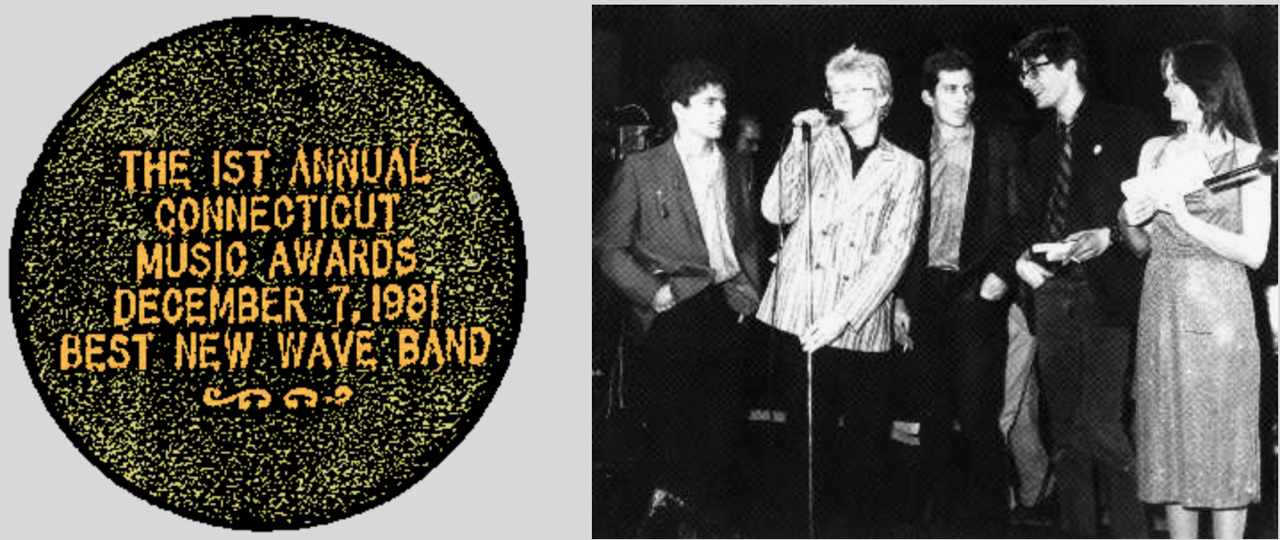
Early Mark Becker, far left
Becker mostly grew up in Connecticut and attended Southern Connecticut State University. He had always dreamed of becoming a pilot, but learning to fly is beyond the financial means of most Americans, including young Mark. While service was Becker’s primary reason for joining the military, it also provided the most viable path to flight school. The Marines had a program that provided the best chance at earning his Wings of Gold. The program required Becker to report for duty during the summers, which allowed him to continue to, in his words, “grow my hair out, play in my rock and roll band, and live the college life.”
After graduation, Becker joined the Marines as a second lieutenant, serving until leaving in 1990. “Then uh…” Becker says, “Saddam Hussein invaded Kuwait and I got called back into service.” Becker flew combat helicopters in the first Gulf War, later retiring from active duty and taking a job as a pilot for United Airlines while continuing to serve in the reserves. Throughout, he maintained an interest in and hobby of formation flying. Think Blue Angels but with obtainable aircraft.
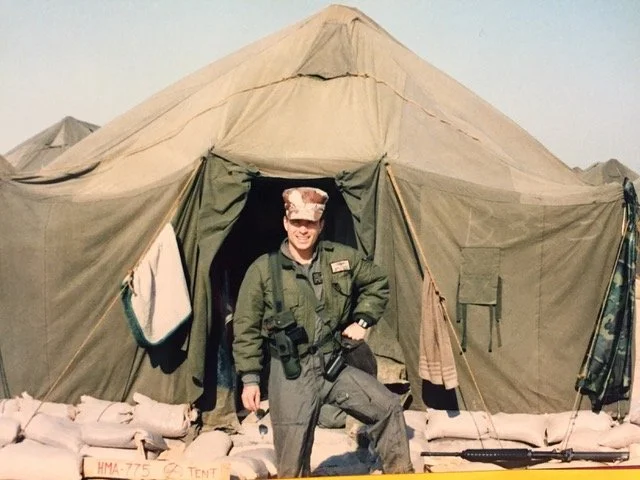
Becker on deployment
In 2017, Becker founded the Memorial Squadron, a 501(c)(3) charity dedicated to performing flyovers at veterans’ funerals. Noting that there are many formation flying clubs that engage in the art for recreation, Becker says that his squadron, “flies formation with a purpose.” The all-volunteer squadron is led by Becker, who insists however that it isn’t his group, he’s simply the founder and the person who runs the operations and does much of the admin work. He credits the team of pilots who volunteer their time–despite the notable expense of flying a private airplane–as the real backbone of the organization. Although Becker is the primary lead formation pilot, other qualified lead pilots often take on the challenges and responsibilities for planning and leading missions as well. The Memorial Squadron doesn’t charge any fees for their work. They rely on donations, the bulk of which come from Becker’s solar panel business, and individual pilots shoulder the expense of flying and maintaining their own aircraft.
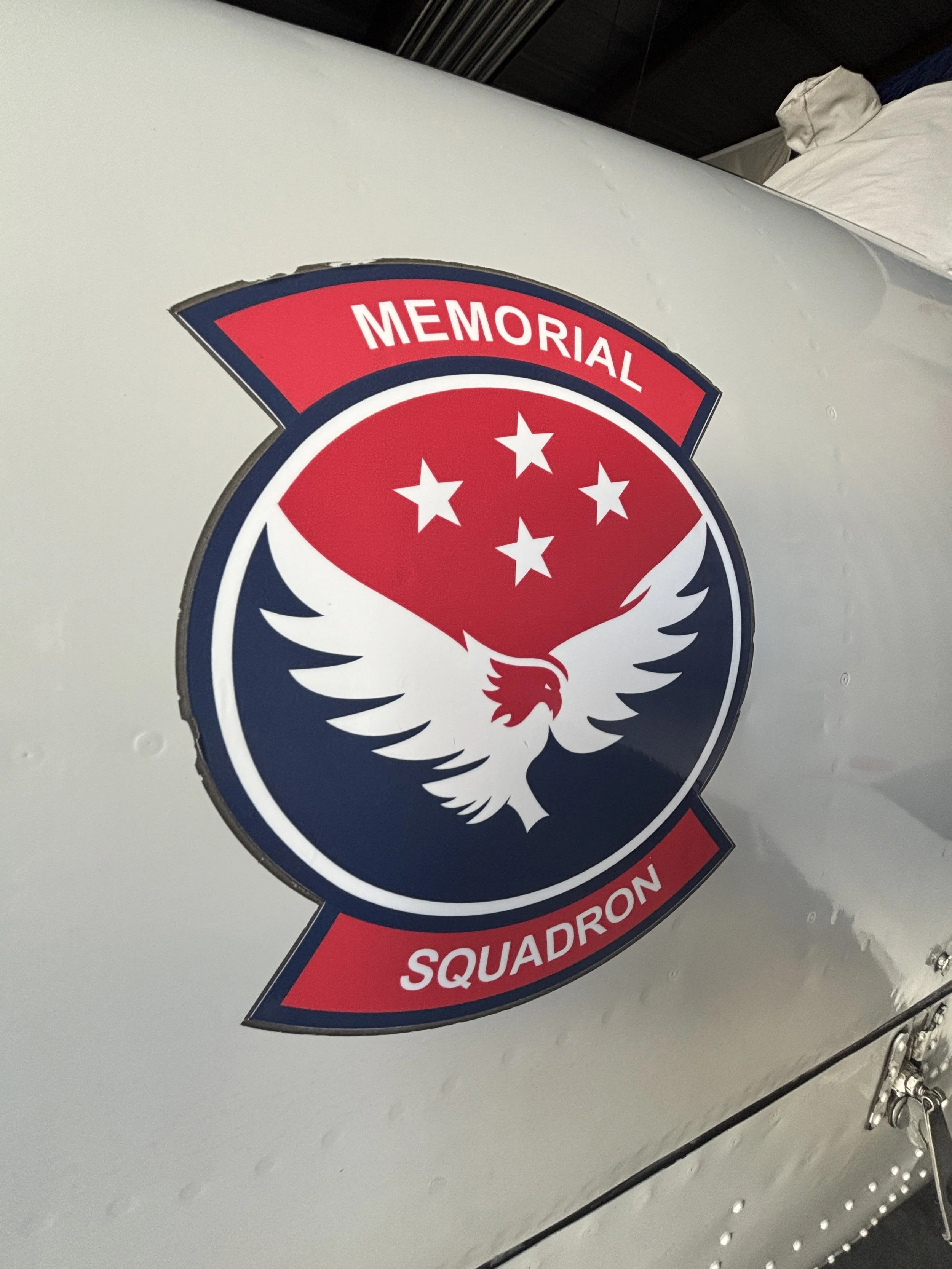
“I wanted to create something,” says Becker. “There’s very few veterans who qualify for a flyover [at their funerals]. Presidents. Generals. But I thought everyone deserved that honor.” Each branch of the U.S. military has different criteria for determining which veterans qualify for a flyover, though a common thread is that the person may have died while on active duty or met criteria for rank or service honors like the Silver Star. The Memorial Squadron provides flyovers for as many veterans as they are able. And though the squadron’s primary mission is to serve military funerals, they also perform at celebrations for national holidays and other military events.
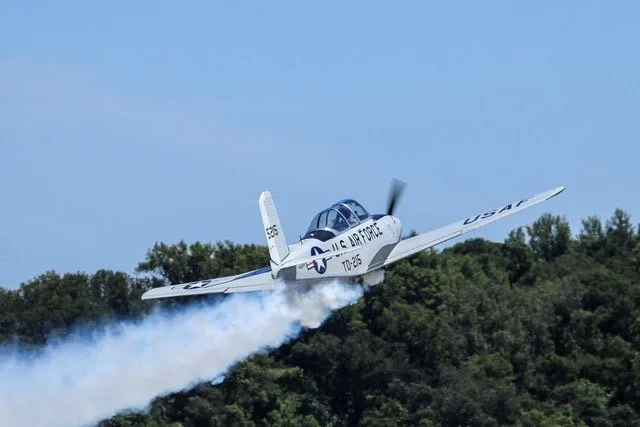
A low pass over Gnoss Field in Marin
Down 0-2, in Disbelief
Fast forward to September, and the Ballers were having their needle-scratch moment: wondering how they got here, facing elimination in the championship series. “From a front office perspective we were distraught,” says Pratt, remembering one of the team’s lowest moments in Idaho Falls. “We got back to the hotel after going down 0-2 and I had a 12-pack of beer that I’d bought but hadn’t opened. So we sat in the lobby trying to drink this extra beer, watching Forensic Files and trying to feel better about things.” The Ballers had completed an historic season. In just their second year, the team set a modern Pioneer League record with 73 wins in 96 games, which also marked the best winning percentage in all professional baseball in 2025. Now, they were in danger of joining the 2015-16 Warriors as Oakland teams that won 73 games and lost in the championship. “We needed something literally over-the-top.”
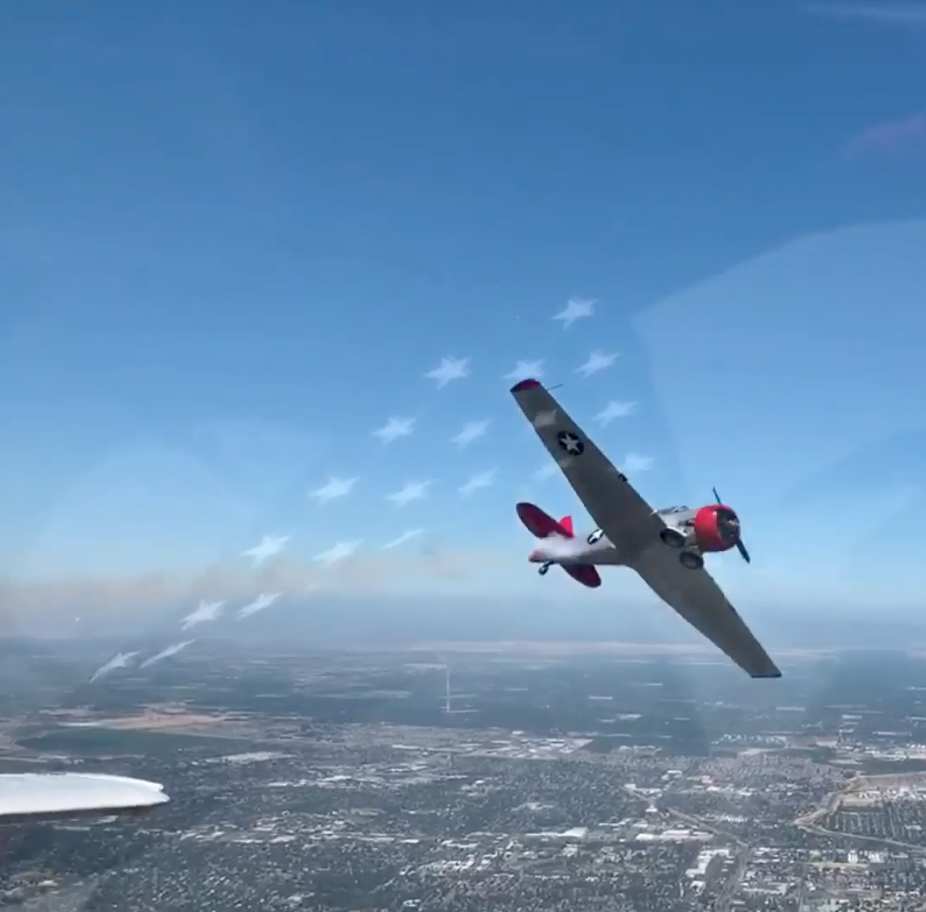
Above with the squadron
At home, Becker also knew the team needed a boost. When he first suggested the idea of a flyover through Big Mike in early September, team brass was hesitant. They were worried about permits, regulations, and legal wrangling. Becker assured them that it wasn’t that complicated. He would work everything out, but in characteristically self-effacing form, he is now quick to spread around the glory. “If there’s going to be anything said in this article, I want it to be praise for my team, the Livermore Airport, and NorCal TRACON Air Traffic Control. They give us the red carpet because they know what we’re doing,” says Becker, who also gave credit to Raimondi’s nearby Oakland Airport.
Finally convinced, Ballers General Manager Laura Geist asked Pratt if he wanted a flyover for Game 3. “And I was like, yes. Please. Absolutely,” says Pratt. With an assist from Big Mike O’Hara connecting Becker and Geist, the flyover was in the works. Pratt recounts, “Me and Mark talked on the phone for an hour while we were on the road working out the logistics. We got to the point where we felt like we could pull it off.”
There was just one more thing.
Becker says, “I told them we had to associate this with veterans.”
Pratt remembers this well. “We had to prove we were worthy.”
As fate would have it, Game 3 was National POW/MIA Day, which the Ballers had already planned to recognize. In addition, the team had included veterans as flag bearers for the national anthem at every game. Knowing that sealed the compact for Becker. The Ballers would have their moment. When the team boarded the plane back to Oakland, the players were already sanguine about returning to Oakland for a win-or-stay-home series, and Pratt was convinced that the Oakland fans could bring the type of energy that would overwhelm the opposition from Idaho Falls. Knowing he might have put the first flyover in the history of the Pioneer League into motion, Pratt felt confident. “Our feeling was if we could win Game 3, this series is over.”
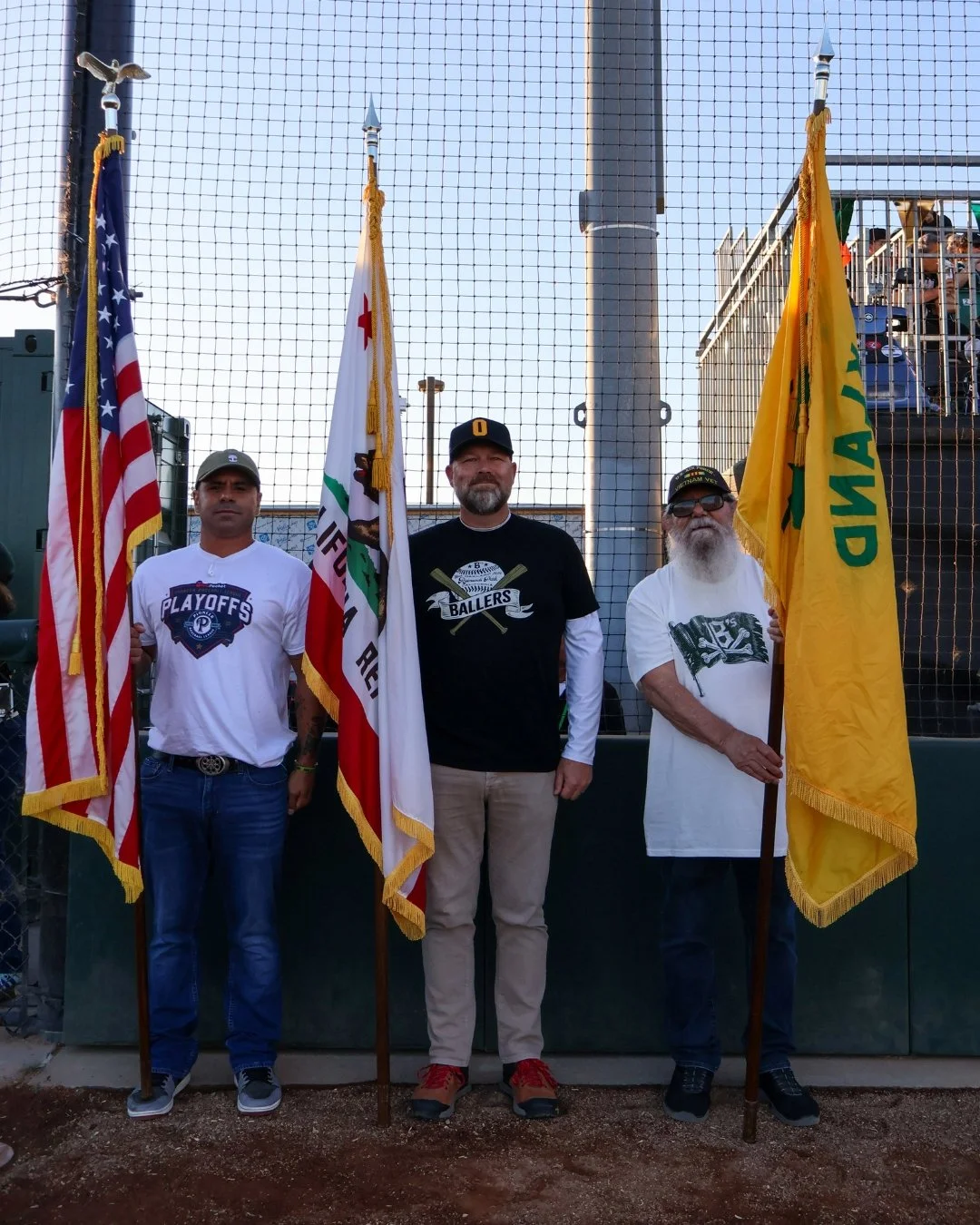
Veteran flag bearers at Raimondi
There’s Quite a Bit of Rocket Science to It
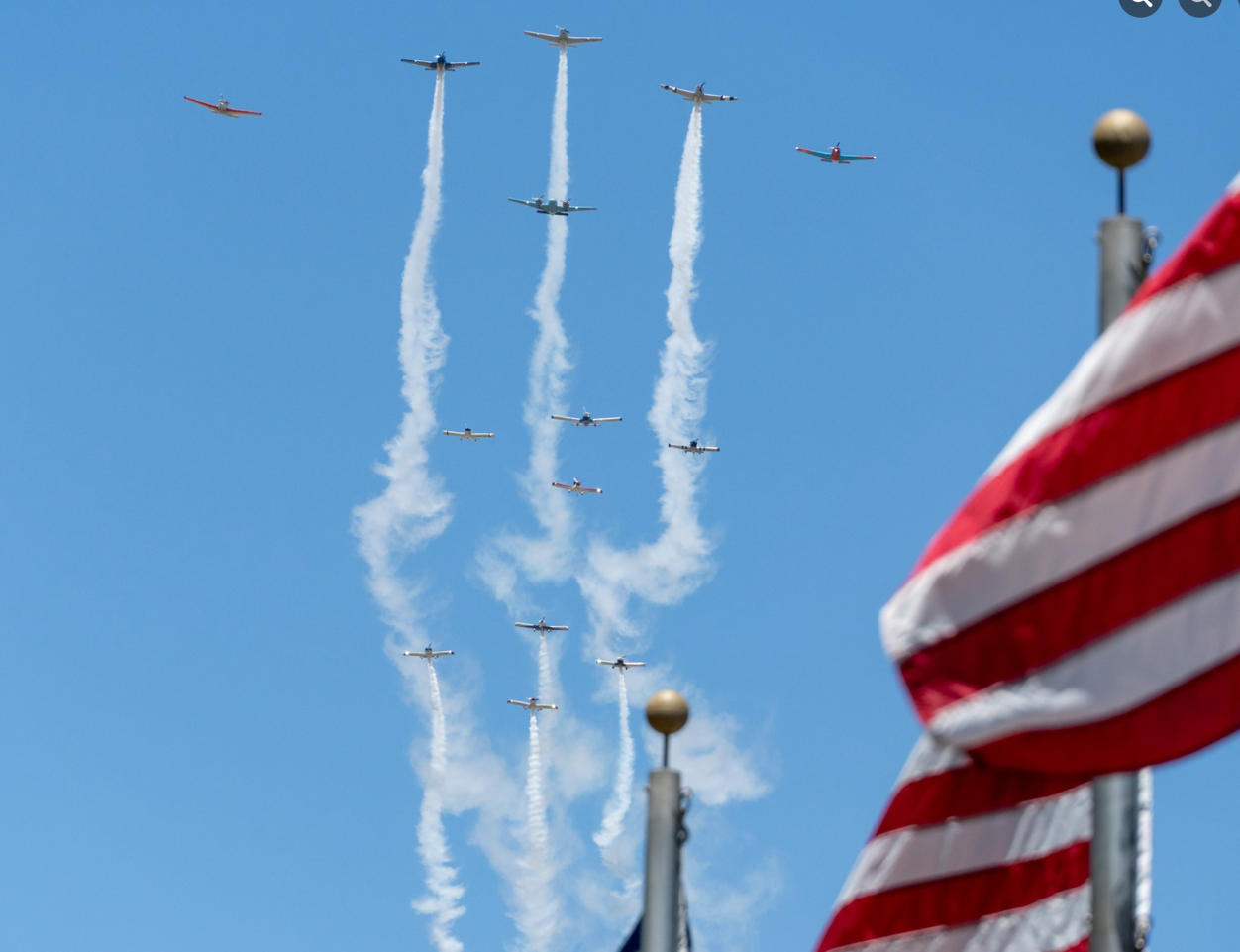
Like any successful relationship, timing a flyover for maximum impact requires communication and trust. If Opening Night in May had been natural migratory magic, Game 3 was a full-blown circus. Pratt had to have the entire pregame show timed perfectly so that the Memorial Squadron would fly over the field right as the singer belted out, home of the brave. But if geese can do it perfectly, how hard could it be? To quote fictional Ron Washington, “It’s incredibly hard.” Pratt needed to tell Becker when the anthem would start and how long the song would be. Part of that included asking the anthem singer to go back through past performances to provide an average duration. “I was hosting [on the field] that day, so it made things even harder. I was constantly checking the clock and making sure everything was going off on time,” Pratt remembers.
“There’s quite a bit of rocket science to it,” answers Becker when asked about how the squadron prepares their approach. “It’s a matter of timing. If Casey tells me the anthem is starting at four o’clock and it’s going to be one minute and thirty seconds, we’re orbiting at 150 miles per hour, and as the flight leader, I’m trying to get it so when we hit that turn towards the park, we’re exactly one minute and thirty seconds out.” This means the squadron is circling the Bay about three miles from the park. There are no comms between the stadium and the pilots. The whole thing depends on coordination ahead of time and then everyone doing their jobs. The one person on the ground who can help if things get out of sync is the singer. If they can see the planes coming in, they can speed up, or hold notes to allow the squadron to hit the stadium at the right part of the performance. For Game 3, that was Pratt’s “ringer all year,” Ysenia Martinez, who had to start singing at exactly 6:32. She timed it perfectly. “That’s graduate level stuff,” Becker jokes.

One last thing. Pratt hadn’t told Idaho Falls about the flyover. It hadn’t been announced as a promotion. The fans were taken by surprise, and they went wild. According to Ballers Manager Aaron Miles, his counterpart—former World Series-winning closer and Idaho Falls manager—Troy Percival seethed.
Pratt recalls that the fans in Idaho Falls had been welcoming for the first two games. They were also sparse in the stands, as the Chukars had won their first round series in an upset and didn’t have much time to market the championship to fans. Pratt didn’t want to be as nice. “We wanted to create a situation where the Chukars would show up and be stunned. It started with the flyover. Then we had incredible performers, then right into the gold rally towels and the noise. It was as if the fans carried us through.”
This Is a Special Group
But Nina Thorsen still had that old familiar feeling. Sitting in the right field bleachers with her drum, surrounded by her fellow 68s, she thought, “2000 and 2001 and 2002 and 2003 and 2006 and 2012 and 2013 and 2014.” All years when it looked like Oakland baseball might have a team that could win it all, only to lose in heartbreaking fashion again and again.
“We had to tell each other it was going to work out, but at the same time saying, well, it was fun. If we come in second, it’s all right.” Thinking back on it now, Thorsen pauses briefly before adding, “It’s not all right.”
The flyover had captured the attention of the crowd, then B’s outfielder Davis Drewek’s high-flying home run robbery against the first batter of the game sent them into a frenzy. According to Thorsen, “Until the Ballers jumped out ahead, it was a weird vibe.” Afterward, the vibes were immaculate.
Oakland won Game 3, 10-2. After a slow start in Game 4, when there was no flyover, they overcame an 0-2 deficit to win 8-3. The Memorial Squadron wasn’t available that day, but they returned for Game 5. That flyover was also top secret. Even the B’s players didn’t know it was happening again. Pratt and the front office wanted them to be surprised. One last edge in the last game of the season. The Ballers won easily, dispatching Idaho Falls 8-1 for Oakland’s first professional baseball championship since 1989. In all, the Ballers won four straight elimination games in the postseason.
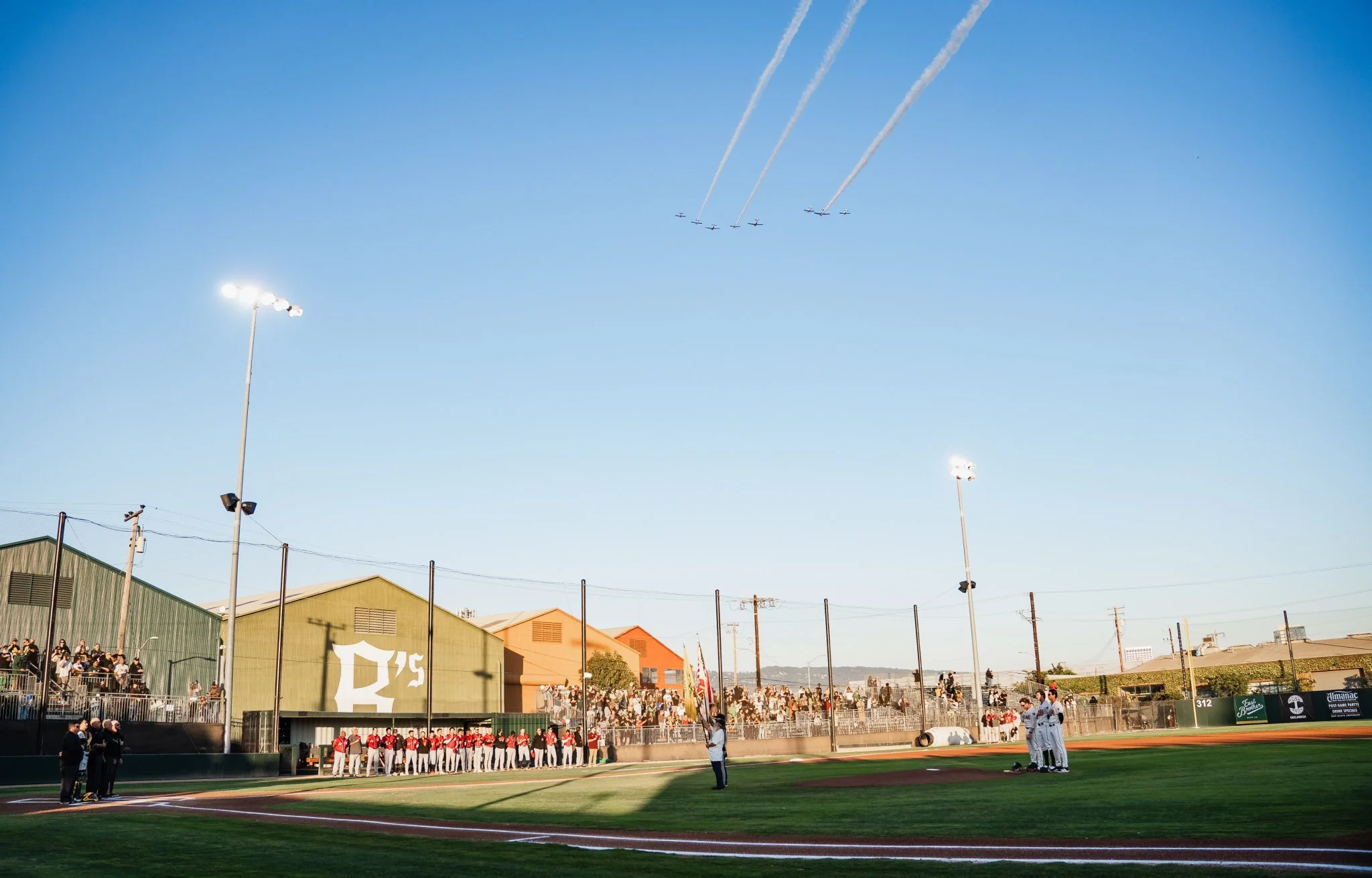
Pratt again gives a huge assist to the crowd. “I credit the fans. I think the flyover sparked everything and then the fans really took over with the rally towels. The other team was rattled. We lost both on the road and won all three at home. The difference was the Oakland fans and there were Oakland fans flying those planes.”
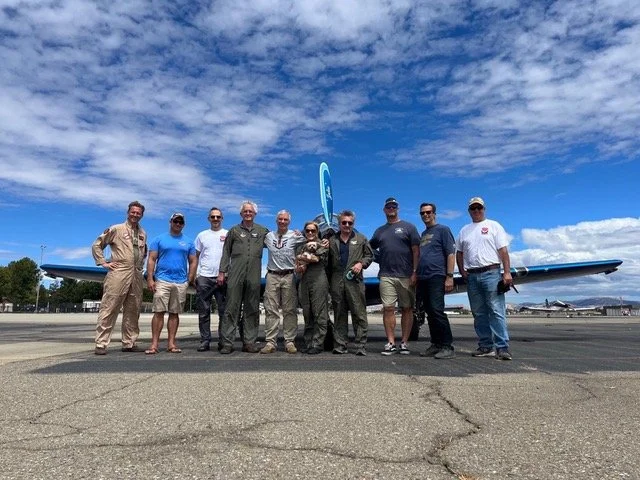
Becker agrees. He is steadfast in making the point that while he’s the one being interviewed, he isn’t what makes the Memorial Squadron what it is. He credits the volunteer pilots who share his passion for a worthy mission that also happens to be very expensive. “The feedback we get from fans, the Ballers, the families of veterans, the intrinsic reward is even more special when we know the impact we made. This is a very special group.”
Looking Forward
Mark Becker never gave up on Oakland. Throughout his time living in Danville, he held a property in the Town, one he returned to once his kids were out of college. “I love Oakland…It’s a great place. It gets a bad rap. That's one of the things that’s so great about the Ballers. Oakland needs a team like that.”
Oakland also needs people like Becker. A secondary mission of the Memorial Squadron, one that Becker speaks about with particular verve, is providing the opportunity to fly to as many young people as possible who wouldn’t otherwise be able to afford to learn. It’s a program Becker would like to see expand with the help of sponsors. “I’m getting ready to retire,” Becker says. Then he opines, “We don’t ask for money for the flyovers. Sponsors would be wonderful. It would be nice to have a foundation to teach young people to fly because a lot of people have those dreams. They just can’t achieve them because of the cost.”
For a city that has taken some blows in recent years, whether in sports or otherwise, Oakland deserves the pomp, the relief, and the dedication of a team on the field and a squadron above invested in the Town’s success.
To support the Memorial Squadron, visit their Facebook page.
Photos and video courtesy of Mark Becker, Nina Thorsen, Mayor Mike Davie, the Memorial Squadron and Oakland Ballers, and Casey Pratt.
Roberto Santiago is a third generation Berkeley boy currently raising the fourth generation. Roberto’s writing has appeared in Latina, Parents, and various online outlets. A lifelong baseball fan, Roberto worked briefly with the Boston Red Sox and once hit an RBI single off Spaceman Lee on a 2-2 changeup. It was his only at bat ever in a real baseball game. Find him on Instagram.