The Experiment that Worked
Patient Zero: The Experiment that Worked for the Oakland Ballers
by Chris Rodriguez
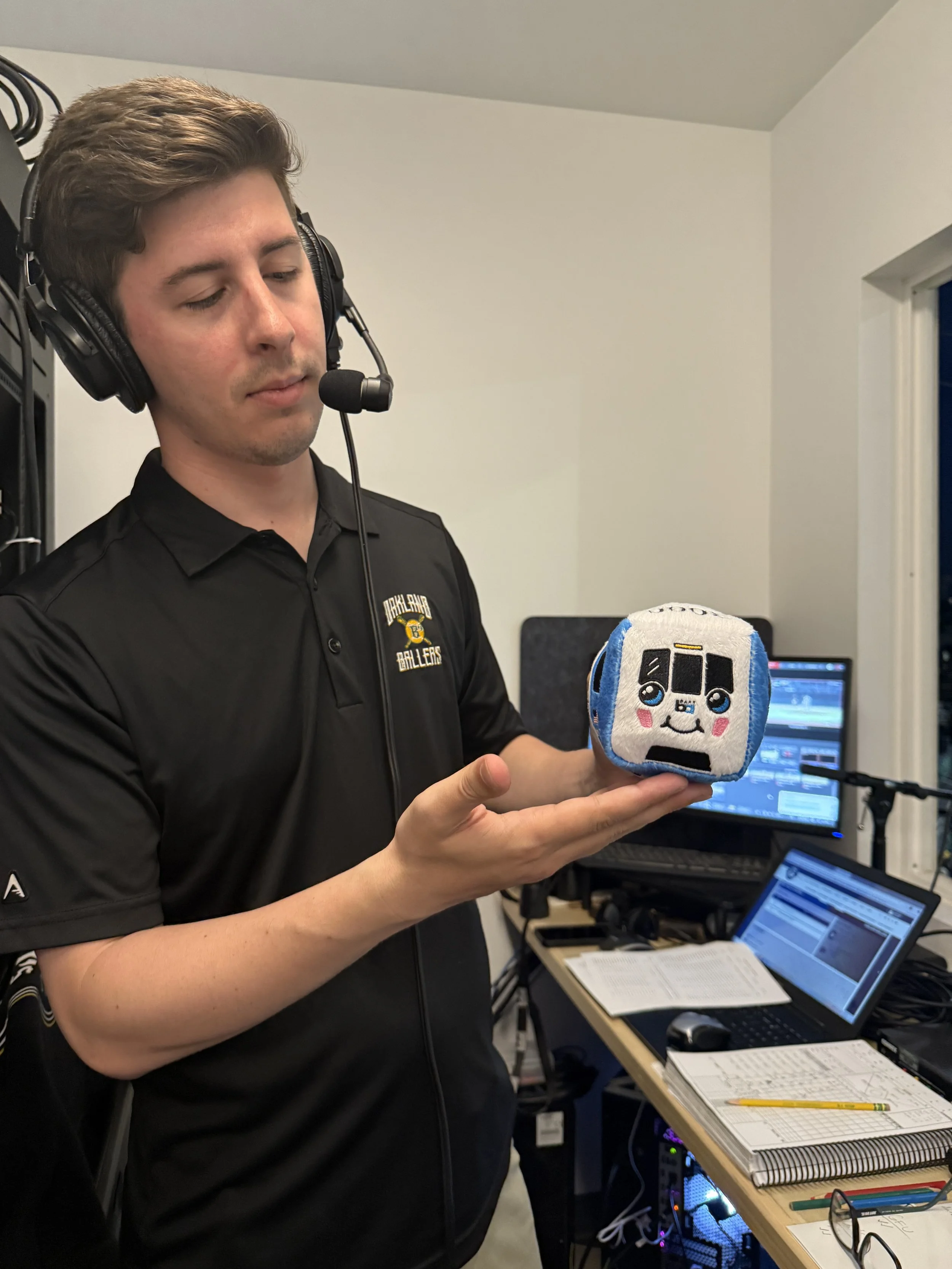
Petersen holds a plush Bart car during a 2025 Ballers broadcast.
Raimondi Park, 9:30 a.m. — I call Tyler. It's cold where I am, probably colder where he is on the field. As we talk, he might be checking the temperature on his phone to confirm, analyzing like a lab tech with data on a clipboard. This is how I imagine him: baseball, weather, logistics, conditions, evaluations. Everything measured. Everything accounted for.
Before he was the Assistant General Manager of the Oakland Ballers, before the crowds, the playoff runs, the 2025 Pioneer League championship, and the green-and-gold merchandise making its way around the city, Petersen was something else: he was employee number one. Patient Zero.
Excerpt from Field Notes: Day 1
Subject placed inside an unstable environment. Forecast unclear, outcomes unknown. No historical data available, only instinct.
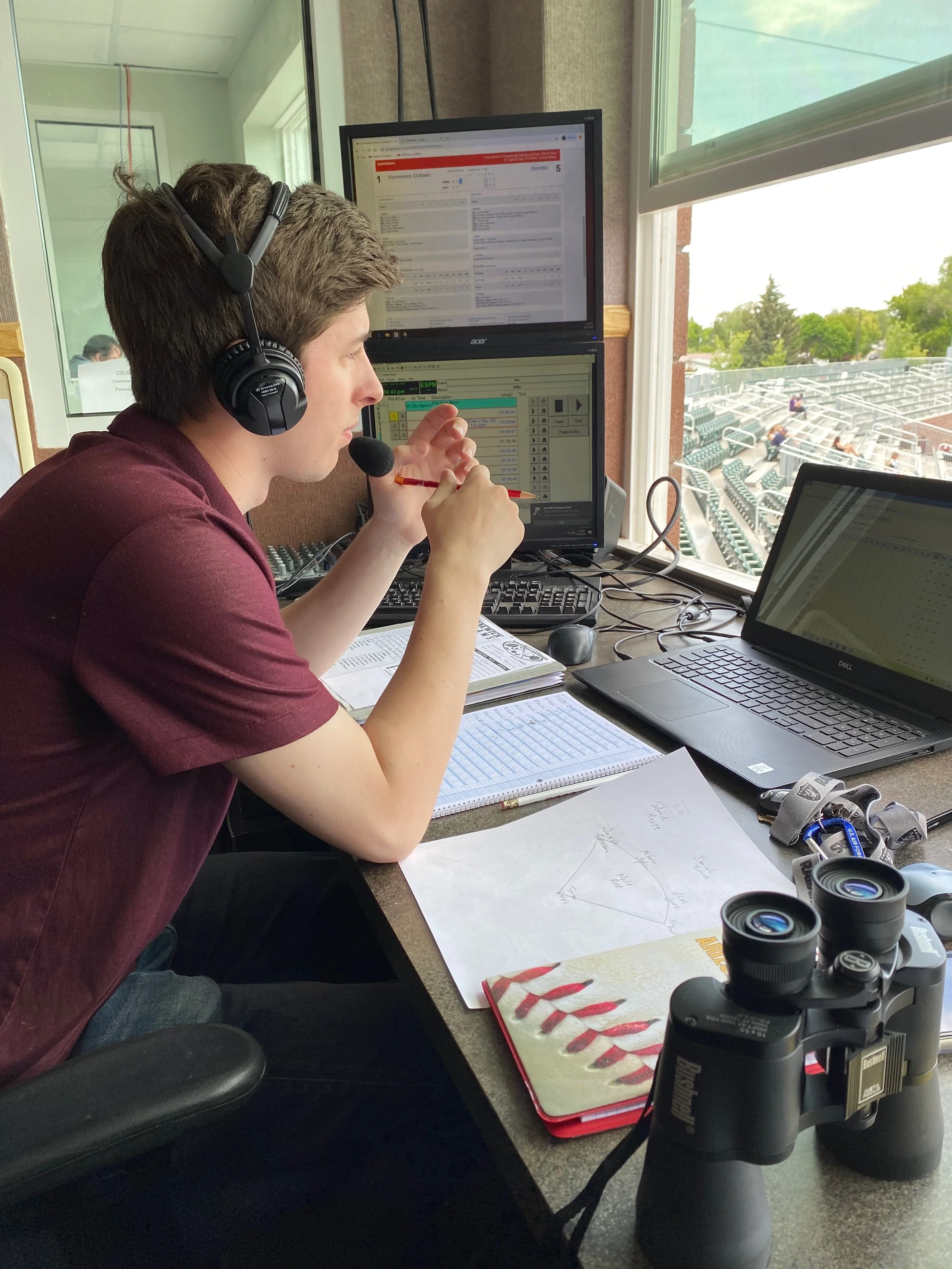
Petersen never planned to run a baseball team; broadcasting was the original track. He worked production for NBC Sports with the A’s, Sharks, Giants, Kings, and Warriors. Three years in, he chased the play-by-play dream and flew to the Winter Meetings in 2019 hunting for opportunity, but no dice. Then, in February 2020, got hired for a broadcasting job for a Royals affiliate in Idaho Falls…until the pandemic hit.
The team and the league transitioned into the independent Pioneer League. The job morphed into something else. Petersen became the only front office representative traveling with the team. Logistics, player operations, contracts. Meals, buses, roster compliance, media notes. Everything that wasn’t glamorous but made the gears turn. It was here that the experiment unknowingly began.
Then came the Rocky Mountain Vibes. A front office run by kids in their twenties, a club stacked with 16 to 18-year-old Mexican academy players. It was truly men against boys. The team went 22-76 the previous year, a record that scraped the very bottom of professional baseball. The condition didn’t faze the subject; it fortified him.
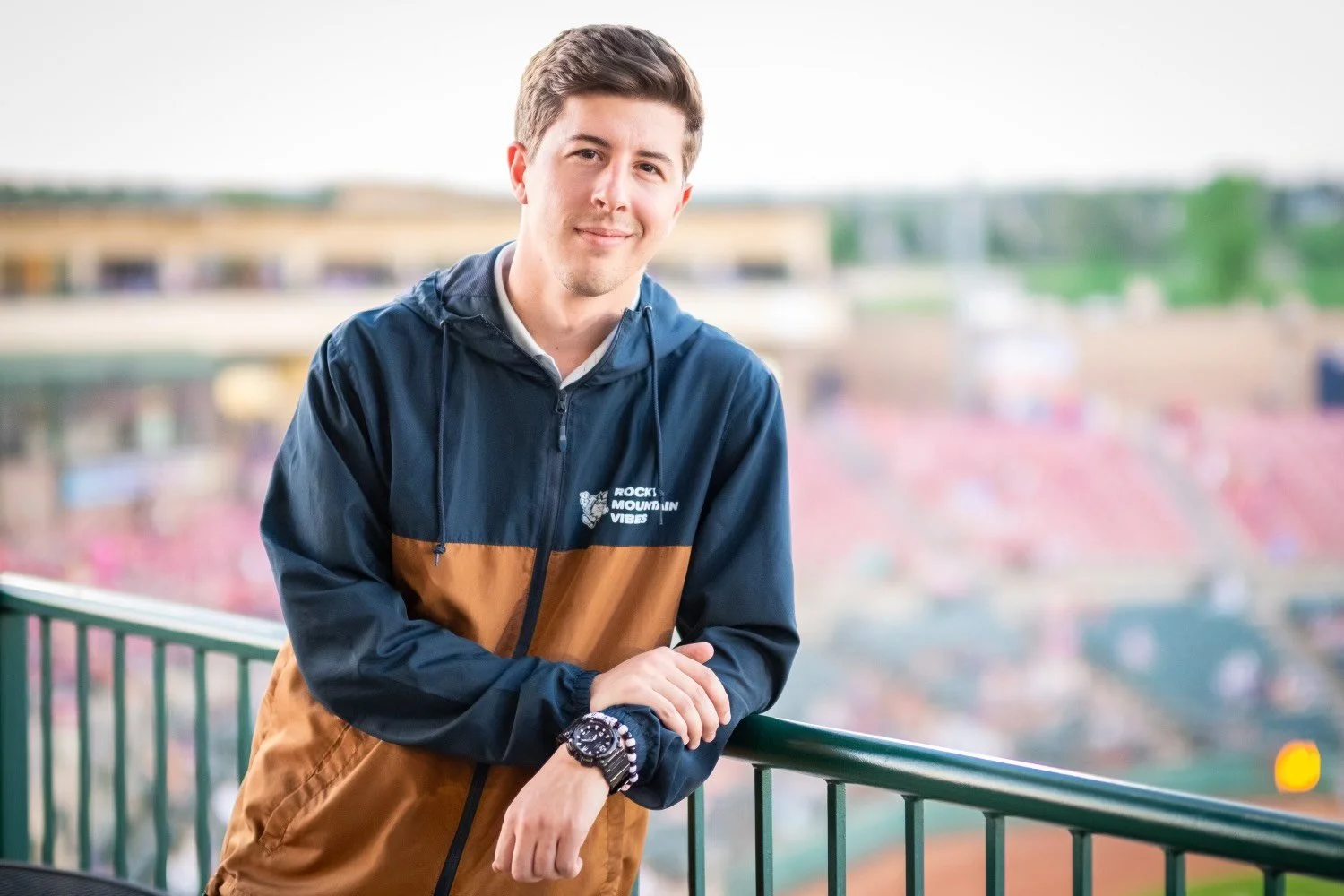
Petersen during his time as Director of Baseball Operations with Rocky Mountain in 2023.
Excerpt from Field Notes: Phase Shift
System collapsing, subject adapts. Builds infrastructure manually; results stabilize.
After a year without a formal GM, Petersen was given the position—building a scouting system, baseball operations department, and rosters, which turned into the team’s first-ever postseason trip. A day after heading home from playoffs in Ogden, UT, a call came through before he crossed the state line, and he heard the voice on the other side say, “Hollywood producers want to start a baseball team in Oakland.” Tyler’s first thought: “Oh no.” Tyler had an idea a call was coming, but he didn’t know it was going to be like this. “At that point, I just thought, I don't know if that's gonna work,” he says now. “That doesn't really sound great. I had very little information to go off of at that point.” Indeed, Hollywood and baseball are completely different worlds. But perhaps budgeting and running a movie production may be more like running a baseball team than we know?
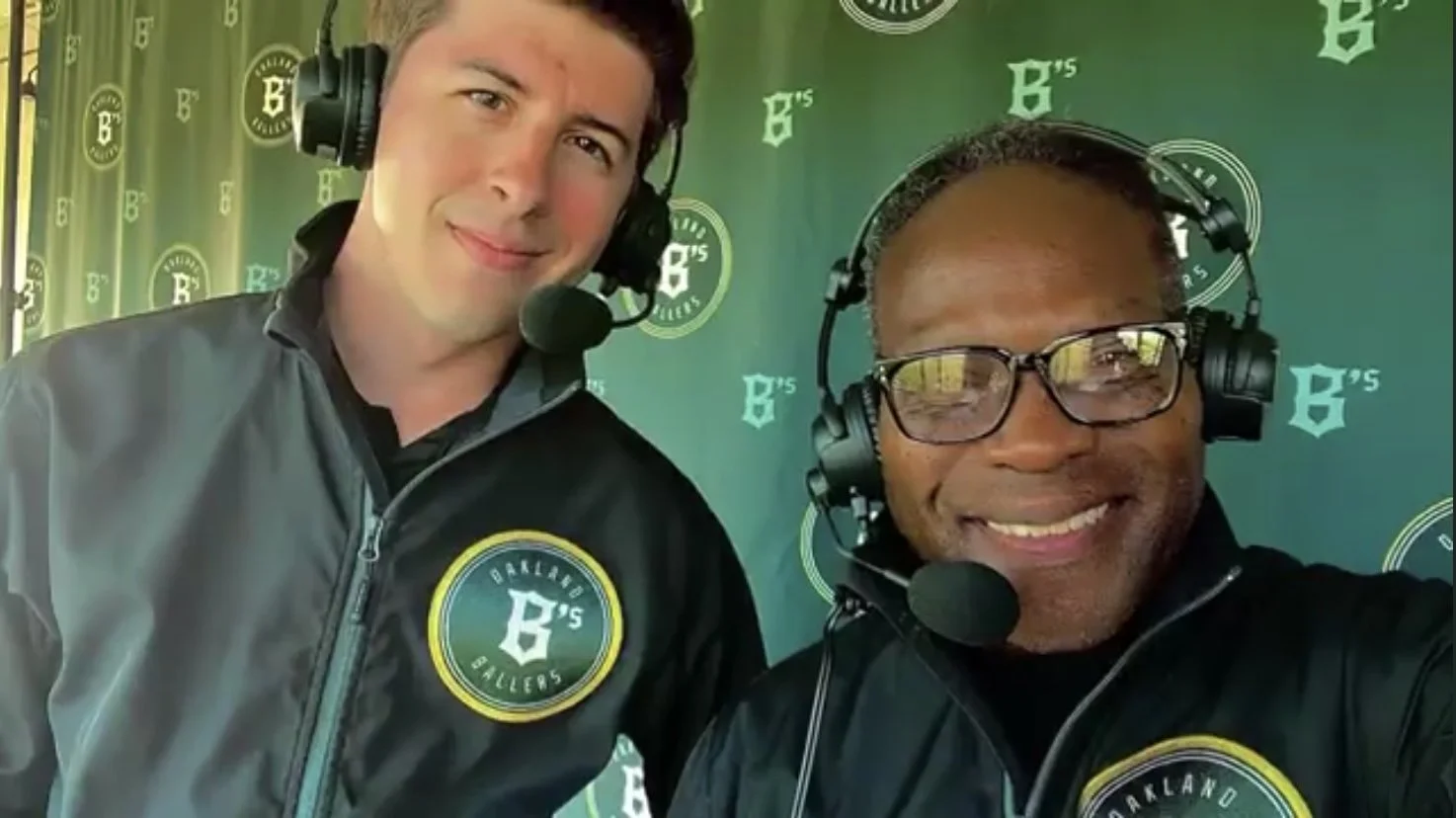
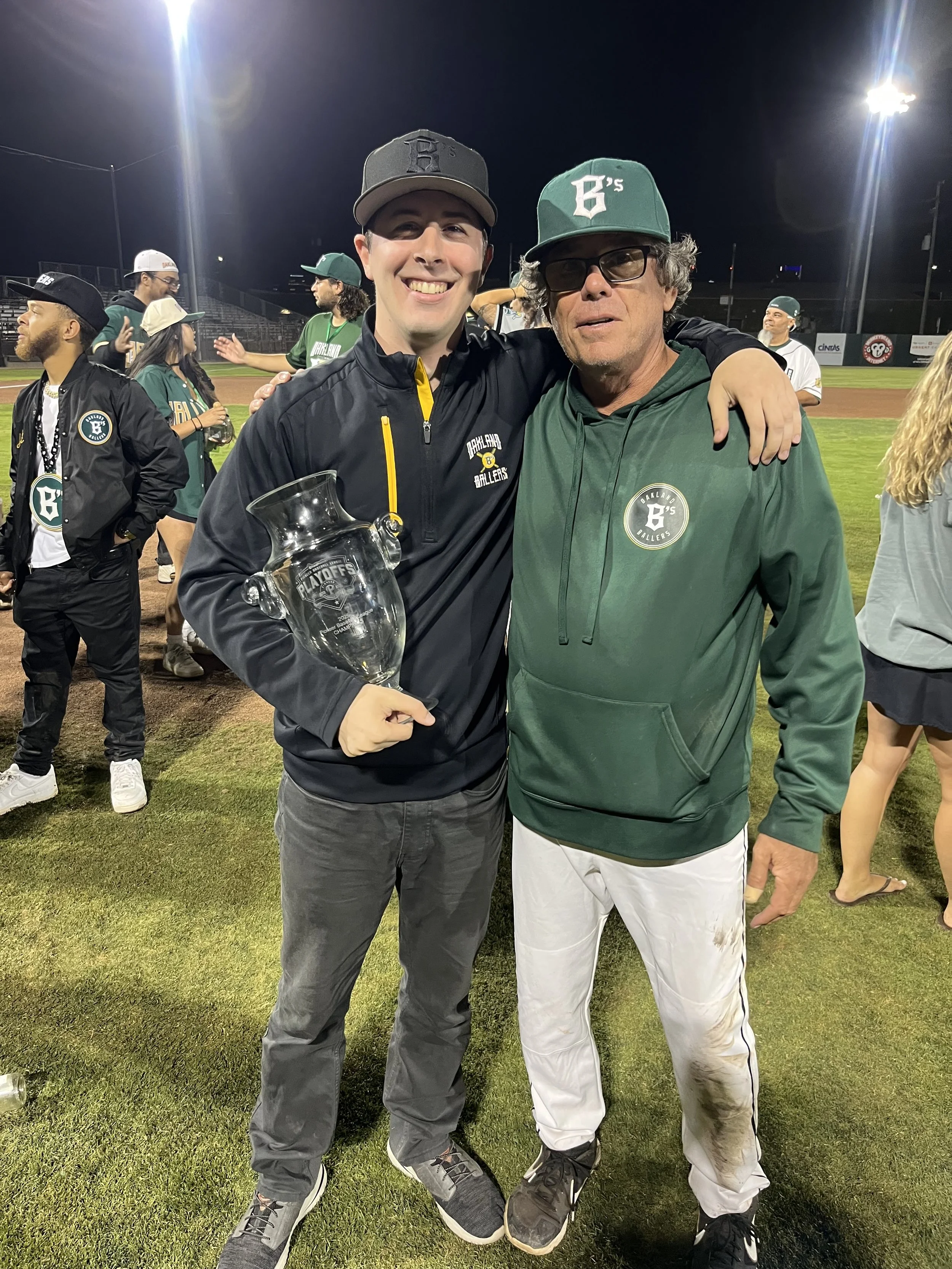
Petersen poses with Vern Glenn before a Ballers broadcast on KPIX+ in 2024.
The Oakland Project
Tyler’s new position included: Broadcasting, travel coordination, analytics, and scouting. It’s not your normal General Manager work in the minor leagues or independent ball; GM’s are more business operations-minded. January 2024 erased the original field plan without prejudice, manager candidates cycled, and infrastructure was rebuilt on the fly. The organization ran like a startup because that’s what it was: an untested brand and an unproven market for independent baseball, and Tyler stood in the middle of it. “I didn’t found the team,” he says. “But I helped launch it, and I’m protective of it now.” There were no playbooks, no cheat codes, only decisions and more people to answer to. “This is a chance for me to have some kind of impact in my local community. And if the project fails or succeeds, I would at least like to have some influence on whether that project would work. I think it would have stunk if they announced this thing, and I had said, no, and it had failed in two years.”
Excerpt from Field Notes: Containment Strategy
Subject embedded full-time. Operating scale remains minimal, with only a handful of core operators and continuous exposure.
By design, Oakland does not operate like most independent clubs. Sales-driven GMs run the business, and the manager runs baseball. In Oakland, Petersen has responsibilities and investments on the baseball ops side. The offseason means phones, endless phones. Player contracts expire October 15th, three weeks to build the roster before the market opens and data to go through, including lists, Baseball Reference tabs, Draft League contacts, agent calls, player-to-player recommendations, and midnight texts. Ten offers produce one signing.
In-season is worse. Ninety-six games, six days a week, logistics by day, broadcasts by night, and player moves in between. “There’s a point in the season,” he says, “where you get tested whether you really want to do this or not.”
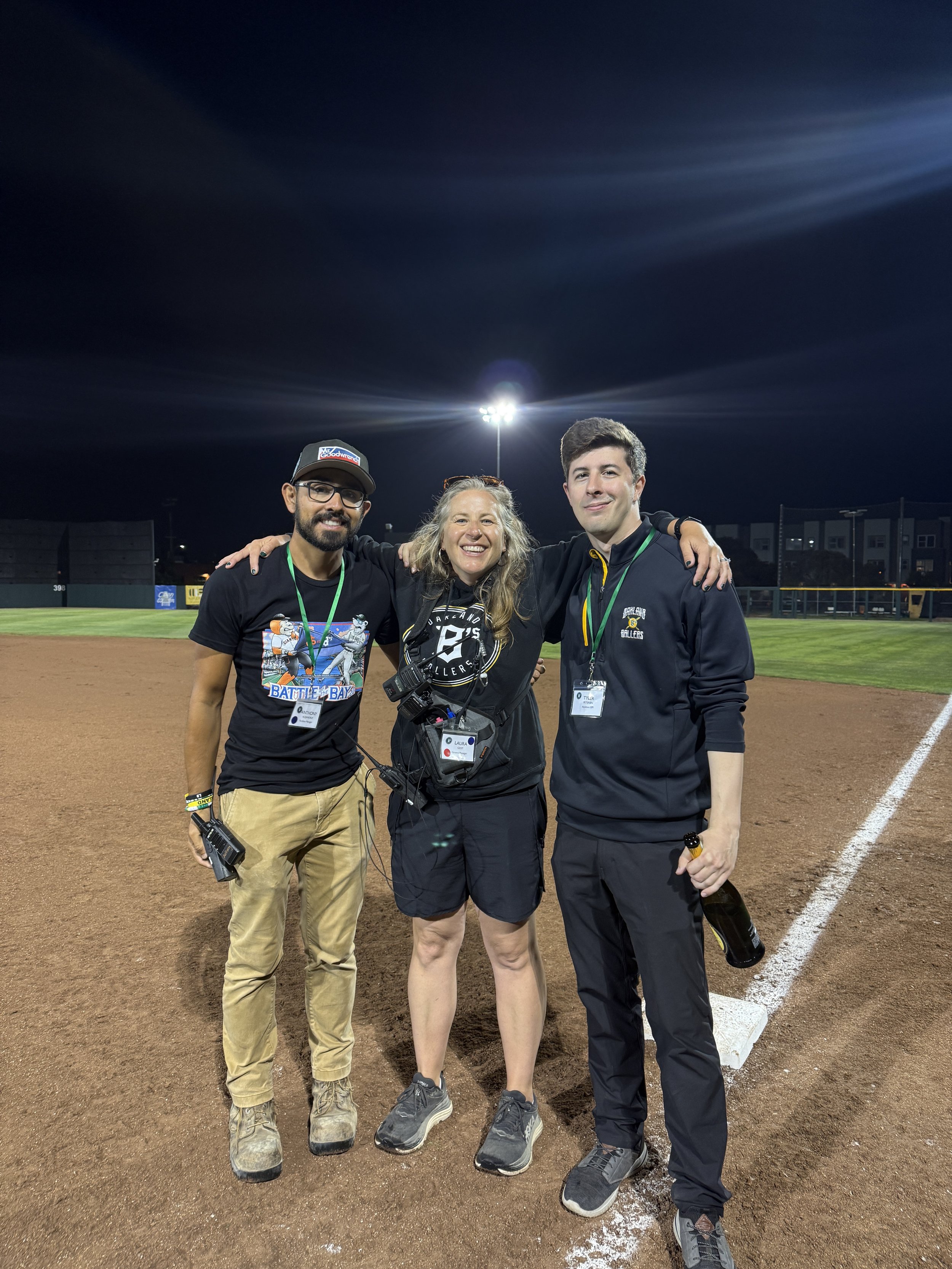
The Ballers Model
Oakland isn’t built to keep players around. Their purpose is to move them onward in their careers. Not every move is with the organization in mind; this team operates on a human level. Trade a great pitcher for nothing if it really opens a door, send hitters on even if it costs wins. Make intros and phone calls and be honest. Oakland has helped launch multiple players directly into Major League organizations in two seasons. That’s not an accident. That’s policy, that’s doing what you say.
The B’s have always locked in on defense up the middle: catcher, shortstop, center field. Fill those first, then build power around them. Petersen can list names from memory: who blocked, who picked, who ran balls down before they dropped in. Winning follows a structure. Yet even he admits, “I don’t know how you win 73 games. You just hope it takes care of itself.” It has so far.
Excerpt from Field Notes: Ethics
The program prioritizes subject progress over asset retention. Competitive sacrifice in exchange for the foundation and long-term acquisition leverage.
The Seat at the Table
Tyler didn’t ask for power. He was recruited, and he asked for creative control and responsibility. Unlike his previous stops, Oakland’s owners are present and visible daily. There is no private jet arrival and no button-up panic. It’s a collaborative atmosphere.
Championships do not define success in Oakland, although it definitely helps. Tyler defines success by exits, player exits. Where did the player go next? Did a door open? Did the call come? Did an opportunity pan out? Oakland’s win totals grab attention. Oakland’s organization earns respect.
Recognition
It used to catch him off-guard when he’d see a hat on the street, a hoodie at a restaurant, the B’s logo at a stoplight. Now, not so much. “What started as nothing, almost a secret” he says, “is suddenly something.” That’s the part you couldn’t predict. The experiment didn’t burn out, and neither did the subject. It went viral.
Final Excerpt from Field Notes: Current Status
Subject no longer contains the outbreak; the subject now operates the system.
Status—nominal.
In Oakland, nothing about this feels accidental anymore. The B’s didn’t cure chaos, they learned to train it. Petersen survived the doses, every variable, every accelerated trial. And now, as the system stabilizes and the players move outward and upward into bigger leagues, one truth remains: the experiment isn’t over, that’s never-ending, but not to worry—the system is learning faster than ever.
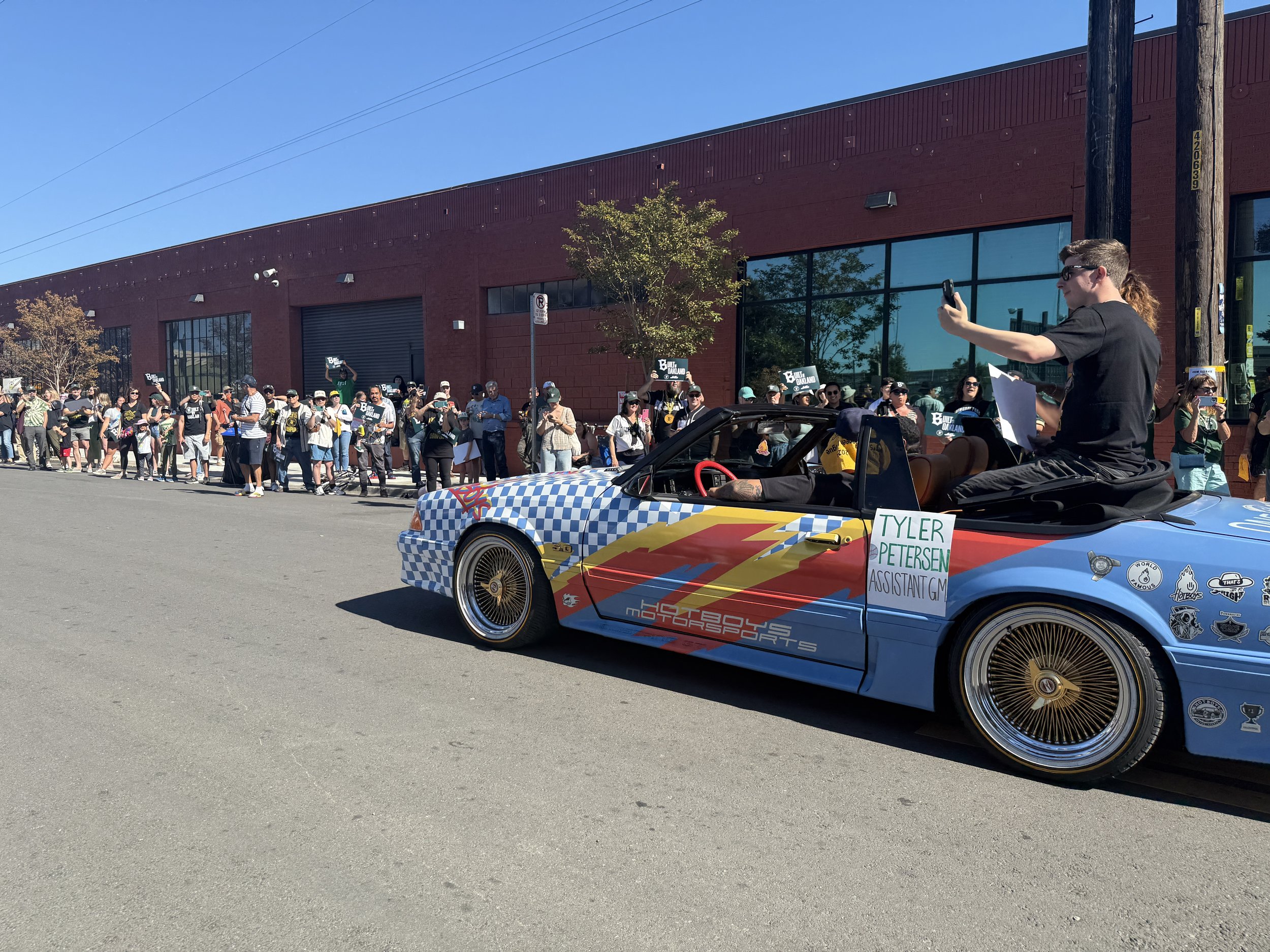
Petersen rides a car during the Ballers Championship Parade in October.
Chris Rodriguez documents baseball through reporting, access, and visual storytelling rooted in the player, development, coaching, and front-office decision-making. This feature runs in collaboration with Dispatches From Raimondi and 9inningnomad.
Find him on Instagram.