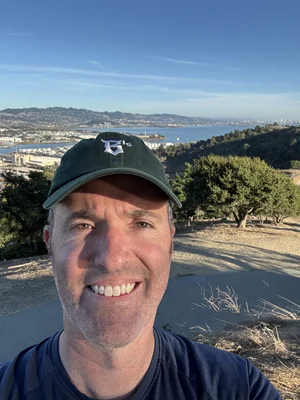
What the B’s Mean to Me: Kaya Oakes
Cancer wanted to isolate me; the B’s brought me back
by Kaya Oakes
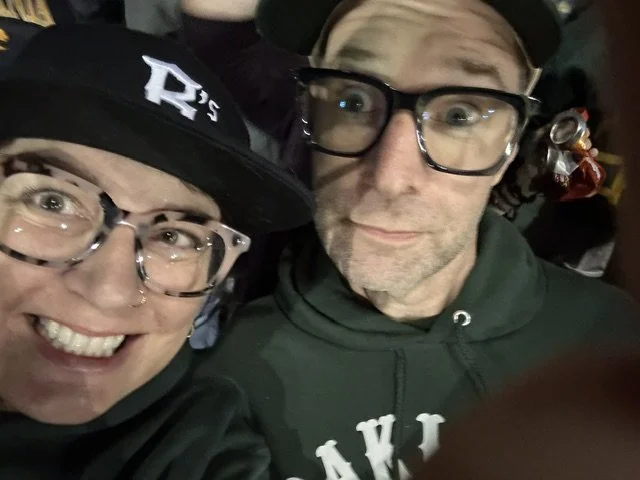
The first time I put on an Oakland Ballers hat at a game, I was bald. Technically not Mr. Clean bald, but months after finishing chemotherapy, my head was covered in a layer of downy white fluff. When you get breast cancer, there are things nobody tells you, like the fact that your hair follicles are straight up dead after chemo and take a long time to come back to life; that it is hard, every October, to watch the world turn pink but to also watch a cure remain elusive even as diagnosis rates continue to rise; that you will mostly be the same person, but not the same person at all. Your tastes in everything from food to people to entertainment will change. You will need new sources of joy.
This is how I became a baseball fan. In 2023, just a couple of years after Covid chased us all into our houses and just as we were all beginning to re-emerge, cancer chased me back into mine. When you get cancer-level sick, it means masks and hand sanitizer, but it also means quitting movies, church, family gatherings, and seeing friends. Technically, cancer is something that you get, but it is mostly what you give up. Cancer is isolating. Only other people with cancer really understand, and one of those people was my friend Greg.
In one of those absurd coincidences that gives life its sharp edges, I was diagnosed with cancer at almost exactly the same time my friend Greg was diagnosed with cancer. There’s no such thing as a “good” cancer or an easy one, but breast cancer is at least well understood, since 1 in 8 people with breasts will get it. Greg, on the other hand, had gallbladder cancer, which sits in the unfortunate middle of a Venn diagram of rare, aggressive, hard to detect, and hard to treat.
Greg was an academic from Canada who landed in America and a Blue Jays fan, and we became friends online due to shared scholarly interests before meeting up at conferences and spending time together when I guest taught at his university. We had long, rambling talks about religion, American versus Canadian culture, and baseball. I’d been raised in a baseball family (although I was born and raised in Oakland, my dad was – alas – a Giants fan), but my interest in the sport had drifted away, replaced by a time-consuming job. Greg lived for baseball, wrote about baseball, and encouraged his three sons to play baseball. With his scholarly knowledge of the sport, Greg made my barely passing understanding of baseball sound like the worst member of your trivia team trying to cover their ass. But he also got me thinking that maybe it was time to start checking out baseball again.
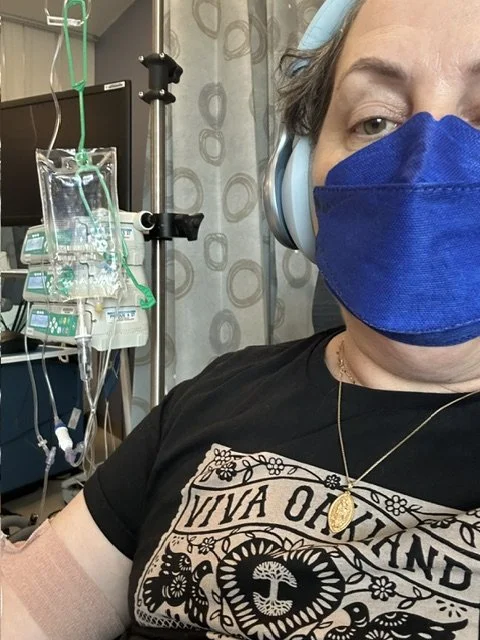
As we moved through surgery, chemo and radiation, we’d exchange chemo selfies and texts about the various bathroom humiliations of cancer, updates about scans and worries about our families. We hadn’t known each other deeply before cancer, but cancer has a way of cracking even the most introverted people open. We lost our health and gained a deeper friendship. Greg knew I hadn’t been much of an A’s fan but also knew that I loved Oakland. So I told him about Oakland getting a new baseball team. And as news about the Ballers began to roll out, I’d send bits and pieces to Greg. They had a woman pitching(!), the mascot was a possum (?), they were playing just a few blocks from where my dad grew up in the Bottoms.
As time went on, Greg would take longer and longer to reply, if he replied at all, because cancer is merciless. He died in October of 2024 at the age of 49. This is why people who’ve been through cancer largely detest the language of battle, fight and survive, as Greg did and as I do, too. It dishonors the dead by turning them into losers and leaves those still alive wondering why, and for how long, they will be around. In America, cancer is killing more and more people, younger and younger, every year. Researchers agree that environmental exposures are behind many diagnoses, with poorer neighborhoods often being cancer clusters. In the words of Barbara Ehrenreich in her essay about her own breast cancer experience, “Welcome to Cancerland,” cancer is “an abomination, and to the extent that it’s man made, also a crime.”
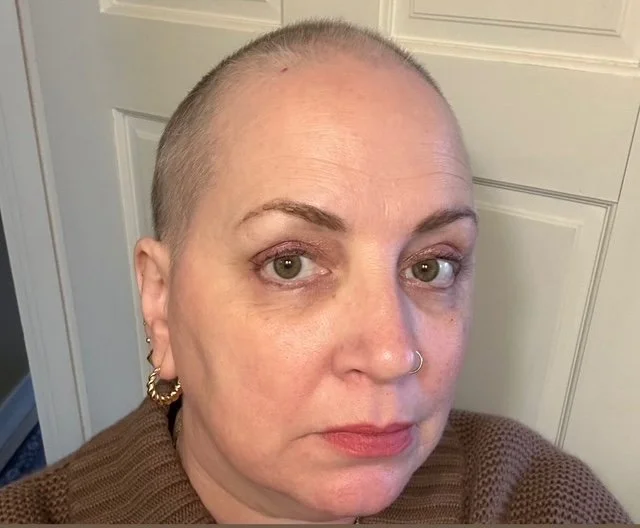
The first summer of Ballers baseball, I was just a few months out of treatment and still pretty sick, toughing out a targeted therapy and the side effects of the hormone-blocking meds I’ll take for up to a decade in order to try and prevent the cancer from coming back. In addition to being mostly bald, my digestion was wrecked, and radiation burns and surgery scars meant my body looked and felt like a particularly potholed stretch of San Pablo Avenue. So I went to a few games and enjoyed them, but not that many, because physically feeling like shit is antithetical to having a good time in a crowd.
The second summer of Ballers baseball, I had hair again, and was physically mostly back to normal, capable of inhaling an order of nachos and not immediately needing to race to a (very clean) porta-potty. My brother, a spurned A’s fan, would come down from Oregon to Oakland to visit our mom, and we’d go to games together. Or I’d go with my husband, another mostly sports-neutral-turned-baseball-curious Bay Area kid, or with one of my other siblings, or with friends. Sometimes I even went alone, and still enjoyed it just as much. And, of course, 2025 was the season when everything clicked and I went to game after game and started talking about “our” team and how “we” won the championship. At the championship parade, with its scraper bikes, players in low riders, flaming snail car and silver-haired cheerleaders, I realized that, for the first time since the doctor took my hand and told me things were going to be difficult for the next few years, I was genuinely, purely happy. It was a true baseball comeback story. I still wish I could tell Greg and my dad about it all.
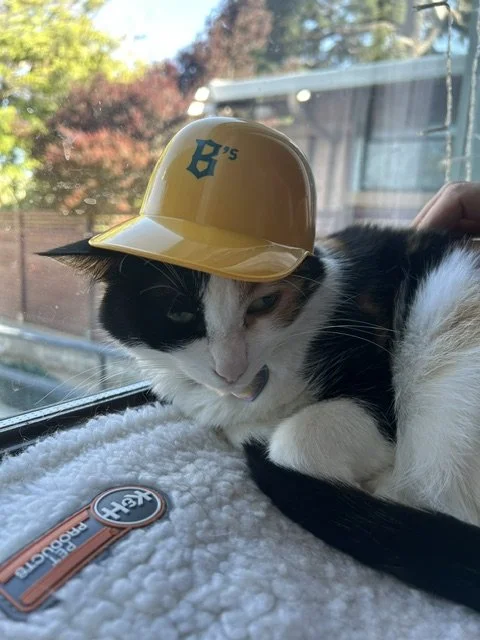
The third summer of Ballers baseball, my hair was long enough to match some of the player’s mullets, but the season was a rollercoaster, the same thrill of victory and agony of defeat I remembered from watching my dad watch the Giants as we shivered in the bleachers at Candlestick park. But you keep going back, win or lose, because baseball is not just romantic; baseball is seductive. The games juxtapose rhythm and elegance with awkwardness and absurdity. It’s a soap opera, a sitcom and a thriller in every game. It’s hard not to get sucked in.
What I experience at Ballers games, more than anything else, is fun. Adults do not get to have fun very often, especially adults dealing with cancer. Some people go to Disneyland after cancer treatment. I went to Raimondi Park, over and over again. Even at frigid, endless night games when the team struggled, or at roasting day games surrounded by stampeding kids, I was still at a baseball game. Like the city around it, the team is tough, self-reinventing and always fighting its way back. At a baseball game, life has order and meaning, and the people who stick it out until the end of the game are all there until the 9th for the same reason: because you want to see how it turns out, even if it doesn’t always turn out how you want it to. And you want those hard-working guys on the field to hear you say thanks, because they deserve it.
After you go through cancer, joy is not found in outcomes, but in experiences. You live in the present because the past is gone and the future is not guaranteed, but what’s guaranteed at a baseball game are the things baseball has always guaranteed, the things millions of people around the world love: yes, emotional highs and lows. Yes, wins and losses. Yes, the drama of it all. But most of all, the noise of the crowd, the goofy music, the dancing possum, the bench under your butt, the people around you, the players, the coaches, the vendors, the town. Win or lose, you have an experience. And in experience, in finding fandom and belonging at a Ballers game, you find joy.
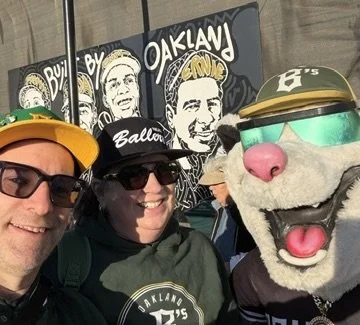
October is National Breast Cancer Awareness Month.
Kaya Oakes is a senior lecturer in writing at UC Berkeley and the author of six books of nonfiction. Her writing has appeared in The Guardian, The Washington Post, The New Republic, and many other publications. She was born and raised in North Oakland and lives a few blocks from Bushrod Park, home field of Oakland baseball legends. Put on Mac Dre’s “Feeling Myself” if you want to see her dance like a fool.