

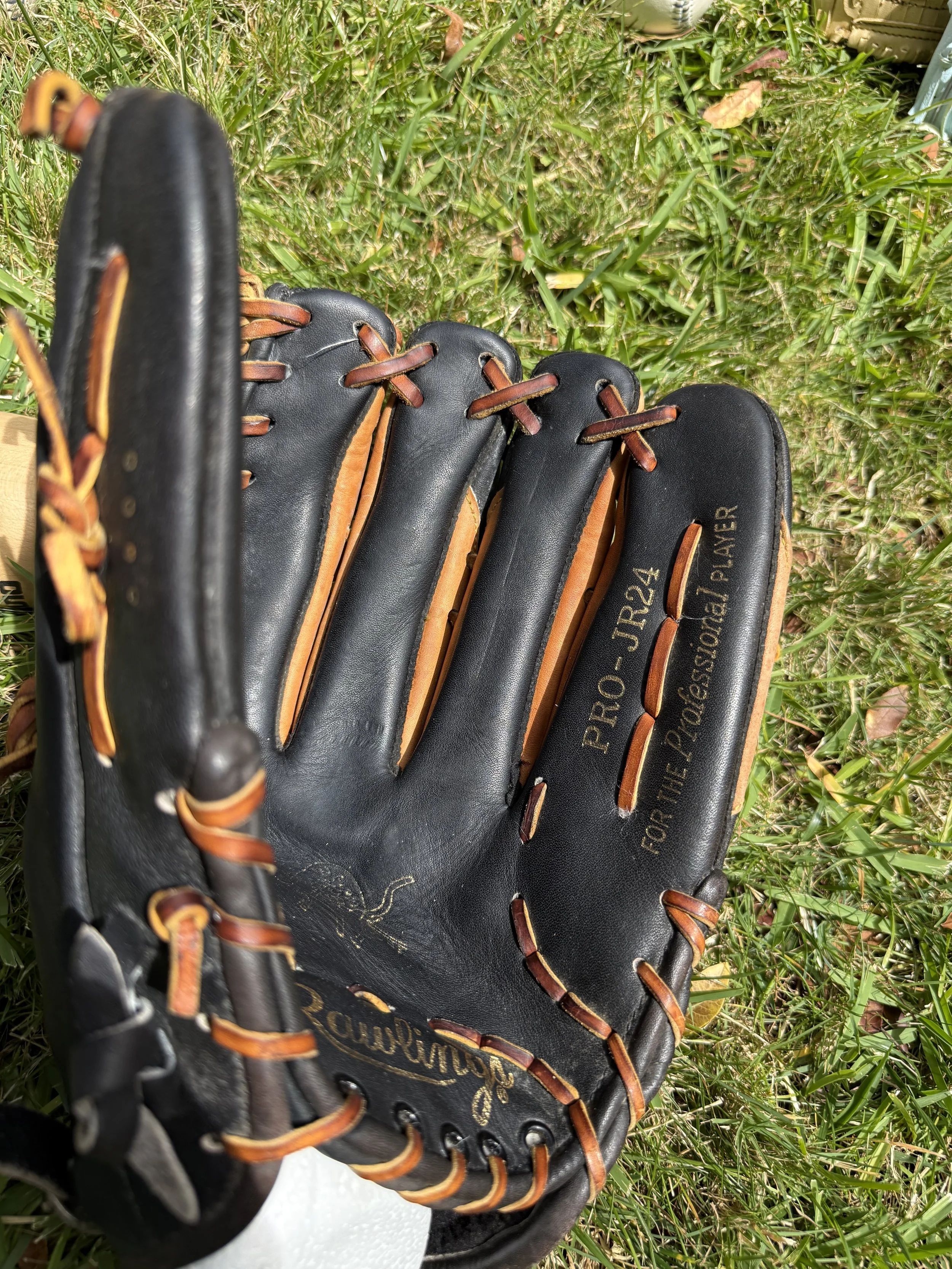
Glove of the Series: Rawlings Heart of the Hide PRO-JR24 Revolution Series
Ken Griffey Jr., lightning bolts, backwards hats, and why we fall in love with baseball in the first place
by Kyle Robinson
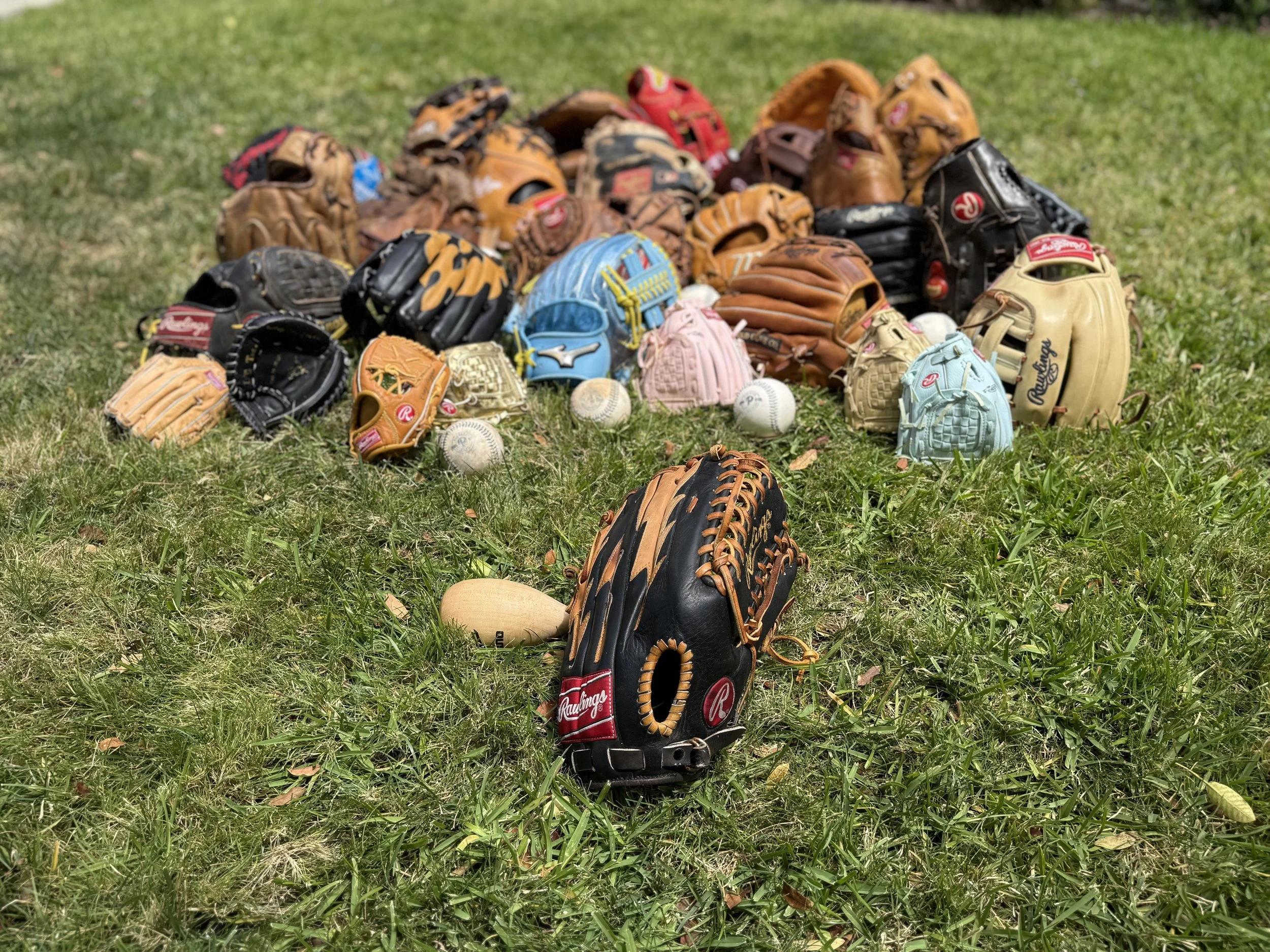
There are players whose names get stamped onto equipment. Then there are players whose personality gets stamped into the sport itself. And there are players known forever by one name. Junior.
Baseball culture spends an enormous amount of time teaching people the right way to do things. How to stand, throw, swing; where to be on a cutoff, how to wear the uniform, how to act after hitting a home run—act like you’ve been there before. There are good reasons for most of that, since baseball is a game built on repetition, fundamentals and lessons passed from one generation to another. Ken Griffey Jr. grew up inside the game: his father, Ken Griffey Sr., played 19 seasons in the majors, including two alongside his son in Seattle.
Which makes the story behind Junior’s most recognizable bit of personal style even better. The iconic backwards hat wasn’t originally a fashion statement. It wasn’t rebellion or marketing; it was simply a kid trying to wear his dad’s hat. Griffey Jr. explained that his father’s cap was too big on him and would bounce into his face, so he turned it around. Like other kids, he simply wanted to wear his dad’s hat, pants and shoes. Then the entire baseball world followed him.
Junior didn’t disrespect baseball tradition. He was raised inside it and then he added himself to it. The swing, the smile, #24, the wall climbs, the backwards hat, shoes, cleats, and for at least one moment in Rawlings history, lightning bolts on a glove. None of those things replaced the game of baseball, they sat alongside it, gave it flavor and texture and style.
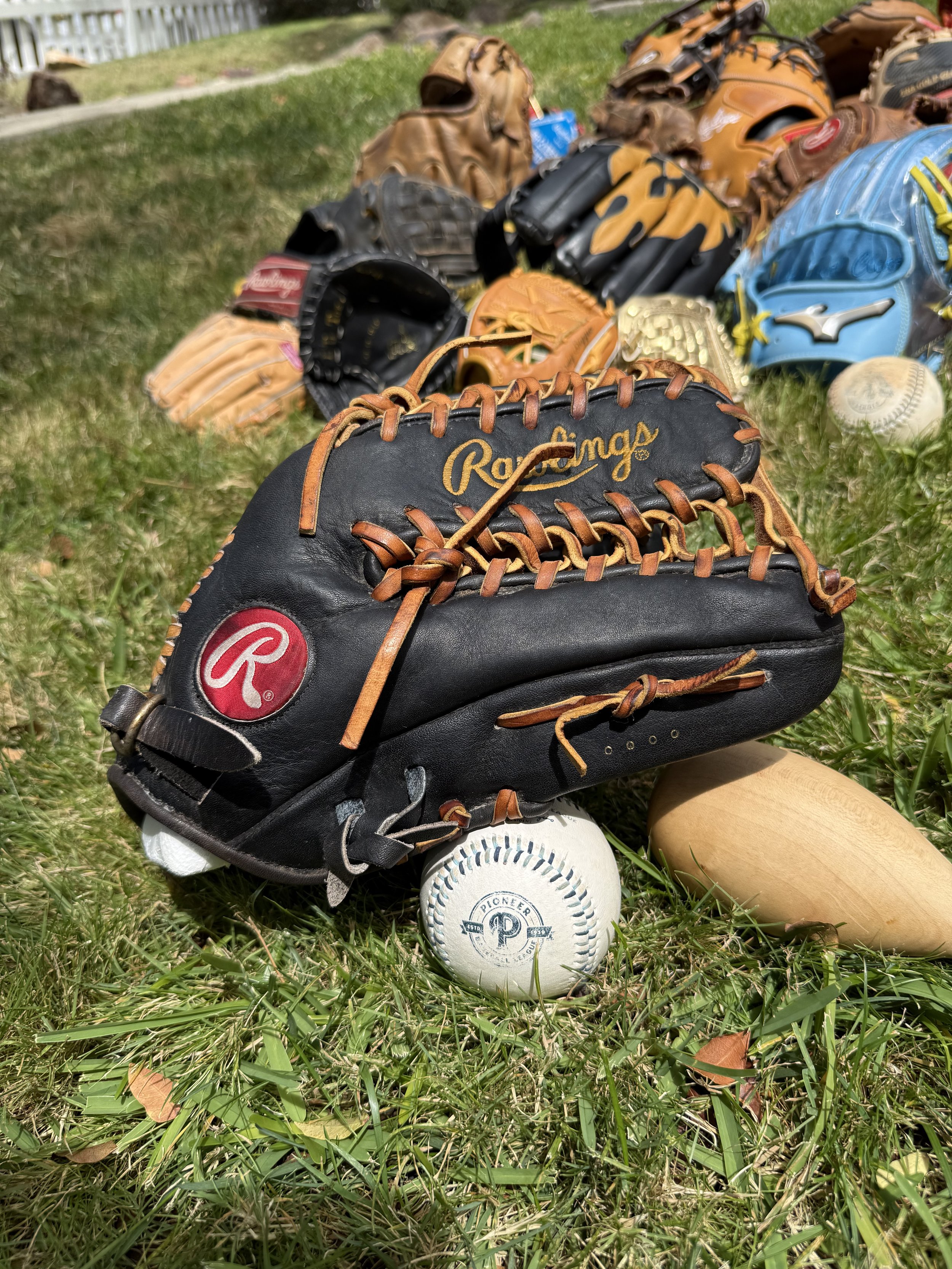
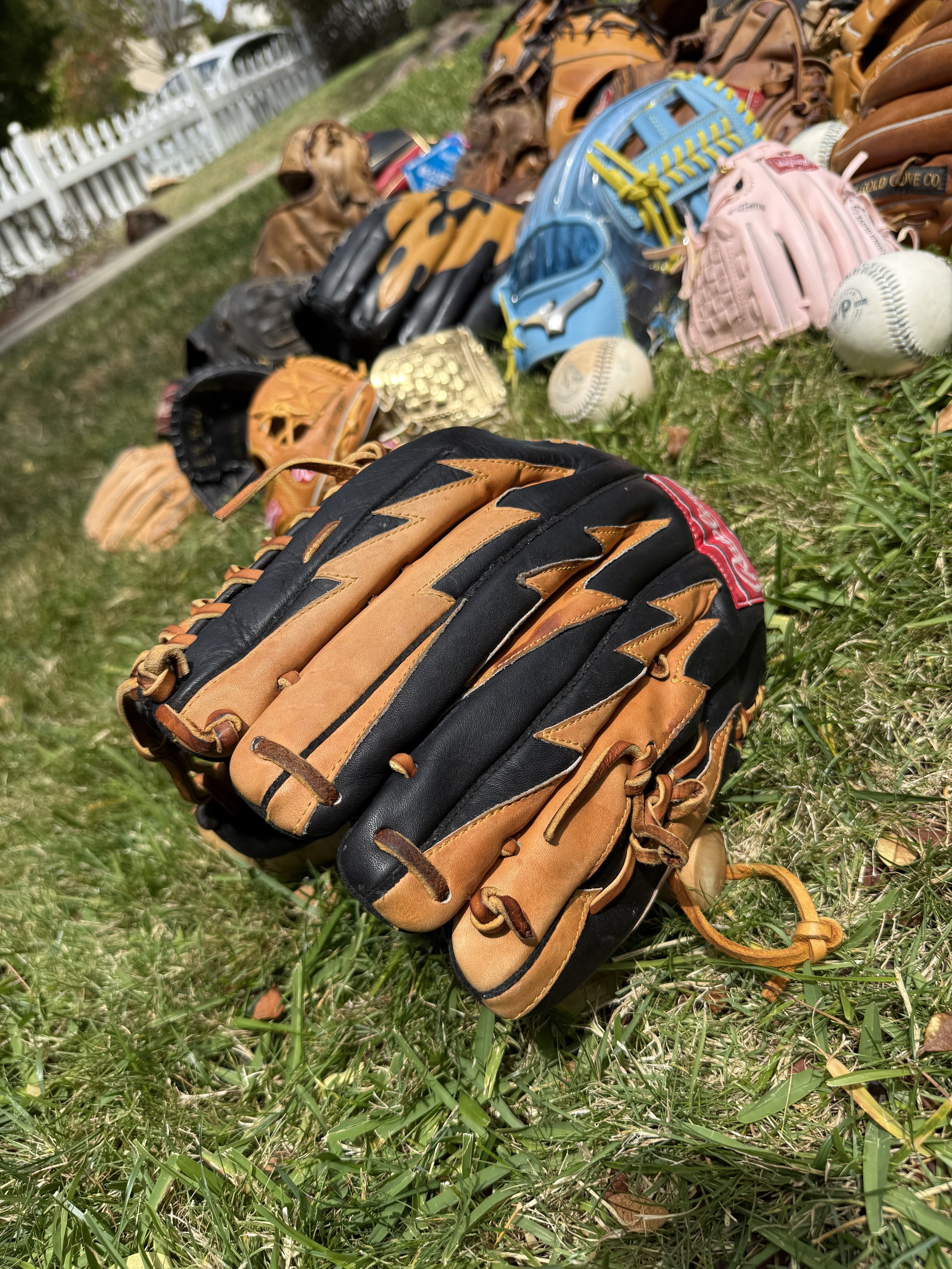
Junior’s resume is almost beside the point, but it’s impossible to separate the cultural figure from the player who earned it. Twenty-two major-league seasons. 630 home runs. 13 All-Star selections. 10 Gold Gloves. Seven Silver Sluggers. The 1997 American League MVP, and a Hall of Fame election in which he received 437 of 440 votes, 99.32 percent—the highest percentage in Hall of Fame voting history at the time. The backwards hat wasn’t doing the work, the guy underneath it was.
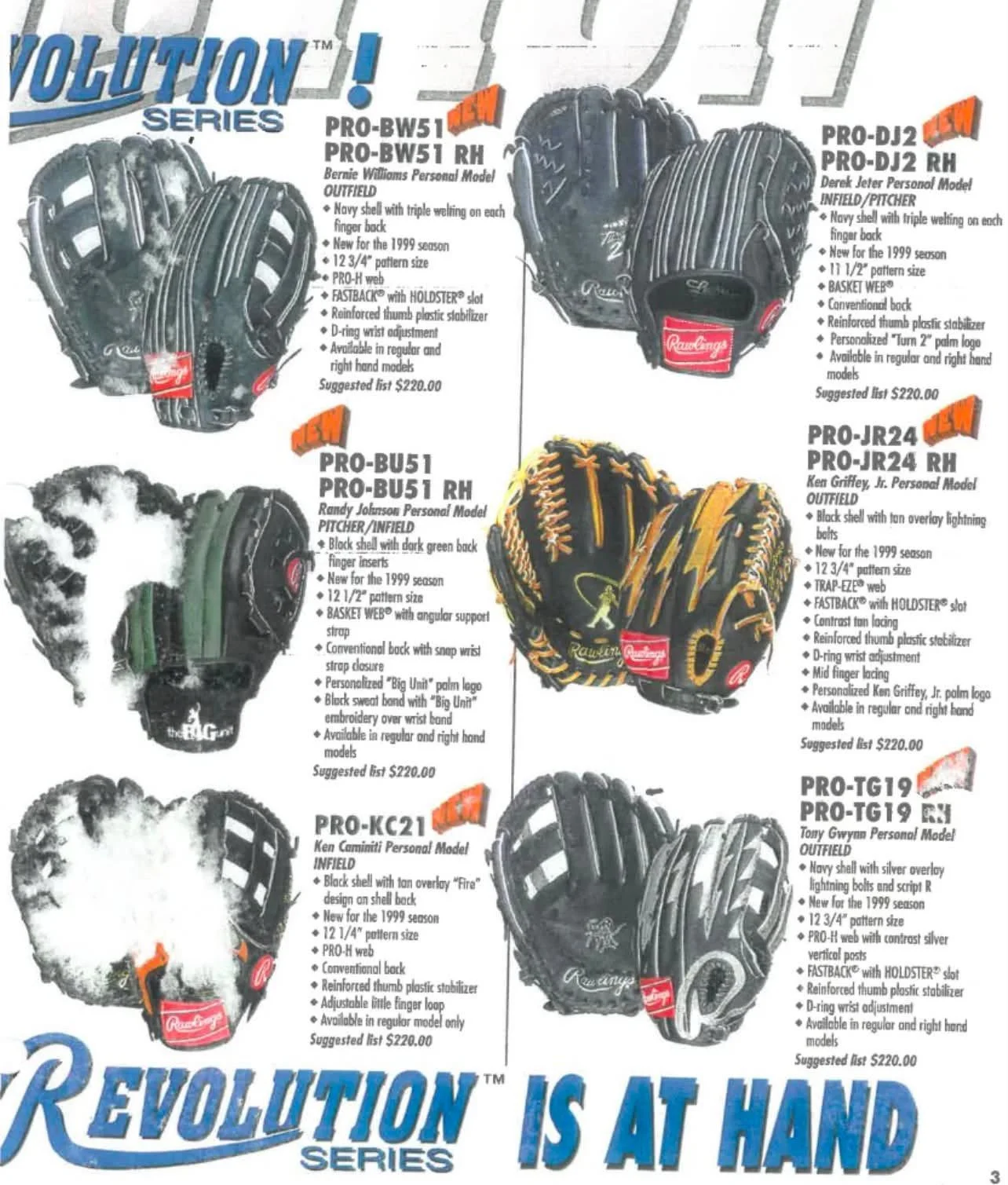
The Revolution player model gloves of this period are fascinating because they weren’t content to be generic equipment with a famous name attached. They gave the equipment some personality, like those lightning bolts. You look at it and immediately think of Griffey. That’s part of what player equipment is supposed to do. It lets a kid buy a little piece of somebody else’s baseball life. So what if you can’t hit like Griffey, or run like Griffey; you definitely cannot climb a wall like him. But you can put on the glove, you can put on the shoes, turn your hat around, go outside and try. That’s a powerful thing to sell a kid, and it’s a powerful thing for baseball to allow, because at least some of those kids are going to change the game, and the rest of them are going to enjoy watching them do it.
There is a remarkably small group of athletes who have become so visually ingrained in sports culture that you can take almost everything away and still know exactly who you’re looking at. Remove the face, the uniform, the number. Leave only the outline.
Michael Jordan has the Jumpman.
The NBA’s famous silhouette has long been associated with Jerry West; designer Alan Siegel has acknowledged using a photograph of West as the basis, although the league has never formally identified the player. MLB’s batter logo has a different history: designer Jerry Dior said he intentionally did not model it on any single player, despite the long-running belief that it was Harmon Killebrew.
And then there’s Junior. Not MLB’s logo. Not Seattle’s logo. His own image. The backwards cap. The swing. The silhouette. Still Griffey. That is an extraordinary level of cultural permanence. Plenty of great players leave statistics, a much smaller group leaves images, and an almost impossibly small group can be reduced to a silhouette and remain recognizable. Junior got there.
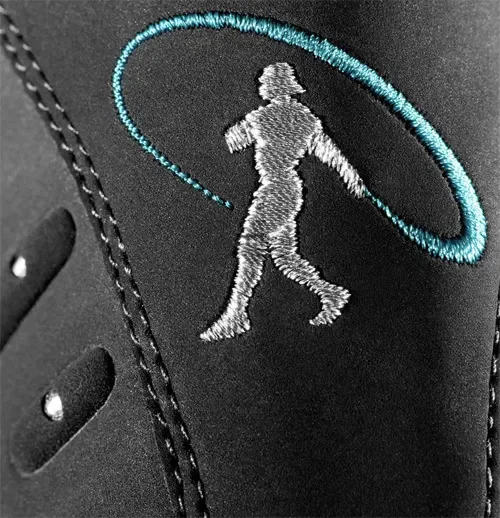
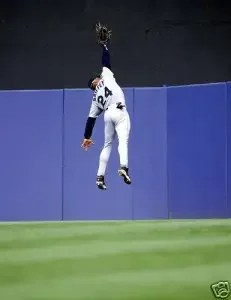
And he hasn’t really left. Griffey hasn’t played a major-league game since May 31, 2010, with a retirement announcement following on June 2, but the guy is still making an impact all over the game. Nike is still selling the Air Griffey Max 1 in multiple men’s colorways in 2026, explicitly marketing the model around the enduring legacy of the Swingman. Rumor has it that the Junior is at least partially responsible for the MLB logo being featured on the back of the fitted on-field hats—Major League Baseball realized that the backwards hat panel was blank and ripe for a bit of marketing.
Which brings us, naturally, to the important matters of modern baseball. A collection of old, washed-up has-beens and never-weres—including yours truly—are patiently waiting for the right Griffey shoes or cleats to show up in a color combination that works with our men’s-league uniforms. We are adults, most of us have children of our own, almost all of our hamstrings require negotiations before baseball activities. Because that’s what we’re really talking about here in Junior’s legacy: he made baseball equipment fun. You didn’t merely want to hit like Griffey. You wanted the shoes, the glove, the hat, the look. You wanted some tiny piece of whatever made baseball look that enjoyable. Thirty years later, some of us still do.
But here’s the thing about Griffey that I think gets lost when we reduce him to a collection of cool objects. He was never asking baseball to stop being baseball. He was showing people how much room there was inside it. Not to ignore the fundamentals, not to ignore your teammates, and not let everybody turn the game into chaos. Give everyone enough room to become themselves inside the game and let them play and have fun.
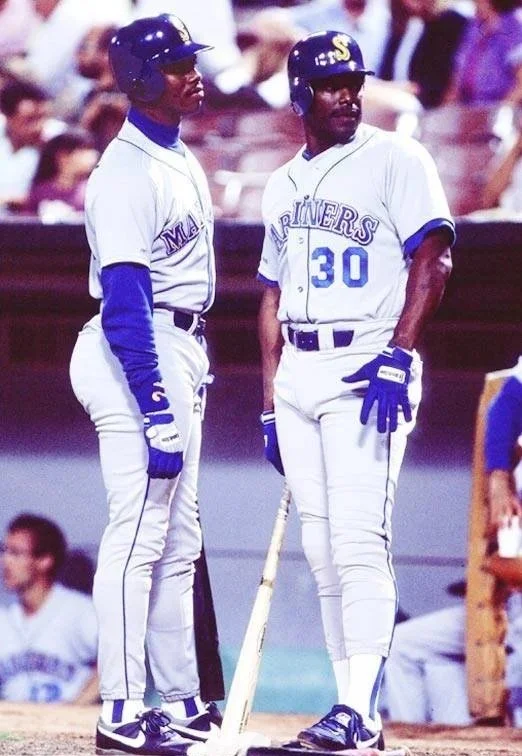
Griffey grew up watching his father play at the highest level. He learned the game, and then he found his own way through it. The look started trying to fill Dad’s shoes hat, the style became unmistakable, and the performance made it permanent. Eventually, a generation of kids could look at Ken Griffey Jr. and understand that there was more than one way to look like a baseball player.
If you looked only at the standings over the last several weeks, there have been plenty of reasons to temper expectations. The Ballers’ playoff path has narrowed.
Jake Allgeyer, a fixture in the middle of the lineup and part of last year’s championship club, was traded to Lake Country to give him an opportunity at a higher level. Langston Burkett is done for the season. Charlie Hurley is gone. The roster keeps changing. There are fewer games left to make up the remaining ground. And yet every time I’ve walked into Raimondi lately, something else has been obvious.
It’s packed. Oakland is showing up.
On Saturday, 4,135 people came through the gates at Raimondi. They watched Oakland fall behind Modesto 12-4, but then they stayed.
Joey Winters, essentially brand new to the club, homered. Jeter Ybarra—now playing third base because apparently this season needed another wrinkle—hit a grand slam. Brady Chavez quietly gave Oakland three scoreless innings and kept alive the possibility of something ridiculous happening.
Then something ridiculous happened, thank you baseball. The Ballers entered the ninth down two. A walk. A single. A bunt. An error. Catcher’s interference. Another walk. Tie game. Then Noah Blythe came to the plate with the bases loaded. In a game featuring 25 runs ended because Blythe did one of the hardest and least-glamorous thing a hitter can do…..stopped swinging. Ball four. 13-12. Walk-off.
Oakland’s comeback from eight runs down was the largest comeback of its 2026 season. Afterward, Chavez described the difference between simply finishing a schedule and what Oakland is doing now: “It’s super fun playing meaningful baseball.” Fun. There’s that word again.
The playoffs matter. Winning matters. Nobody in that clubhouse is pretending otherwise. But sometimes I wonder whether we make the standings responsible for carrying too much of what baseball is supposed to mean. Because a random Tuesday night at the ballpark matters too.
So does the kid leaning over the rail, the player who stops to sign something. So does wearing somebody’s jersey for the first time. So does a ridiculous walk-off. So does being one of 4,135 people who decide an eight-run deficit isn’t quite enough reason to go home.
Griffey never stopped being the kid who grew up at the ballpark. Before there was the Swingman. Before there were signature shoes. Before there was the lightning-bolt glove. There was a little boy watching his father play baseball.
Kids don’t fall in love with baseball because somebody explains how seriously they’re supposed to take it. They fall in love because Dad’s hat is sitting there, because somebody hands them a glove. Because hitting a baseball feels incredible. Because they’re allowed onto the grass. Because some player on television makes the game look like the most fun thing a human being could possibly be doing. Then they learn the traditions, eventually some of those kids add traditions of their own.
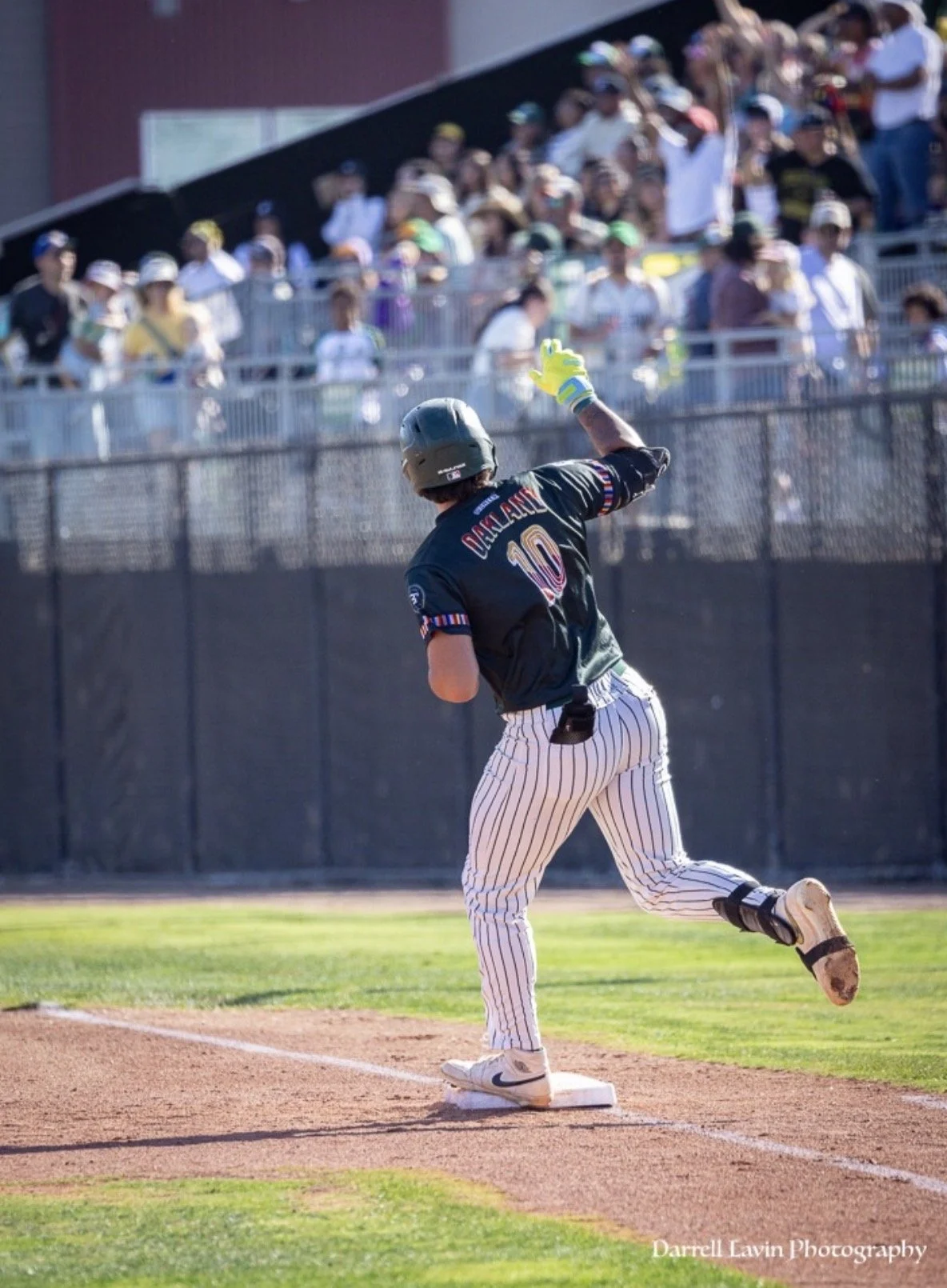
That’s what Oakland has gotten right with the Ballers. Raimondi doesn’t look like a major-league stadium. The Pioneer League doesn’t look exactly like Major League Baseball.
The knockout round certainly doesn’t. Some of the promotions are ridiculous. Some nights the baseball is ridiculous. Sometimes both are happening simultaneously.
Oakland isn’t obligated to recreate somebody else’s version of what professional baseball is supposed to look like. It gets to build its own, and the people filling Raimondi seem perfectly happy to help. That’s why the place stays loud even when the playoff picture gets uncomfortable. They’re not waiting to find out whether the season is meaningful before they decide to enjoy it. They give it meaning. They’re there, watching, participating.
Griffey reminded a generation of players and fans that there’s room in the game for you. You don’t preserve baseball by freezing it at the exact moment you personally fell in love with it; you do that by teaching the next generation the game well enough that someday they can make it their own.
I think about that “some kid” at Raimondi a lot, because there are a lot of them—kids in the East Bay for whom this stadium and these players will be foundational, forever. Some kid at Raimondi right now is wearing a hat that doesn’t quite fit. I’ve seen a few copying a player’s swing. Maybe they’re staring at the designs on somebody else’s glove or cleats. Maybe thirty years from now they’ll be obsessed enough to wait for a pair of baseball cleats designed for somebody who retired before their own kids were born. I hope so.
Because baseball has always needed the people who respect what came before them and were willing to pass it along. To teach the game to the next wave, give them somewhere to play and give them enough room to find themselves inside it. And when they do?
Get the heck of out of the way, and let them have fun.
Kyle Robinson is a transplanted Texan with a lifelong passion for the game of baseball. Residing in Oakland with his wife Randi, their daughter India, and a menagerie of pets. When he’s not slyly convincing his wife to name their pets after legendary baseball broadcasters (e.g. our corgi Milo Hamilton Robinson) he is probably balancing parenthood with trying to cram in as much baseball as possible. Whether it’s keeping the dream alive as a weekend warrior behind the dish, or on the sideline as a coach, volunteering, rest assured he has baseball on the brain. Find him on Instagram: @krob452
